Nicholas Chapman
(2 comments, 18 posts)
This user hasn't shared any profile information
Posts by Nicholas Chapman
The Righteous Shall Be in Everlasting Remembrance: Further Reflections on Colonel Philip Ludwell III
1Introduction
March 14/27 this year will mark the 266th anniversary of the falling asleep in the Lord of Colonel Philip Ludwell III of Williamsburg, Virginia. As many readers of this web site will know he is the first documented convert to Orthodoxy in the Americas, following his reception into the Church in London in December 1738. Last year, Metropolitan Hilarion, the First Hierarch of ROCOR and Ruling Bishop of its Eastern American Diocese blessed for panikhidas to be held in his memory on the anniversary of repose. Since this blessing was given more information has come to light that further enhances our picture of Colonel Ludwell and the relevance of his life to Orthodoxy in America today.
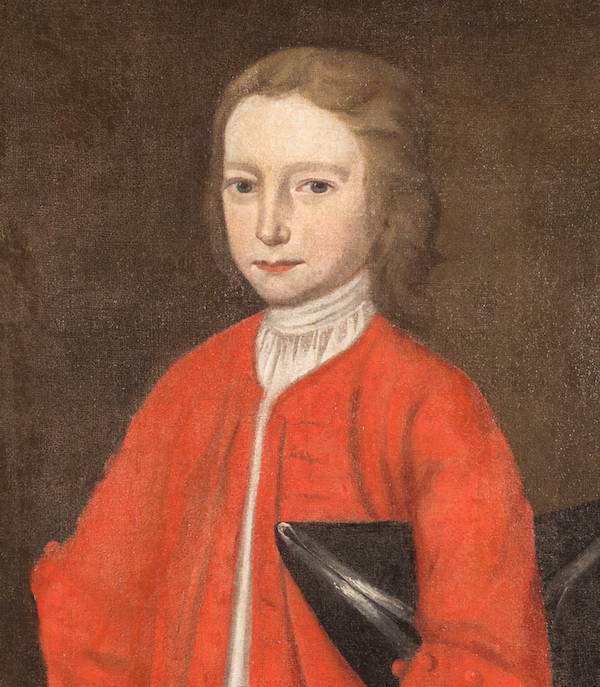
Philip Ludwell III was born in Virginia in 1716, some sixty years before the revolution that would give birth to the United States of America and the modern concept of the “nation state” founded on ideological ties rather than those of family, kinship and language. He travelled to London, England in 1738 and was received into Orthodoxy at one of the first parishes of the Russian Church established outside the boundaries of the Empire: But it should be clear that this was not a Russian church in any modern narrowly defined nationalistic setting. The priest of the parish who received him was Fr Bartholomew Cassanno, a half French, and half Alexandrian Greek who spent most of his adult life in England and had married an English women converted to Orthodoxy in the 1720’s. Following her repose he would become a hieromonk. Like the priest and his matushka most of the parish were either from the Greek speaking lands of the eastern Mediterranean or English converts to Orthodoxy.
From the Archives of the Holy Synod
Thanks to the tieless efforts of my dear friend Misha Sarni in London, I have recently obtained copies of documents regarding Colonel Ludwell from the archives of the Holy Synod in St Petersburg. As regards Ludwell’s arrival in London, Fr. Stephen Ivanovsky, the second ethnic Russian priest of the parish writes to the Holy Synod in St Petersburg in 1761:
In 1738, during the incumbency of the late Hieromonk Bartholomew Cassano at this holy Church, an English gentleman named Ludwell [transliterated as Лодвел – Lodvel – tr.], born in the American lands and living there in the province of Virginia, came to London seeking the True Faith, which he, with God’s help, has swiftly found in the Holy Graeco-Russian Church. And so on the 31st of December of the same year he was confirmed in the same with the holy Chrism. The next year, 1739, he returned to his native land, from whence he, having lived there for twenty years, came back to London last month of September, and brought with him his three daughters, two of whom are eleven years of age, and the third, twenty, who long time ago in America lost their mother, minding to have them united with the Holy Eastern Church here, gaining through this union the one Mother for them and himself.
Ivanovsky goes on to explain that during his years in America Ludwell had translated into English “The Orthodox Confession” of Metropolitan Peter Moghila of Kiev and now sought the Synod’s blessing to publish and distribute it to all sons of the Holy Eastern Church dwelling in London, without charge, for their spiritual nourishment.
He continues:
The same man, filled with Orthodox piety, requested that I, unworthy, humbly petition the Most Holy Ruling Synod concerning the future condition of his soul. How should he conduct himself after returning to his home land with his family, what shall he and them do, keep the practice of prayer only at their home, or would they be permitted to go temporarily to an English church, having no church of their own? So that they could offer their Creator some due in public, even thrice a year, thus drawing away from themselves the anger of the local people, since there, and in the whole Province of Virginia, and in the whole of America, except nearby Pennsylvania, any other Religion except Protestant, is forbidden. Besides in his home country still nobody knows about his change of Religion, since he is a councilor in a high position in the King’s service.
Concerning the Holy Gifts, he humbly petitions the Most Holy Ruling Synod, whether it would consider it possible to send them from here once a year some Consecrated Holy Gifts, as was practiced by the Early Christians, so that they, having been deprived of this Spiritual Nourishment after their departure from here, should not fall into despair. Since he had no greater concern throughout his twenty years there than the absence of these Divine Gifts, which he oftentimes longed to partake for the strengthening of his faith. And this petition of the selfsame man who is full of pious zeal, which is stemming from his great love for the Holy Church, I, unworthy, make bold to bring for the Most Holy Ruling Synod’s compassionate consideration, and humbly beg for a decision that will bring him joy.
In response to Ivanovsky’s petition the Holy Synod very swiftly blessed the printing and distribution of the catechism and for Ludwell to dispense it freely to those who would like to own it for their benefit.
The Synod also responded:
That he, Priest Ivanovsky, having properly instructed and established the three daughters of the said gentleman Ludwell in the knowledge of our Orthodox faith, shall receive them into the Holy Eastern Church, of their own volition, through the appropriate Church service. As to ways to preserve their Orthodox faith after their departure, what order of prayer to follow in their native land, and other matters related to Church mysteries, you, priest Ivanovsky, shall, having diligently obtained from them the knowledge of all circumstances and customs observed there, and having carefully considered these, advise them with suitable caution.
Finally, as regards the Holy Gifts:
At the time of departure of said Ludwell and his family to their native land, in consideration of their needs and circumstances as reported by you, priest Ivanovsky, and also his, Ludwell’s, most fervent desire. If there is an unfailing hope in his perfect will to hold fast, now and henceforth, to our Orthodox faith, and in view of the above needs, the Most Holy Synod gives you, priest Stefan Ivanovsky, the blessing to provide him with the Holy Gifts, for himself and his children, in a proper Tabernacle, having given him appropriate instruction concerning their keeping.
Philip Ludwell and Benjamin Franklin
Last December I was able to visit the only extant house in the world of Benjamin Franklin, in Craven St, London. Colonel Ludwell also lived in Craven St during the last seven years of his life and the extent of his friendship with Franklin is gradually becoming clearer. In the mid 1760’s Franklin briefly returned to America and in February 1763 he wrote from there to Ludwell back in London:
I must shortly make a journey to your Country, which I should undertake with much greater Pleasure, if I could promise myself the happiness of meeting there with my dear Friend, (but this is not to be expected, for I hear you are to continue this year in England). I pray sincerely that every Blessing may attend you, wherever you are, and particularly that of Health. O that I could invent something to restore and establish yours! But we shall meet, I trust, in a better Country, and with better Constitutions, vigorous health and everlasting youth; and since t’will be an additional pleasure so great in itself and so easily afforded us, I am persuaded we shall know one another.
From this letter it is clear that Ludwell did not intend to remain in London, but rather to return to his native Virginia. God’s will was otherwise and he was to repose in London in 1767. Its seems highly probable that Benjamin Franklin may have been present at his funeral in the Russian Church at the end of March that year.
Franklin and Ludwell worked together in a number of important educational and charitable initiatives in early America. Franklin is credited with founding America’s first hospital, in his native Philadelphia, the Pennsylvania Hospital in 1751. Two years prior to this he began the educational establishment that was to grow into America’s first full University – the University of Pennsylvania. What is much less widely realized is that Ludwell was the founding donor for both these institutions. Ludwell and Franklin together along with others funded an organization known as “The Associates of Dr Bray” who in 1760 opened the first schoolhouse for African American children in Williamsburg, Virginia.
The Piety of Philip Ludwell
All these actions attest to Ludwell’s love for his fellow man. His love for God is equally demonstrated by his adherence to the Orthodox Faith he embraced in his youth, retained for over twenty years whilst cut off from outward Church life and then brought his family into. In those wilderness years he labored to translate the catechism into English and also the Divine Liturgies of St John Chrysostom and St. Basil the Great. He penned a brief exhortation to piety entitled “How to Behave Before, In and After Divine Services in the Church.” In this he demonstrates the importance of reverence for God and awe in the presence of His holiness:
As then passest along to the Church present thy self before the King as the awfull majesty before whom thou art going to content thy self in the Courts of his house.
Enter the Church with gravity and composure and present thy self before the sanctuary and devoutly adore thrice; bless thy self with the sacred sign and say:
Surely the Lord is in this place!
How awfull is this place!
This is none other than the house of God and this is the Gate of Heaven!
How amiable is thy dwelling O Lord of Hosts!
My soul hath a desire a longing to enter the Courts of the Lord; my heart and flesh rejoice in the living-God.
…………………………………………………………………………………………….
Let the Words of my Mouth and the Meditation of my heart be always acceptable in thy Sight O Lord my Strength and my Redeemer.
Conclusion
It is surely a remarkable thing that a man so connected to the early history of this Republic was also a devout Orthodox Christian who faithfully and diligently strove to live and witness to the Orthodox Faith, to love God and to care for the poor and disadvantaged. May his memory be eternal and may he be numbered among the blessed!
Orthodoxy in America – an Interconnected and Shared History
0Presentation given by Nicholas Chapman of Herkimer NY at the OCL 25th Anniversary Conference, Washington DC on Oct 27, 2012. (Original here)
Before I begin let me thank George Matsoukas and the Board of OCL for the invitation to present today. I would also like to acknowledge Matthew Namee whose place I have filled due to his current work and other commitments. His constant support over the past three years has stimulated, informed and helped to sustain my own research.
Introduction
Your Grace’s, Reverend Fathers and Mothers, Brothers and Sisters: The study of the history of Orthodoxy in America is still at a very early stage with a substantial amount of primary documentary materials as yet unread or undiscovered, in both English and other languages. The realms of archeology and oral history are even more virgin fields. The present circumstances of the Church in America make it increasingly important to get to grips with these sources. I believe a more complete understanding of our common heritage will help to forge a single present identity, that in turn can provide a foundation for wider efforts to bring an end to the canonical irregularities of Church governance that have arisen in North America and elsewhere in the past one hundred or more years.
The work that I have done to date suggests that we have a more interconnected and shared history than is commonly realized and that an awareness of this can help to foster a clearer single Orthodox identity. Such an identity would transcend the narrow categories of modern nationalistic philosophies that have impacted the life and mentally of all Orthodox churches to differing degrees since at least the early 19th century. In the short time available I will present five themes of American Orthodox history. Dr Walsh and Dr Yiannis will then develop some of these in more detail, after which there will be opportunity to flesh them out further in open discussion.
1. The Genesis of Orthodoxy in the Americas
There has been some presence of Orthodox peoples in the Americas from the beginnings of European colonization following Columbus’s first landing in 1492. Early Spanish historians place Greeks in Santa Domingo by 1500 AD and fighting with the conquistador Cortes in the capture of what is now Mexico City in 1521. The first person identified by Spanish records as a Greek Christian is Doroteo Teodora, a member of a Spanish exploration party on the Florida coast in 1528. The early French explorer Samuel de Champlain records two Slavonians in his party exploring what is now the coast of Maine at the end of the 16th century and he has a Greek as an interpreter with the native peoples of the St Lawrence Valley in the 1620’s. Merchants, many of whom were associated with the London based companies trading with Russia and the Ottoman near east, began the first permanent English settlement at Jamestown. These settlers compared Jamestown to Constantinople and referred to the native Americans as infidels or Turks. Two of the Directors of the Virginia Company published works that include references and substantial sections on Orthodox faith and practice. These interactions between Virginia, Muscovy and the Levant continued throughout the 17th century, fueled by economic and religious considerations. Thus the Royal Governor Sir William Berkeley proposes importing workers from the Greek Morea in 1675, whilst his successor Lord Culpepper advocates for sending a delegation of Virginia planters to the Patriarch of Moscow in 1681. Ultimately these connections between Virginia and centers of Orthodox life may be seen to culminate in the conversion to Orthodoxy of Colonel Philip Ludwell III of Virginia who was received into the Russian church in London in 1738, after travelling there for this purpose. To borrow a phrase from the writer of the epistle to the Hebrews, “time does not permit me to tell” of many other early events prior to the transfer of Alaska to the United States in 1867. Suffice it to say that by 1865 the Orthodox presence in what is now the lower 48 had become substantial enough for St Metropolitan Philaret of Moscow to propose the creation of in America, a Russian Orthodox Church. (It should be noted that at no time does Philaret include Alaska within his definition of America.)
Metropolitan Philaret notes the possible presence of as many as thirteen thousand Orthodox believers in America but suggests the primary motivation for establishing an ecclesiastical structure is American spiritual leaders who first showed the desire to have an Orthodox Church in America…. This is a reference to approaches to Moscow, from the Episcopalian diocese of California, whose Bishop in San Francisco reported the presence of some four hundred persons belonging to the Greek Church who, while they recognized his authority up to a certain point, yet refused to receive communion from his hands. Such developments in California and elsewhere led to an Episcopalian delegation visiting Moscow in 1864, headed by the Episcopalian Bishop of New York.
By 1866 a decision had been made to construct an Orthodox temple in New York City. A major fundraising event for this was held in Moscow in 1866 in conjunction with the visit to Russia of Gustavus Vasa Fox, the assistant secretary of the US navy. At that banquet ( T)he attorney to the Synodal board of Moscow, spoke of the proposal to erect a Russian church in New York City, for which …., a subscription in America had produced already seven thousand dollars…. Mr. Curtin expressed in the name of General Clay… the hope that the Russians would soon find, in coming to New York, an orthodox church worthy of the Greek religion. Mr Clay, he said, would subscribe 500 rubles, and Mr Fox as much; and he believed that private subscriptions in New York would yet yield twenty five thousand more. He was certain, too, that twenty four thousand rubles, additional to the thousand given by Messrs.’ Clay and Fox, would be raised in Russia. These were substantial amounts of money, possibly millions in current dollars. I do not know what became of these monies: perhaps we are looking at the first question of financial accountability in American Orthodox history!
2. Orthodoxy as an aspect of American History
Dr. Walsh will develop this theme so I will only touch upon it briefly. Suffice it to say that the history of Orthodoxy in North America should first be studied within the wider context of the exploration and subjugation of the new world by the European powers and how their geopolitics were fueled by economic and religious considerations. These determine their interactions from the fall of Constantinople in 1453 through to the Bolshevik revolution in Russia in 1917 and beyond. The impact on the emergence of Orthodox life in the United States of American independence, the Civil War, the concept of Manifest Destiny, the Cold war, changing immigration policy etc. must be appraised. The internal situation of the Orthodox churches in the near East, Russia and the Balkans must be understood as it impinged upon their activities or lack of same in the United States. We also need to be aware of the growth of the Church in other parts of the West in the same period that interconnect with and often predate developments here.
3. The Crucial Role of Ordinary Believers
Until now the history of Orthodox mission in North America has tended to focus almost exclusively on the clergy and monastics that arrived in Kodiak, Alaska in 1794. There is almost no recognition of the work that had already taken place before their arrival whereby devout but un-ordained Orthodox believers had brought Orthodoxy to the native peoples. One such person was Osip Prianishnikov, a merchant from Tobolsk in Siberia who by 1791 was fluent in the Kodiak, Aleut and Chugach Yupik languages. Combining this with his knowledge of church services he was able to lead the native peoples in morning services, hours and evening services, even before the arrival of the missionary fathers. After their arrival he became their translator and continued to fulfill the ministry of a reader.
Prianishnikov was not the only Russian to have taught the Alaskans prayer. John Ledyard of Connecticut, the great early explorer records in his 1778 visit to Alaska that the Russians assembled the Indians in a very silent manner, and said prayers after the manner of the Greek Church….I could not but observe with what particular satisfaction the Indians performed their devoirs to God, through the medium of their little crucifixes, and with what pleasure they went through the multitude of ceremonies attendant on that sort of worship. This was 16 years before St Herman and his fellow laborers arrived!
In a similar vein, but very different cultural context we have the aforementioned Colonel Philip Ludwell III who appears to have created an Orthodox prayer house in Williamsburg, Virginia in the 1740’s and 50’s and was able to commune from the presanctified gifts that the Holy Synod of Russia had blessed him to take from London to Virginia in 1739. During this period Ludwell would also translate the liturgies of St John Chrysostom and St Basil as well as the Orthodox Catechism of Metropolitan Peter Moghila of Kiev. The latter was published in London in 1762. He is an example in his life of Orthodox piety and philanthropy and evidence points to some of his descendants continuing in the Faith until very recent times.
Some of these descendants quite probably played a part in the formation of an Orthodox prayer house in Galveston, Texas in the 1850’s. Galveston had also been the home of George Fisher, a Serbian Orthodox seminary drop out who arrived in America in 1814. He ended his life in San Francisco in 1873, having served in the 1860’s as the Greek consul and been one of the founders of the Holy Trinity parish in that city.
So the creation of Orthodox churches in America was much more the fruit of the devotion and labor of pious believers both clergy and lay, than the result of some kind of hierarchical master plan formulated in Constantinople, Moscow or anywhere else!
4. Orthodoxy in America and the emergence of Evangelicalism
Time once again does not permit me to develop this theme, but I strongly believe there was a connection between early Orthodoxy in America and the Moravian, Methodist and Episcopal churches. The more contemporary phenomena of the Evangelical Orthodox Church actually has much deeper historical roots. The Moravians from their mid 15th century beginnings in the Czech lands until at least their arrival in America in the mid 18th century perceived themselves as an orphaned Eastern church. According to the New York Gazette of Jan 21, 1751, in petitioning the British authorities for permission to settle in America they presented a public writing from the chief Patriarch of the Greek Church, in 1740, acknowledging them to be descended from the Eastern Church.
In a similar vein the early Methodists looked east for ecclesiastical legitimacy. One of the reasons the young John Wesley was expelled from Savannah was for celebrating the liturgy of St John Chrysostom when it was not an authorized rite of the Church of England. A later 18th century American source says that Wesley, with the encouragement of his Moravian friends, travelled to Constantinople in the 1780’s and was ordained a Bishop by the Patriarch.
At the same time, the then dominant Anglican Church in America looked to the Church of Russia as its model in its achievement of its independence from Constantinople, when considering its own distinctiveness from the Church of England. Following independence from Britain the American Episcopal Church obtained its first resident Bishop in the person of Samuel Seabury of Connecticut. He was ordained Bishop in Scotland by Bishops of the non- juror tradition whose early 18th century antecedents had actively negotiated for acceptance as an Orthodox Church. Seabury brought to America forms of liturgical office based on the Scottish Book of Common Prayer. His Communion Office, published in New London in 1786, contains an explicit epiclesis or prayer for the descent of the Holy Spirit on the gifts after the words of institution, following the Orthodox tradition. This tendency of the Episcopal Church in America towards Orthodoxy came to a head in the 1860’s with the formation of the Russo-Greek Committee that actively sought union with the Orthodox East.
5. Orthodoxy, Democracy and the Emergence of Nationalism
In a major speech before the General Assembly of the State of Connecticut in 1783, the seventh President of Yale, Dr Ezra Stiles, suggests that the Orthodox Church may offer a model of religious tolerance for the nascent American republic. He said:
The United States will embosom all the religious sects or denominations in Christendom… (He then enumerates all the Christian churches he knows to be present in America, including a Greek church.) All religious denominations will be independent of one another, as much as the Greek and Armenian patriarchates in the East; and having, on account of religion, no superiority as to secular powers and civil immunities, they will cohabit together in harmony, and, I hope, with a most generous catholicism and benevolence.
A few years later in Paris, France, the Orthodox believer and first naturalized US citizen, John Paradise introduced Thomas Jefferson to Adamantios Koreas, one of the fathers of the modern Greek nation and language. After their meeting Jefferson and Koreas corresponded for many years regarding the understanding of liberty, democracy etc. Koreas was also a graduate of the Orthodox founded Evangelical Greek School in Smyrna where he studied alongside his contemporary, the future St Nikodemos of the Holy Mountain. Perhaps these two could be said to typify two polarities of the contemporary Greek church in America and I will leave it to the far more capable hands of Dr Yiannis to develop these points further.
Another renowned early American philosopher was Benjamin Franklin who corresponded frequently with the early Russian enlightenment thinker and Orthodox churchman Mikhail Lomonosov. It was Franklin who arranged for John Paradise to gain American citizenship and the latter in turn corresponded with Eugenios Voulgaris, the Corfu born Bulgarian who went on to become the Archbishop of Cherson in the Russian church and is remembered with the epithet “Teacher of the Nations.” Thus the Orthodox enlightenment in Greece and Russia is seen to interact with some of the founding fathers of the American republic.
Conclusion
Our Orthodox past is not isolated from the mainstream of American history but interwoven with it. Within this past we have both saints and philosophers. The time has come to begin building upon the foundation they have laid through their prayers, writings and actions. This must be done in a spirit of charity and mutual respect whilst understanding our God given calling to pass on the faith which was once for all delivered to the saints. (Jude 1:3)
St Raphael Hawaweeny & Spanish language Orthodoxy in the Americas
3St Raphael Hawaweeny was a native of Lebanon, who in 1904 became the first Orthodox bishop ordained in the new world. As Bishop of Brooklyn he had oversight over the Syro-Lebanese communities that were beginning to appear in the Americas in the early twentieth century and he worked tirelessly for their growth and consolidation. It has been noted previously by Matthew Namee on this web site that during the years of St Raphael’s ministry until his repose in 1915 there was a dramatic increase in the extent and use of the English language in the liturgical life of these communities.
Last year, whilst I was researching in the National Archives in London, England, I discovered a document that shows that St Raphael’s missionary concerns extended beyond English to the Spanish language. The document I found was a letter (written in Russian) in 1912 from St Raphael to Fr. Eugene Smirnov, the priest of the Russian Embassy church in London. By way of background it should be mentioned that Fr. Eugene had briefly served as a reader at the Russian Orthodox parish in New York in the early 1870’s under Fr Nicholas Bjerring. Fr Eugene maintained an active interest in Orthodox missionary work throughout his life and in particular facilitated considerable support for the development of the church in America by way of both material and financial assistance.
The letter, which is translated in full below, is evidence of the expansive missionary vision of both St Raphael and Fr. Eugene. I am indebted to Dr. Karina Ross of St George Antiochian Orthodox George in Utica for its translation:
Your Blessedness,
Esteemed Father Protopriest!
The box with five hundred copies of St. John’s Liturgy in the Spanish language that you promised to me in your letter from Feb. 13th / 26th of the current year was conveyed to me yesterday from the Russian Cathedral in New York.
I humbly request you to notify of this the deeply respected – apostles of Orthodoxy in the twentieth century in the heterodox West – splendid general V. Vich(?)-Perez and remarkable warrior of Christ G. A. K (can’t make out the surname), (the life and the conversion to Orthodoxy of the former through the latter, your spiritual son, I described in great detail from its account in “Church News” in my Arabic spiritual publication “Al-Khalimat” (“The Word”) last year), and also to let them know of my deepest gratitude and prayerful blessing.
I intend to send out these copies to our Orthodox Syrian Arabs who are living in Spanish language countries in Northern and Central America, in hope that this very beneficial book with (?) mercy will be of great use for the support of Orthodoxy and, quite likely, for its proliferation among Spanish speakers. Let the Lord of Hosts support all those who labour in Christ’s vineyard.
I sincerely thank you, esteemed Father Protopriest, for the love that you have shown me and for your trust in my unworthiness, with deep reverence and sincere gratitude, yours truly.
Perpetually praying for you to Lord Jesus, Raphael, Bishop of Brooklyn.
To His Blessedness
Father Protopriest
Evegenii Smirnov
32 Welbeck St., London
It is my hope that a reader of this article might be able to find and translate the article of St Raphael in Al-Khalimat” (“The Word”) referred to in the letter so that we might learn the identity of the two Spanish language apostles of Orthodoxy in the twentieth century and thus place this document within the wider context in which it obviously belongs. I am not certain to what extent Spanish is currently employed liturgically in any of the Antiochian Orthodox parishes in the USA and whether any evidence exists of its earlier use that St Raphael clearly intended to promote through the distribution of this translation of the Divine Liturgy of St John Chrysostom.
Nicholas Chapman, Herkimer, NY, August 26, 2012
Nicholas Chapman: Was Fr. Samuel Domien a Greek Catholic? Part 3
0Editor’s note: What follows is the last of three articles by Nicholas Chapman on Fr. Samuel Domien, the first Orthodox priest known to have set foot in the Western Hemisphere. Domien was fascinated with electricity and became friends with Benjamin Franklin, who mentions Domien in his letters. To read Nicholas’ original article on Domien, from back in March, click here. To read the first article in this latest series, click here, and to read the second article in the series, click here.
In a recent article on this website I introduced Fr. Samuel Domien as the first Orthodox priest in the Americas. I acknowledged that this statement contradicts the only known published research about Domien found in two articles by Demetrius Dvoichenko-Markov:
1. A Rumanian Priest in Colonial America, (published in the October 1955 issue of The American Slavic and East European Review.)
and
2.Benjamin Franklin and the first American Romanian-Relations (Cahiers roumains d’etudes litteraires 1/1977 – The Romanian Book of Literary Studies, a French language publication of the University of Bucharest.) I am indebted to Matthew Namee for finding this second work.
In both of these essays, Markov takes the view that Domien was not an Orthodox priest, but rather a Greek Catholic (Uniate) clergyman. I believe that all of his arguments for reaching this conclusion are weak and do not stand up to serious examination. I hope that I can retain the interest of the reader whilst showing in some detail why I reach the opposite conclusion to Markov. I will do this by introducing a substantial amount of recently unearthed materials that further evidence the level of awareness of Orthodoxy in eighteenth century America.
Why did Fr Samuel Domien leave Transylvania?
As mentioned earlier Markov suggests that Domien left Transylvania in 1747 to further his education, with support from the Vatican. Perhaps The Boston Gazette of January 26,1748 offers an alternative reason. In that issue it publishes an Extract of a Letter from Transylvania dated August 23. (Presumably 1747) The letter describes in fairly apocalyptic terms and great detail the progress of a plaque of locusts across the Transylvanian countryside. The locusts are said to be of “an enourmous size” and they eat “the Leaves, the Grass, the Cabbages, the Melons, and Cucumbers to the very Roots. “ So starvation could well have been a factor in Domien’s departure from his native land.
Orthodoxy and knowledge of Latin
Markov argues that Domien’s knowledge of Latin is further evidence that he is a Greek Catholic rather than an Orthodox. This argument fails to give credence to the importance of knowledge of the Latin to the Orthodox in Eastern Europe in the years following the counter reformation (that began at the Roman Catholic Council of Trent in the mid sixteenth century) and the subsequent Union of Brest in 1595 that created the Slav Eastern Rite Catholic churches.
The use of Latin in the Orthodox churches at this time is ilustrated by the famous catechism of Metropolitan Peter (Moghila) of Kiev (that Philip Ludwell III later translated into English) which was probably origininally written in Latin or at the very least translated into it at a very early stage in the mid seventeenth century.
The Orthodox clergy were also being taught Latin.The precursor of the present day Moscow Theological Academy was the Slavic Greek Latin Academy which began in Moscow in the 1680′s. So it should not be at all unusual for Orthodox clerics, particularly from Ukraine and points west, to know Latin. For a Orthodox priest of Romanian orign to acquire a knowledge of Latin should be even less surprising given that Romanian is considered to be the living language that is closest to Latin.
A Glimpse into the Theology of Fr Samuel Domien
Finally, I am indebted to Joel Brady of the University of Pittsburgh for finding a further reference to Fr Samuel Domien in the writings of Benjamin Franklin. Franklin writes from Philadelphia on May 9, 1753 to Peter Collinson (a London based cloth merchant and avid botanist) on the subject of “The Support of the Poor.” Franklin contrasts attitudes to labor amongst both Protestant and Catholic workers in Europe and then says:
We had here some years since a Transylvanian Tartar, who had travelled much in the East, and came hither merely to see the West, intending to go home thro’ the spanish West Indies, China &c. He asked me one day what I thought might be the Reason that so many and such numerous nations, as the Tartars in Europe and Asia, the Indians in America, and the Negroes in Africa, continued a wandring careless Life, and refused to live in Cities, and to cultivate the arts they saw practiced by the civilized part of Mankind. While I was considering what answer to make him; I’ll tell you, says he in his broken English, God make man for Paradise, he make him for to live lazy; man make God angry, God turn him out of Paradise, and bid him work; man no love work; he want to go to Paradise again, he want to live lazy; so all mankind love lazy. Howe’er this may be it seems certain, that the hope of becoming at some time of Life free from the necessity of care and Labour, together with fear of penury, are the main-springs of most peoples industry.
If we allow for what Franklin describes as Domien’s “broken English” his words could be said to indicate an Orthodox understanding of redemption as a return to the paradisical state from which we fell. The passage also evidences that Domien’s interactions with Franklin were not linked exclusively to scientific matters.
Conclusion
In the extract from his journals which I quoted in my previous article Franklin states that Domien is “a priest of the Greek Church.” Having examined Markov’s argument I see no reason why Franklin’s words should not be taken at face value. I think “the ball is in the other court” for more compelling evidence to be presented to support Markov’s contentions that he was in fact a Greek Catholic.
There is also a wider undercurrent to this story related to Franklin’s links with other Orthodox scientific scholars and clergy which further contextualise his relation both with Fr Samuel Domien and Philip Ludwell III. I hope to have time to write about these over the coming months.
Nicholas Chapman, Herkimer NY, May 21 2012
Nicholas Chapman: Was Fr. Samuel Domien a Greek Catholic? Part 2
0Editor’s note: What follows is the second of three articles by Nicholas Chapman on Fr. Samuel Domien, the first Orthodox priest known to have set foot in the Western Hemisphere. Domien was fascinated with electricity and became friends with Benjamin Franklin, who mentions Domien in his letters. To read Nicholas’ original article on Domien, from back in March, click here, and to read the first article in this latest series, click here.
In a recent article on this website I introduced Fr. Samuel Domien as the first Orthodox priest in the Americas. I acknowledged that this statement contradicts the only known published research about Domien found in two articles by Demetrius Dvoichenko-Markov:
1. A Rumanian Priest in Colonial America, (published in the October 1955 issue of The American Slavic and East European Review.)
and
2.Benjamin Franklin and the first American Romanian-Relations (Cahiers roumains d’etudes litteraires 1/1977 – The Romanian Book of Literary Studies, a French language publication of the University of Bucharest.) I am indebted to Matthew Namee for finding this second work.
In both of these essays, Markov takes the view that Domien was not an Orthodox priest, but rather a Greek Catholic (Uniate) clergyman. I believe that all of his arguments for reaching this conclusion are weak and do not stand up to serious examination. I hope that I can retain the interest of the reader whilst showing in some detail why I reach the opposite conclusion to Markov. I will do this by introducing a substantial amount of recently unearthed materials that further evidence the level of awareness of Orthodoxy in eighteenth century America.
The Unia
Markov explains that the Greek Catholic Church came into existence in Transylvania in 1701, when the previously Orthodox Metropolitan Atanasie recognized the authority of the Pope and was followed in this allegiance by some sixteen hundred clergy in Romania. Markov does recognize that there was considerable contiunuing opposition to this which gained new impetus in 1744 with the arrival of Visarion, a Serbian Orthodox monk. This in turn led to an intensification of persecution of the Orthodox. Markov says that at the same time the favored status of the Greek Catholic Church enabled then to send clergy of a scholarly disposition abroad to further their education. Without citing any particular evidence he concludes that Domien was most likely one of these scholarly Uniate clerics, rather than an Orthodox fleeing persecutions. He assumes that Franklin would simply not be aware of the difference.
This assumption is open to challenge. Early American newspaper accounts illustrate that the difference between an Orthodox and Greek Catholic was understood by the educated classes, of whom Franklin was most certainly one. Here is one example, from The Boston Newsletter of August 17, 1713:
Rome, April 29. A Father Missionary arrived here some days ago with 3 Deputies of the Patriarch of Alexandria, who have full Powers to abjure in his Name the Rites & particular Doctrines of the Greek Church, and embrace the Roman, which has given a great Satisfaction to the Pope. A Select Congregation met on Sunday Morning in the presence of the Pope, to examine the Validity of the Powers given by the said Patriarch, which were admitted, and on Wednesday Morning those Deputies made the abjuration aforesaid before the Cardinals of the Holy Office, which was yesterday morning ratified in a public Consistory held for that purpose. The Bulls of the Pope in favour of the said Patriarch are to be forthwith dispatched, and his Holiness has granted him the Pallium. They hope that this will prove a means for reconciling the Greeks with the Romish Church, which has been always aimed at by the Holy See, and so often attempted to no purpose.
In this article it is said that the Alexandrian Orthodox will abjure the rites as well as the doctrines of the Greek Church, which may suggest a less nuanced form of conversion to Catholicism. But in an article published on October 11, 1731 in the Weekly Boston Rehearsal it is clearly Uniatism being described:
Constantinople, May 17, New Style. Here has been a great commotion of late among the Greeks, about their Patriarch Jeremias, who was deposed, and banished to Mount Sinai, but found means to return, and endeavoured to raise a Posse, that should not only make him Patriarch again, but subject the Greek Church to the Government of the Pope of Rome……….For we are credibly informed, that besides the Money promised by Pater Jeremias both to Turks and Franks, he had entered into an engagement to assist the Romish Missionaries, in bringing the Greeks over to Popery, and to acknowledge the Bishop of Rome to be Head of the Greek Church.
An analysis of the specific situation of the Greek Church in Transylvania is found in an essay on European Affairs printed in The American Magazine and Monthly Chronicle for the British Colonies in 1758. Within the context of a discussion of Russian-Turkish relations the writer explains that:
the Russians are by far the more dangerous enemy to the Turks, for the greater part of the grand Seignior’s subjects being christians, and these generally of the Greek Church, are naturally inclined to the Russians,who are of the same communion; whereas they are much better pleased to live under the power of the Turks, then to fall under that of the Austrians, because the latter are papists, which implies a disposition to persecute. Nay so true is this remark, that any liberty of conscience the Greek christians enjoy in Transylvania, is owing to their Ottoman neighbours, under whose milder government, the Austrians have just reason to apprehend, they would take refuge, if occasion were given them, from the intolerant spirit of popery.
This extract is particularly pertinent to the question of Markov’s identification of Domien as a Greek Catholic as it was published in Philadelphia within three years of Franklin’s letter identifying Domien as a priest of the Greek Church from Transylvania. The publisher was William Bradford, who like Benjamin Franklin was a Philadelphia printer who published The Weekly Advertiser, the main competitor to Franklin’s Pennsylvania Gazette.
Nicholas Chapman, Herkimer NY, May 21 2012