Orthodoxy & the US Courts

Notes on an Ethiopian Orthodox court case

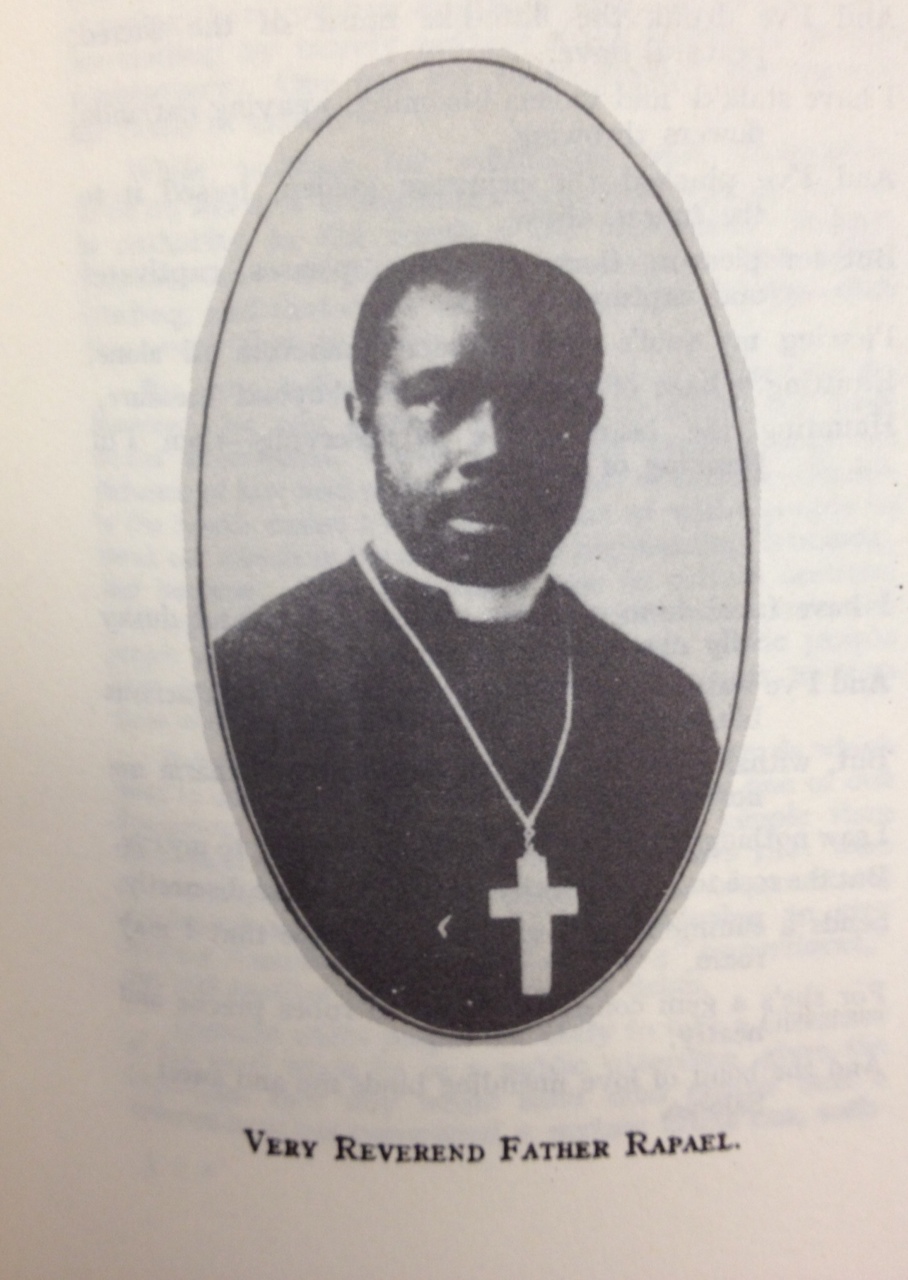
Right now, I’m fully immersed in work on my big paper on Orthodoxy and the civil courts. I just thought I’d offer some notes on a case I just read, Kidist Mariam Ethiopian Orthodox Tawahedo Church, Inc. v. Kidist Mariam Ethiopian Orthodox Tawahedo Church, Inc., a 1995 Georgia Court of Appeals case involving the split of an Ethiopian Orthodox parish. (And yes, the case is Kidist Mariam Church versus Kidist Mariam Church — both factions claimed to be the “true” church.)

The basic facts are as follows: In 1993, the Kidist Mariam board of directors, “after a vote by the congregation,” fired the parish priest. The priest told the archbishop, who responded by disbanding the board of directors. This led to a split in the parish — the “Atlanta Group” sided with the archbishop, while the “Decatur Group” was led by the old board of directors. Both groups elected new boards of trustees and claimed the right to control the parish funds. Hence this court case.

Rather than defer to the bishop’s definition of which group constituted the “true” parish, the court applied the neutral principles of law approach. The parish articles of incorporation stipulated that the parish was autonomous with respect to the ”internal affairs of the corporation.” The parish bylaws indicated acceptance of the archbishop’s authority only over religious, spiritual, and liturgical matters. Based on these facts, the court concluded that Kidist Mariam was a “hybrid” congregational/hierarchical church.

The court ruled that, “even assuming Archbishop Matthias was authorized in declaring the removal of the corporation’s Board of Directors because of their decision to remove Rev. Haregewoyn as priest of the Kidist Mariam Church, neither the Archbishop nor the Atlanta Group had authority to appoint the corporation’s Board of Directors.” So the Atlanta Group (i.e. the pro-archbishop group)’s new board elections didn’t conform to the parish articles of incorporation and bylaws; meanwhile, the Decatur Group’s board elections were consistent with those official documents. The result? A victory for the Decatur Group, and a loss for the archbishop’s faction.

I find the court’s reasoning curious — and not in a good way. The court has confused the legitimacy of the archbishop’s decision to disband the original board of directors with the legitimacy of the Atlanta Group’s new board. It is entirely possible (probable, even) that no board is legitimate — that the archbishop’s board failed to conform to the parish governing documents, but the Decatur Group’s board failed to qualify even as church members in the first place.

Membership status in a parish is an ecclesiastical (religious, spiritual, liturgical) matter. The archbishop had the authority to determine who was and wasn’t a parish member — and that means he had the authority to disband the board (because you can’t serve on the board if you’re not a parish member). If the archbishop declared the entire Decatur Group not to be parish members on the grounds that they rebelled against his ecclesiastical authority and purported to fire the priest… well, the archbishop had the right to do that, and it seems like he had a pretty good reason. I mean, you can’t have parish boards firing priests — not in the Orthodox Church, and while I know the Ethiopian Church isn’t in communion with the Eastern Orthodox Churches, I don’t think their ecclesiology on that point differs from ours.

The court’s reasoning demonstrates — as do so many other cases — that the neutral principles approach to Orthodox parish disputes is fatally flawed. It assumes that a real distinction exists between ecclesiastical and non-ecclesiastical issues, when in fact Orthodoxy permits no such dichotomy. Here, the issue of which was the “real” board hinged, in large part, on the issue of who were “real” parish members. That’s an ecclesiastical question, and the court overstepped its bounds when it ignored this fact.

This article was written by Matthew Namee.

Yet Another Priest is Taken to Court

In the middle of the twentieth century, Fr. Boris Burden (+1973) played important roles in American Orthodoxy.  It was he and Fr. Michael Gelsinger who rallied behind the attempt in the late 20s and early 30s to unite Orthodoxy and they were the key players, together with George E. Phillies (a Greek attorney) in establishing the Federated Orthodox Greek Catholic Primary Jurisdictions in America, which I’ve discussed on here before.  He and Fr. Michael also donated a large number of books to the university in Buffalo, starting their Byzantine collection.

Unfortunately, Fr. Boris also seemed to find his way into the courts.  I haven’t had a chance to try to track down this case, but the Brooklyn Daily Eagle of Saturday, April 9, 1932, lists Joseph McKoe v. Boris Burden as a case scheduled for the 8th District Court on April 11th.  As I said, I don’t know what drove that case, but in another case, in 1924, Burden was taken to court for getting into a fist fight.  Here’s the newspaper article from back then (Brooklyn Eagle, October 14, 1924).  By the way, raising a fist against another, if you’re a priest, breaks canon law.  Though I am aware of economia being extended when a priest was defending someone else, in this case, that is not the case.  It is an old fashioned, immature fist fight.  So, sometimes in American Orthodoxy, those who have worked the hardest have also had serious character flaws.  I suppose that’s to be expected in a frontier, marginalized religion, but it is worth remembering nonetheless.

PRIEST HOLDS OWN

IN FISTIC BATTLE

Following a violent altercation last midnight between Hugh Yeo, 23 years old. a taxi drlver, living at 2155 65th st., and Boris Burden of 417 8th St., starters for the Yellow Taxi Cab Company,- at their stand at Ave. 1 and the Brighton line, Patrolman John Maxwell took both men to the Parkville station, where they were charged with disorderly conduct.

Yeo spent the night in the cells. Burden obtained bail. When he appeared before Magistrate Eilperln in the Flatbush Court this morning, the taxi starter of the night before, a tall, good-looking young man of 26. with blond, wavy hair. wore the black gown and round clerical collar of a priest. “Yon could have knocked me over with a feather,” said Yeo, when his fellow prisoner explained to the Court that during the day he was the Rev. Father Boris Burden of the Eastern Orthodox Greek Catholic Church.  He said that he is attached to the general staff of the cathedral at 15 E. 97th St.. Manhattan, and added that he has been working on a sociological study of immigrants. Fred G. Ritta. counsel for the Yellow Taxi Cnb Company, defended the priest taxi starter against the disorderly conduct charge, to which he pleaded not guilty. The client, at the instigation of his employers, also preferred a charge of assault against Yeo.   According to Yeo,  the priest-starter gave as good as he took, both in blows and verbal insults.


Metropolia beats Moscow in court

In the Supreme Court cases Kedroff v. St. Nicholas Cathedral and its successor Kreshik v. St. Nicholas Cathedral, the highest court in the country ruled against the Metropolia and in favor of the Moscow Patriarchate in a dispute over church property. But Moscow didn’t win all the time. The 1962 Ohio Court of Appeals case St. Peter and St. Paul’s Church of Lorain, Ohio v. Burdikoff had the opposite outcome, which is set forth in a fascinating judicial opinion.

At the outset, the court offers this introduction to the Orthodox Church as a whole:

The temptation is very great to detail the history of the Orthodox Greek Catholic Churches of the Eastern Confession. The historical development of Christianity in the eastern churches is a subject that is not stressed in our schools, yet out of the Greek Catholic Churches much of the early foundation of the Christian Church was formed. The lives of its saints, and writings of its scholars, are worthy of emulation and study.

Not exactly what you’d expect to read in a secular judge’s opinion, huh? Anyway, onto the case.

Ss. Peter and Paul Church in Lorain, OH was founded in 1912 under the Russian Archdiocese of North America, which in turn was under the Russian Orthodox Church. At the 1924 All-American Sobor, the Archdiocese declared itself to be autonomous of Moscow, transforming itself into the “Russian Metropolia.” The Lorain parish formally submitted to the Metropolia by 1925. In February of that year, the parish filed an action in court to transfer the title of its property from Archbishop Alexander Nemolovsky (who had been the Russian primate in America) to the parish corporation itself. The court agreed, and title was successfully transferred.

From 1925 until 1960, the Lorain parish was served by clergy under the Metropolia. The parish participated in the Metropolia’s sobors, sent contributions to the Metropolia, and otherwise behaved as a parish of the Metropolia. No one questioned or challenged this fact. The parish didn’t split into pro-Moscow and pro-Metropolia factions, and Moscow itself never tried to take control of the parish.

In 1957, Fr. George Burdikoff became rector of Ss. Peter and Paul. Burdikoff had previously been a priest of ROCOR, but he later joined the Metropolia. Upon arrival in Lorain, he apparently received a 10-year contract to serve as the parish priest. (Incidentally, was this a common thing? It seems really strange to give a priest an employment contract, but the court treats it as an established fact.)

At first, Burdikoff continued to serve under the Metropolia, but in 1960, he secretly switched his allegience to Moscow, whose archbishop then appointed Burdikoff as rector of the Lorain parish. In other words, with Burdikoff’s secret transfer, Moscow now began to claim authority over Ss. Peter and Paul Church.

The court was faced with two questions:

  1. Who has the right to control the parish property – Moscow or the Metropolia?
  2. Is the Lorain parish still bound to fulfill Burdikoff’s 10-year contract?

The biggest question is the first, and the court spends a lot of time addressing it. To begin with, the court reasoned as follows:

  1. The Lorain parish was clearly founded under Moscow. (And I should note here that when the parish began in 1912, the Church of Russia was governed by a Holy Synod, rather than a Patriarch. I’ll refer to “Moscow,” but you should take that to mean “Church of Russia.”)
  2. But in 1925, the parish submitted to the autonomous Metropolia, and Moscow did nothing (with regard to Lorain specifically).
  3. In an interesting (and, to me, deeply flawed) argument, the court pointed out that Moscow and the Metropolia are both members of the World Council of Churches. The WCC only accepts autonomous churches as members; it follows, then (says the court) that by being a WCC member, Moscow must accept that the Metropolia is in fact autonomous.
  4. “Thus for 35 years one autonomous church body has occupied the church building, received dues and other monies, supported its superiors, and the superior church body, the Metropolia. In all this time the church which formerly claimed spiritual and temporal jurisdiction [Moscow] has done nothing to oust the group which it calls schismatic from occupation and control of the Lorain Church. It now seeks to do so by the subterfuge of a priest who has switched allegience when it best served his personal interest.”

As a general rule, when a member parish withdraws from a hierarchical church, they can’t take church property with them. Moscow argued that this rule, combined with the Supreme Court’s opinions in Kedroff and Kreshik, means that they should win. The court disagrees. Kedroff and Kreshik don’t apply here, the court says, because in those cases the New York government (first the legislature and then the judiciary) tried to transfer church property from Moscow to the Metropolia. Here, that’s not happening — in fact, Moscow is trying to get the Ohio courts to support a transfer in the other direction, from the Metropolia to Moscow.

The court continually reiterates that the Lorain parish was under the Metropolia for “35 years” without a complaint from Moscow. This is important because it opens the door to the application of several legal principles:

  • Adverse Possession. Let’s say that I own a piece of land, but a squatter moves onto that land and starts acting like an owner. I know about the squatter, but I don’t do anything to oppose him. If he does this for long enough, according to the common law principle of adverse possession, he can become the new legal owner of the property. It’s possible to apply this concept to the Burdikoff case — the Metropolia exercised control over the Lorain parish for 35 years, presumably with Moscow’s knowledge but without its opposition. Under adverse possession, if Moscow was the rightful owner, it isn’t anymore.
  • Laches. Here, the basic idea is that you can’t wait forever to assert a legal right — an “unreasonable delay” in asserting your rights can be interpreted by the courts as a forfeiture of those rights. Here, if Moscow once had the right to control the Lorain parish, they forfeited that right by failing to assert it for 35 years (which fits any definition of “unreasonable delay”).
  • Estoppel. Similar logic applies here. Moscow may be estopped (forbidden, basically) from asserting its rights over the Lorain parish because it waited so long and knowingly allowed the Metropolia to control the parish for 35 years.
  • Waiver. More of the same — the idea here being that Moscow essentially waived its rights over the Lorain parish by tolerating the Metropolia’s control over it for so long.

Underlying all of these theories is the principle that you can’t just wait forever to assert a legal right. Whatever rightful control Moscow may once have had over the parish, it lost it by waiting so long.

It’s easier to dismiss Burdikoff’s claim that he had a 10-year contract with the parish. The court found that Burdikoff breached the contract when he submitted to Moscow: “he cannot now be heard to complain that he is deprived of a right under a contract which he himself repudiated.”

Long story short, this is a rare victory for the Metropolia over Moscow.

This article was written by Matthew Namee.

Five court cases

Sorry for the long delay between articles… I’ve been terribly busy, I’m afraid. Here are notes on five of the many, many Orthodox court cases I’ve been researching lately. These cases fit broadly into the category of “deference,” where the courts tend to defer to the higher church authorities (bishop, diocese, mother church, etc). The other line of cases are of the “neutral principles of law” variety, and I’ll summarize more of those in the future.

  • Russian Church of Our Lady of Kazan v. Dunkel, 310 N.E. 2d 307 (1974)
    • Which faction is the true parish? Parish organized under the Metropolia. In 1969, a faction tried to transfer the parish to ROCOR. The court found that the parish had been indisputably under the Metropolia from the time of its establishment in 1942 up to the schism in 1969.
    • Regarding whether the Metropolia had been a part of ROCOR, the court said, “The record supports the conclusion that the Metropolia never became merged in the Synod of Bishops and Kazan therefore owed no allegiance to the Synod.”
    • Parish property belongs to the Metropolia faction.
  • Colin v. Iancu, 267 N.W. 2d 438 (1978)
    • Parish was part of the Romanian Orthodox Episcopate in America (ROEA) under Bishop Valerian Trifa. Dispute between priest and bishop; bishop removed priest, and in response, a majority of the parish voted to leave the ROEA. Bishop then defrocked priest. Trial court granted property to the ROEA faction.
    • Along the lines of Dunkel, here one faction of the parish sought to leave its original jurisdiction. In such cases, the “faithful minority” (as the court puts it) is entitled to keep the property.
  • Draskovich v. Pasalich, 280 N.E. 2d 69 (1972)
    • Part of the Bishop Dionisije Milivojevich controversy – one faction of the parish favored the Mother Church, the other Bishop Dionisije. Trial court ruled in favor of the Dionisije faction, finding that the Mother Church lacked the legal authority to divide the diocese.
    • The opinion is lengthy, but the appellate court’s conclusion is rather simple: the parish “was organized as a church within the hierarchy of the Mother Church and therefore those who remain loyal to the Mother Church are entitled to control and use of the property in question.”
  • Kendysh v. Holy Spirit Byelorussian Autocephalic Orthodox Church, 850 F.2d 692 (6th Cir., 1988) (unpublished opinion)
    • First of all, the jurisdiction in question (Belarusian Autocephalous Orthodox Church) is a tiny, non-canonical body currently headquartered in Brooklyn. Holy Spirit Church was organized in 1971 and was part of the BAOC prior to a 1980 schism.
    • Key issue: can the BAOC’s new constitution/statute invalidate previous bylaws of member parishes?
      • Statute is valid.
      • Parish was part of the BAOC prior to the schism.
      • Therefore, BAOC’s statute governs the parish. According to the statute, in the event of parish liquidation, parish property belongs to BAOC.
    • Court: “As the district court noted, once a local parish submits itself to the authority of a central hierarchical church, provisions in the central church’s constitution override inconsistent provisions in the local church’s articles of association.”
  • All Saints Church v. Kedrovsky, 156 A. 688 (1931)
    • Hartford dispute. Both sides now actually repudiate Kedrovsky. Plaintiff recognizes Metropolitan Platon, defendant recognizes Archbishop Apollinary (ROCOR).
    • Definition of an Orthodox parish under Russian Church law (not sure what exactly): “an association of Orthodox Christians composed of the clergy and laity living in a definite locality and united around a temple, forming part of a diocese, under the canonical administration of the diocesan Bishop and under the guidance of a Rector appointed by the latter.” Stated as elements:
      • Association of Orthodox Christians (clergy and laity)
      • Living in a definite locality
      • Temple (church building)
      • Part of a diocese
      • Under a diocesan bishop
      • Under a rector appointed by the diocesan bishop
    • Court rules in favor of the ROCOR faction, reasoning that Platon’s legitimacy comes from three possible sources:
      • Appointment by Patriarch Tikhon, but the court found that a patriarch can only make a temporary appointment, not a permanent one.
      • Appointment by the ROCOR synod, but in 1927 ROCOR removed Platon from office.
      • Confirmation by the Metropolia at the 1924 All-American Sobor in Detroit. But the court saw this as a negative, but the court saw this as a negative, reasoning that the sobor was “a movement hostile to the continuance of the established organization of the church general.”
    • The court really likes ROCOR, viewing it as the best way to handle a bad situation. The court is unsympathetic to the Metropolia’s desire to be independent of ROCOR.

This article was written by Matthew Namee.

Hierarchical, Congregational, and the problems of the “parish”

In 1993, the Appeals Court of Massachusetts rendered its decision in (brace yourself) Primate and Bishops’ Synod of Russian Orthodox Church Outside Russia v. Russian Orthodox Church of Holy Resurrection, Inc. We’ll just call it Primate from here on out.

This case involved a Massachusetts ROCOR parish that left ROCOR and joined HOCNA in 1987. At a parish meeting, members voted to amend their articles of organization and bylaws, removing all references to ROCOR in the bylaws. The parish then switched jurisdictions. The ROCOR Holy Synod sued, arguing that (1) the parish vote was illegal and (2) parish property is subject to the dominion and control of ROCOR (“the Church”).

At trial, the judge ruled that the parish “was hierarchical in terms of internal administration, discipline, and matters of faith,” but “congregational as far as the control and use of its property.” The appellate court agreed. Applying a neutral principles of law approach, the court identified the key question as being where “the church members, prior to the schism, have placed the ultimate authority over the use of church property.”

Churches can be hierarchical or congregational, but the two concepts aren’t mutually exclusive. The court explains that a church may be “hierarchical in some matters and congregational in others.” At first blush, this doesn’t seem to be the case with a ROCOR parish. ROCOR’s official documents recognized Synodal jurisdiction over “[m]atters concerning church property in dioceses [and] parishes.” Citing Apostolic Canon 41 (“We command that the Bishop have authority over the property of the Church”), ROCOR’s regulations emphasized that the bishop has authority over all “church property” in his diocese. The local parish bylaws presented a similar picture. When the parish was organized, it adopted the standard ROCOR parish bylaws, which called for Synod approval of major decisions regarding “church real estate.”

So this should be a win for ROCOR, right? It all seems pretty cut and dried, but that’s not how the court saw things. At trial, witness testimony revealed that the parish was always a separate legal entity, “not a subdivision of any other entity.” Parish property was paid for by parish funds, and legal title was in the name of the parish. The trial judge found that the parish property was never “diocesan, monastic or Church property.”

The court tried to educate itself on Orthodox history and ecclesiology. It noted that the apostolic canons (including the canon cited above) were adopted more than 1500 years ago, and that in the Russian Church, property ownership didn’t always follow a single pattern. “While the only person who could appoint a priest was the bishop, property and indeed churches belonged to various groups, including tradesmen, nobles, and the Tsars.” Orthodoxy, the court observed, has both hierarchical and congregational elements, and thus can’t be analogized to the modern day Roman Catholic Church. In a footnote, the court commented:

Unlike the Roman Catholic Church, there was evidence that in the Russian Orthodox Church authority was vested in the whole body of the laity as well as with the hierarchy; it was described as “an organic, as opposed to a juridical notion of authority.” There was also testimony that there were congregational aspects in the orthodox faith; in theory the bishop is elected by the people as well as the clergy, and that even in appointing the priest, the bishops would not impose someone upon the parish that the parish did not want.

Furthermore, the parish in question was just one of about twenty that left ROCOR at the same time, but ROCOR only demanded the property of two of the parishes. In the history of ROCOR, said the court, “[t]here has been much voluntary movement of parishes in and out of the Church, as well as in and out of the other orthodox umbrella organizations [jurisdictions].” In many of those cases, the moving parishes kept their property. Thus, said the appellate court, the trial judge wasn’t unreasonable in concluding that the parish in question was congregational as to its property.

This case presents two challenging themes: the idea that parish property isn’t necessarily “Church” property, and the concept of dual hierarchical and congregational forms of church governance, coexisting within Orthodoxy. Both themes emphasize the distinctiveness and separateness of the parish. It is, in this interpetation, an independent legal entity. It is affiliated with the diocese or Church to a certain degree, in doctrinal and even pastoral matters (e.g. the appointment of a priest), but it is not legally bound by the Church when it comes to property decisions.

All of this is paradoxical — a separation of the sacred from the profane which is foreign to Orthodox thought. And yet I’m not entirely certain that the court got it wrong. To be honest, I’m undecided about what courts should do, but this court’s logic has some merit, at least from a legal standpoint. How could we create a rule based on Primate, and applicable in nearly all Orthodox parish property cases? We could, I suppose, employ a rebuttable presumption that the parish is a legally independent entity with respect to property. We could then further employ a rebuttable presumption that the parish is congregational with respect to its internal governance. The diocese would retain control over doctrine, liturgy, and clergy appointments, but it would have to rebut the presumptions of independence and congregationalism to assert control over property. And any parish could, if it wished, explicity surrender its property independence and/or recognize an exclusively hierarchical form of government.

But… well, there are problems. Recognizing congregationalism within the parish means that a court would have to decide who qualifies as a “member.” This is a tricky issue. Qualifications for “membership” vary from jurisdiction to jurisdiction and parish to parish, and can include the payment of dues, reception of communion, and regular confession, among other things. I didn’t mention this above, but in Primate, one of ROCOR’s arguments was that the vote at the parish meeting was invalid because it was two members short of a two-thirds majority. The two missing “members,” the court found, hadn’t paid dues for a full year, and thus weren’t technically members at all. Thus ROCOR’s argument failed.

I’m beginning to see what the problem is in these parish property disputes. In Orthodoxy, the diocese — not the parish — is the basic ecclesiastical unit. The concept of “parish” has evolved over time, and even now it isn’t entirely clear-cut. Yet it is within parishes that most property disputes arise. Until we have a coherent understanding of what it means to be a “parish” and a “parishioner” (rather than just a diocese and an Orthodox Christian), we will continue to struggle with this problem.

The only real solution that I can think of is to break down the wall between parish and diocese. If all the Orthodox in America were united, and every major city had an Orthodox bishop, the dioceses would be rather small. All Orthodox property within the diocese — so, within the city and the outlying area — would be property of the diocese. Rather than being parishioners, the faithful would be members of the diocese — the Orthodox Church of __________ (Chicago, Seattle, Wichita, etc.). And the Orthodox Church of __________ would own all the formerly “parish” property in its territory. By abandoning our present jurisdictional structure and embracing a more ancient model of the Church, with smaller and more unified dioceses, we may be able to avoid cases like Primate, and the well-meaning but ultimately un-Orthodox logic that they express.

This article was written by Matthew Namee.

UPDATE: Originally, I said that the parish in question left ROCOR for the OCA. I have since been informed that the parish was one of a number of parishes that joined HOCNA, not the OCA. I have corrected the article above.

Go to Top