Saints

St. Raphael of Brooklyn on the Episcopalians

0

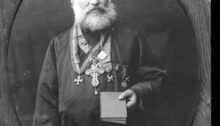
Today being the ninety-eighth anniversary of the repose of St. Raphael of Brooklyn (+1915), here is a pastoral letter he sent out in 1912 regarding relations with the Episcopal Church, mostly likely written on his behalf by Fr. Ingram Nathaniel Irvine. Thanks to Fr. Joseph Huneycutt of Houston for posting it today.

To My Beloved Clergy and Laity of the Syrian Greek-Orthodox Catholic Church in North America:

Greetings in Christ Jesus, Our Incarnate Lord and God.

My Beloved Brethren:

Two years ago, while I was a Vice-President and member of the Anglican and Eastern Orthodox Churches Union, being moved with compassion for my children in the Holy Orthodox faith “once and for all delivered to the Saints” (St Jude ver. 3), scattered throughout the whole of North America and deprived of the ministrations of the Church; and especially in places far removed from Orthodox centres; and being equally moved with a feeling that the Protestant Episcopal (Anglican) Church possessed largely the Orthodox faith, as many prominent clergy professed the same to me before I studied deeply their doctrinal authorities and their liturgy — the “Book of Common Prayer” — I wrote a letter as the Bishop and Head of the Syrian Catholic Mission in North America, giving permission, in which I said that in extreme cases, where no Orthodox priest could be called upon at short notice, the ministrations of the Protestant Episcopal (Anglican) clergy might be kindly asked. However, I was most explicit in defining when and how the ministrations should be accepted, and also what exceptions should be made. In writing that letter I hoped, on the one hand, to help my people spiritually, and, on the other hand, to open the way toward bringing the Anglicans into the communion of the Holy Orthodox faith.

On hearing and in reading that my letter, perhaps unintentionally, was misconstrued by some of the Episcopalian (Anglican) Clergy, I wrote a second letter in which I pointed out that my instructions and exceptions had been either overlooked or ignored by many, to wit:

(a) They (the Episcopalians) informed the Orthodox people that I recognized the Anglican Communion (Protestant Episcopal Church) as being united with the Holy Orthodox Church and their ministry, that is holy orders, as valid.

(b) The Episcopal (Anglican) Clergy offered their ministrations even when my Orthodox clergy were residing in the same towns and parishes, as pastors. And,

(c) Protestant Episcopal clergy said there was no need of Orthodox people seeking the ministrations of their own Orthodox priests, for their (the Anglican) ministrations were all that were necessary.

I, therefore, felt bound by all the circumstances to make a thorough study of the Anglican Church’s faith and orders as well as of her discipline and ritual. After serious consideration I realized that it was my honest duty, as a member of the College of Bishops of the Holy Orthodox Greek Apostolic Church, and Head of the Syrian Mission in North America, to resign from the vice-presidency of and membership in the Anglican and Eastern Orthodox Churches Union. At the same time, I set forth, in my letter of resignation, my reason for so doing.

I am convinced that the doctrinal teaching and practices as well as the discipline of the whole Anglican Church are unacceptable to the Holy Orthodox Church. I make this apology for the Anglicans whom as Christian gentlemen I greatly revere, that the loose teaching of a great many of the prominent Anglican theologians are so hazy in their definition of truths, and so inclined toward pet heresies that it is hard to tell what they believe. The Anglican Church as a whole has not spoken authoritatively on her doctrine. Her Catholic minded members can call out her doctrines from many views, but so nebulistic is her pathway in the doctrinal world that those who would extend a hand of both Christian and ecclesiastical fellowship dare not, without distrust, grasp the hand of her theologians, for while many are orthodox on some points, they are quite heterodox on others. I speak, of course, from the Holy Orthodox Eastern Catholic point of view. The Holy Orthodox Church has never perceptibly changed from Apostolic times, and, therefore, no one can go astray in finding out what she teaches. Like her Lord and Master, though at times surrounded with human malaria — which He in mercy pardons — she is “the same yesterday, and today, and forever” (Hebrews 8:8) … the mother and safe deposit of “the truth as it is in Jesus” (Eph.4:21).

The Orthodox Church differs absolutely with the Anglican Communion in reference to the number of Sacraments and in reference to the doctrinal explanation of the same. The Anglicans say in their Catechism concerning the Sacraments that there are “two only as generally necessary to salvation, that is to say, Baptism and the Supper of the Lord.” I am well aware that, in their two books of homilies (which are not of a binding authority, for the books were prepared only in the reign of Edward VI and Queen Elizabeth for priests who were not permitted to preach their own sermons in England during times both politically and ecclesiastically perilous), it says that there are “five others commonly called Sacraments” (see homily in each book on the Sacraments), but long since they have repudiated in different portions of their Communion this very teaching and absolutely disavow such definitions in their “Articles of Religion” which are bound up in their Book of Common Prayer or Liturgy as one of their authorities.

The Orthodox Church has ever taught that there are seven Sacraments. She plainly points out the fact that each of the seven has an outward and visible sign and an inward and spiritual Grace, and that they are of gospel and apostolic origin.

Again, the Orthodox Church has certain rites and practices associated and necessary in the administration of
the Sacraments which neither time nor circumstances must set aside where churches are organized. Yet the Anglicans entirely neglect these, though they once taught and practiced the same in more catholic days.

In the case of the administration of Holy Baptism it is the absolute rule of the Orthodox Church that
the candidate must be immersed three times (once in the name of each Person of the Holy Trinity). Immersion is only permissory in the Anglican Communion, and pouring or sprinkling is the general custom. The Anglicans do not use holy oil in the administration, etc., and even in doctrinal teaching in reference to this Sacrament they differ.

As to the doctrine concerning Holy Communion the Anglican Communion has no settled view. The Orthodox Church teaches the doctrine of transubstantiation without going into any scientific or Roman Catholic explanation. The technical word which She uses for the sublime act of the priest by Christ’s authority to consecrate is “transmuting” (Liturgy of Saint John Chrysostom). She, as I have said, offers no explanation, but She believes and confesses that Christ, the Son of the living God Who came into the world to save sinners, is of a truth in His “all-pure Body” and “precious Blood” (Liturgy of Saint John Chrysostom) objectively present, and to be worshiped in that Sacrament as He was on earth and is now in risen and glorified majesty in Heaven; and that “the precious and holy and life-giving Body and Blood of Our Lord and God and Saviour Jesus Christ are imparted” (to each soul that comes to that blessed Sacrament) “Unto the
remission of sins, and unto life everlasting” (Liturgy of Saint John Chrysostom).

Confirmation or the laying on of hands, which the Orthodox Church calls a sacrament—”Chrismation”—in the Anglican Church is merely the laying on of hands of the Bishop accompanied by a set form of prayers, without the use of Holy Chrism, which has come down from Apostolic days as necessary.

Holy Matrimony is regarded by the Anglican Communion as only a sacred rite which, even if performed by a
Justice of the Peace, is regarded as sufficient in the sight of God and man.

Penance is practiced but rarely in the Anglican Communion, and Confession before the reception of Holy Communion is not compulsory. They have altogether set aside the Sacrament of Holy Unction, that is anointing the sick as commanded by Saint James (see James 5:14). In their priesthood they do not teach the
true doctrine of the Grace of the Holy Orders. Indeed they have two forms of words for ordination, namely, one which gives the power of absolution to the priest, and the alternative form without the words of Our Lord, whosoever sins ye remit, etc. (John 20: 23). Thus they leave every bishop to choose intention or non-intention in the act of ordination as to the power and Grace of their priesthood (“Ordination of Priests,” Book of Common Prayer).

But, besides all of this, the Anglican Communion ignores the Orthodox Church’s dogmas and teachings, such as the invocation of saints, prayers for the dead, special honor to the blessed Virgin Mary the Mother of God, and reverence for sacred relics, holy pictures and icons. They say of such teaching that it is “a foul thing, vainly invented, and grounded upon no warranty of Scripture, but rather repugnant to the word of God” (Article of Religion, XXII).

There is a striking variance between their wording of the Nicene Creed and that of the Holy Orthodox Church;
but sadder still, it contains the heresy of the “filioque.”

I do not deem it necessary to mention all the striking differences between the Holy Orthodox Church and the Anglican Communion in reference to the authority of holy tradition, the number of the General Councils, etc. Sufficient has already been said and pointed out to show that the Anglican Communion differs but little from all other Protestant bodies, and, therefore, there cannot be any intercommunion until she returns to the ancient holy Orthodox Faith and practices, and rejects Protestant omissions and commissions.

Therefore, as the official head of the Syrian Holy Orthodox Catholic Apostolic Church in North America and as one who must “give an account” (Hebrews 13:17) before the judgment throne of the “Shepherd and Bishop of Souls” (1 Peter 2:25), that I have fed the “flock of God” (1 Peter 5:2), as I have been commissioned by the Holy Orthodox Church, and inasmuch as the Anglican Communion (Protestant Episcopal Church of the United States) does not differ in things vital to the well being of the Holy Orthodox Church from some of the most arrant Protestant sects, I direct all Orthodox people residing in any community not to seek or to accept the ministrations of the Sacraments and rites from any clergy excepting those of the Holy Orthodox Catholic and Apostolic Church, for the Apostolic command, that the Orthodox should not commune in ecclesiastical matters with those who are not of “the same household of Faith” (Galatians 6:10), is clear: “Any Bishop; or presbyter or deacon who will pray with heretics, let him be anathematized; and if he allows them as clergymen to perform any service, let him be deposed” (Apostolic Canon 45). “Any bishop, or presbyter, who accepts baptism or the Holy Sacrifice from heretics, we order such to be deposed, for ‘what concord hath Christ with Belial, or what part hath he that believeth with an infidel?’” (Apostolic Canon 46).

As to members of the Holy Orthodox Church living in districts beyond the reach of Orthodox Catholic clergy, I direct that the ancient custom of our Holy Church be observed, namely, in cases of extreme necessity, that is, danger of death, children may be baptized by some pious Orthodox layman, or even by the parent of the child, by immersion three times in the names of the (persons of the) Blessed Trinity, and in case of death such baptism is valid: — but, if the child should live, it must be brought to an Orthodox priest for the Sacrament of Chrismation.

In the case of the death of an Orthodox person where no priest of the Holy Orthodox Church can be had, a pious layman may read over the corpse, for the comfort of the relatives and the instruction of the persons present, Psalm 91 and Psalm 118, and add thereto the Trisagion (“Holy God, Holy Strong One,” etc). But be it noted that so soon as possible the relative must notify some Orthodox bishop or priest and request him to say the Liturgy and Requiem for the repose of the soul of the departed in his Cathedral or parish Church.

As to Holy Matrimony, if there be any parties united in wedlock outside the pale of the holy Orthodox Church because of the remoteness of Orthodox centers from their home, I direct that as soon as possible they either invite an Orthodox priest or go to where he resides and receive from his hands the holy Sacrament of Matrimony; otherwise they will be considered excommunicated until they submit unto the Orthodox Church’s rule.

I further direct that Orthodox Christians should not make it a practice to attend the services of other religious bodies, so that there be no confusion as to the teaching or doctrines. Instead, I order that the head of each household, or a member, may read the special prayers which can be found in the hours of the Holy Orthodox Service Book, and such other devotional books as have been set forth by the authority of the Holy Orthodox Church.

Commending our clergy and laity unto the safe-keeping of Jesus Christ, and praying that the Holy Spirit may keep us all in the truth and extend the Borders of the Holy Orthodox Faith, I remain.

Your affectionate Servant in Christ,

RAPHAEL
Bishop of Brooklyn, Head of the Syrian
Greek Orthodox Catholic Mission in America

Issued late in the year 1912; from The Most Useful KNOWLEDGE for the Orthodox Russian-American Young People, compiled by the Very Rev’d Peter G. Kohanik, 1932-1934 (pp. 297-303).

Postcard featuring the replica "Church of the Holy Sepulchre," part of the "Jerusalem" exhibit at the 1904 World's Fair in St. Louis.

An Antiochian wedding at the St. Louis World’s Fair

0

Postcard featuring the replica “Church of the Holy Sepulchre,” part of the “Jerusalem” exhibit at the 1904 World’s Fair in St. Louis.

(An earlier version of this post was published in 2010.)

108 years ago this week, in 1904, St. Raphael Hawaweeny, the Syro-Arab Bishop of Brooklyn, officiated at a wedding in St. Louis. The English bride and Arab groom had a rather romantic backstory, and the wedding took place at the imitation Holy Sepulchre in the “Jerusalem” exhibit at the St. Louis World’s Fair. The newspaper article below appeared in the Bellingham (Wash.) Herald (10/1/1904). After the article, I’ll offer some additional information and commentary.

It was a great event, this marriage of a fair haired English girl and dark-skinned Syrian. In Jerusalem at the World’s Fair every one was in gala attire. There was a sea of [...] color. The Turk, resplendent in flowing silken robes with red tarbouche on head; the Syrian, in gold broidered jacket and trousers of ample proportions; the solemn-visaged Jew and the white-burnoused Arab sheik from the Saharan desert, were assembled to do the couple honor.

The wedding was the culmination of a romantic courtship which was not without its thorny side. The bride, Miss Ethel Thomas of Hanley York, England, met the hero of the romance while a tourist in the Holy Land. Under the warm skies of Palestine their love grew apace, and while the intelligent dragoman waxed eloquent over many a hoary rum his glances were all for the pretty English girl. The other members of the party decided that the attentions of the swarthy guide were too pointed and demanded his removal. Whether it was pity engendered by his dismissal or real affection, the spirited girl determined to leave the party. She joined another, always with the faithful Najib Ghazal as the dragoman. When the tour was over, Miss Thomas returned to the bosom of her family. Her swarthy adorer quickly followed and asked the father of the damsel for her hand. This was refused, and the family offered violent opposition. Mr. Ghazal was under contract to appear as a guide in Jerusalem at the World’s Fair, and was forced to sail without his bride to be. Finally the matter was adjusted, and Miss Thomas sailed to New York, where she was met by her faithful lover. He saw Archbishop Hawawini of Brooklyn, the high primate of the Greek church in the United States, who consented to come to St. Louis in order to unite the pair. The ceremony was inaugurated with all of the state incident to the Greek ritual. The marriage took place in the Church of the Holy Sepulchre.

The bride and her only bridesmaid or shabinat, were attired in white. The bride, with a hat instead of the conventional bridal veil, led the procession, the groom and groomsmen, or shabins, following. In the regular Syrian service it is the custom for the groomsmen to carry the groom, holding him high above the bride during the ceremony. This is to signify the lower position of the wife in the household, for in Oriental countries she is quite a subordinate being. The air was redolent with the perfume of flowers, the air was heavy with aromatic incense, the guests held painted and blessed wax candles, the lights dancing like ingnus fatui in the semi-gloom of the church. These holy tapers are preserved as mementoes. The bride and groom also held two artistically ornamented candles. During the ceremony the priest asks the couple all sorts of trying questions, as for instance, he demands of the bride whether she will promise to bear every vicissitude with loving patience and be ever faithful to her lord and master. He asks the groom whether he will provide a comfortable home and always be kind to his wife. Of course, they signify their consent. There is much chanting during the service, accompanied with profound genuflexions. It is in Arabic. Long and tedious but of picturesque grandeur is the Greek wedding ritual. The priest places upon the fingers of the couple two silver rings linked together with a slender chain, emblematic of their eternal union. The chain is then severed and the golden wedding ring placed upon the fingers of both. Still kneeling the couple drink holy wine from the same cup and partake of the sacrificial bread. This is to signify the union of the blood of life, the bread typifies the flesh. Lastly a cup of water is drunk, which is emblematic of the washing away of all impurity.

When the bridal party emerged from the Church of the Holy Sepulchre, a silver clarinet played a triumphal bridal march. The newly married pair threw nickels and bon bons to the crowd who scrambled for the largess.

Before entering her home provided for her the bride flings a piece of dough upon the portal. If it sticks it is regarded as a happy omen, but if it does not dire misfortune is predicted by the wise women.

Mr. and Mrs. Najib Ghazal will remain in St. Louis until the conclusion of the exposition, as Mr. Ghazal is employed as a dragoman in Jerusalem.

The betrothal of a Syrian couple is entirely the affair of the parents, the prospective bride and groom having nothing whatever to do with it. It is not even considered good form for the young man to see the face of the young woman. He must be content with the description of his mother or the professional matchmaker. What a number of disappointments there must be in store. The burden of providing a trousseau for the bride rests upon the groom. Even though he belongs to the middle class and is not the possessor of great wealth, he must send not less than twenty silk dresses to his bride, also ten gold or silver necklaces, diamond earrings and brooches. This is a provident proceeding, for the groom if disenchanted may abandon the bride the next day; in this case he leaves her well provided with the wherewithal to entrap another husband. The bride must always be subject to her mother-in-law, as it is the Syrian custom not to provide a separate home. This is a survival of patriarchal or rather matriarchal domination which prevails in most Oriental nations.

Prior to the marriage ceremony the friends of the groom take him to the nearest bath house and scrub him thoroughly, the prospective bridesmaids doing the same for the bride. Instead of the butter knives, pickle dishes and assortment of heterogeneous objects presented to the American bride, relatives and friends send offering[s] of money. This is in reality money loaned without interest, as the exact sums must be returned to each donor upon their marriage. Every guest proffers two cakes of soap, and when the pair have a number of relatives and friends, there is often sufficient soap to last a lifetime.

This article’s description of the Orthodox wedding is… well, curious. I am by no means an expert on Orthodox wedding practices, but I am an Arab Orthodox Christian myself, and I was married a traditional Orthodox ceremony in the Antiochian Archdiocese. I’ve attended numerous other Orthodox weddings — all here in the United States, which does limit my exposure, but still — and I’ve never heard of a groom being hoisted into the air by groomsmen during the wedding service. It’s also not clear what, exactly this St. Louis couple consumed. My wife and I partook of wine in the “common cup.” In the distant past, I understand that the Eucharist itself was used. But this St. Louis couple apparently was given, separately, wine, bread, and water. And then there are the questions — the wife was asked whether she would “be ever faithful to her lord and master,” and the husband whether he would “provide a comfortable home,” etc. But in my experience, the husband and wife are only asked one question apiece — whether they have come with a “free and unconstrained will” to be joined to the other person. If any of our readers have insight into what was going on at this St. Louis wedding, please let me know.

(A thought just occurred to me: maybe the author of this article mistakenly attended some other wedding, rather than the Orthodox one. Does the description sound like a ceremony any of you recognize? Or, I guess, the author could have not attended the wedding at all, and made up the details. After all, this article appeared in a Washington newspaper, half a country away, just one day after the event. But… I don’t know. What do you think?)

Anyway, I did some further digging to learn more about Najib Ghazal and Ethel Thomas. Najib arrived at Ellis Island on May 1, 1904, having sailed from Liverpool aboard the Lucania. He is listed on the ship manifest as “Nagib E. Ghazal,” a single 30-year-old Syrian. His reported residence is London. Ethel was about 22 at the time of her wedding. After the World’s Fair, they remained in the United States; presumably, both became naturalized US citizens. They moved around quite a bit — the US Censuses have them in Brooklyn in 1910, San Francisco in 1920, and Detroit in 1930. I can’t find either Najib or Ethel in the 1940 Census, so they might have died by then. As best I can tell, the couple had one child, George, who lived from 1906 to 1984. A quick Google search turns up several Ghazals in Detroit, and these may be the descendants of Najib and Ethel.

If anyone out there has more information, please let us know.

Matthew Namee

St Raphael Hawaweeny & Spanish language Orthodoxy in the Americas

3

St. Raphael Hawaweeny

St Raphael Hawaweeny was a native of Lebanon, who in 1904 became the first Orthodox bishop ordained in the new world. As Bishop of Brooklyn he had oversight over the Syro-Lebanese communities that were beginning to appear in the Americas in the early twentieth century and he worked tirelessly for their growth and consolidation. It has been noted previously by Matthew Namee on this web site that during the years of St Raphael’s ministry until his repose in 1915 there was a dramatic increase in the extent and use of the English language in the liturgical life of these communities.

Last year, whilst I was researching in the National Archives in London, England, I discovered a document that shows that St Raphael’s missionary concerns extended beyond English to the Spanish language. The document I found was a letter (written in Russian) in 1912 from St Raphael to Fr. Eugene Smirnov, the priest of the Russian Embassy church in London. By way of background it should be mentioned that Fr. Eugene had briefly served as a reader at the Russian Orthodox parish in New York in the early 1870’s under Fr Nicholas Bjerring. Fr Eugene maintained an active interest in Orthodox missionary work throughout his life and in particular facilitated considerable support for the development of the church in America by way of both material and financial assistance.

The letter, which is translated in full below, is evidence of the expansive missionary vision of both St Raphael and Fr. Eugene. I am indebted to Dr. Karina Ross of St George Antiochian Orthodox George in Utica for its translation:

Your Blessedness,

Esteemed Father Protopriest!

The box with five hundred copies of St. John’s Liturgy in the Spanish language that you promised to me in your letter from Feb. 13th / 26th of the current year was conveyed to me yesterday from the Russian Cathedral in New York.

I humbly request you to notify of this the deeply respected – apostles of Orthodoxy in the twentieth century in the heterodox West – splendid general V. Vich(?)-Perez and remarkable warrior of Christ G. A. K (can’t make out the surname), (the life and the conversion to Orthodoxy of the former through the latter, your spiritual son, I described in great detail from its account in “Church News” in my Arabic spiritual publication “Al-Khalimat” (“The Word”) last year), and also to let them know of my deepest gratitude and prayerful blessing.

I intend to send out these copies to our Orthodox Syrian Arabs who are living in Spanish language countries in Northern and Central America, in hope that this very beneficial book with (?) mercy will be of great use for the support of Orthodoxy and, quite likely, for its proliferation among Spanish speakers. Let the Lord of Hosts support all those who labour in Christ’s vineyard.

I sincerely thank you, esteemed Father Protopriest, for the love that you have shown me and for your trust in my unworthiness, with deep reverence and sincere gratitude, yours truly.

Perpetually praying for you to Lord Jesus, Raphael, Bishop of Brooklyn.

To His Blessedness

Father Protopriest

Evegenii Smirnov

32 Welbeck St., London

It is my hope that a reader of this article might be able to find and translate the article of St Raphael in Al-Khalimat” (“The Word”) referred to in the letter so that we might learn the identity of the two Spanish language apostles of Orthodoxy in the twentieth century and thus place this document within the wider context in which it obviously belongs. I am not certain to what extent Spanish is currently employed liturgically in any of the Antiochian Orthodox parishes in the USA and whether any evidence exists of its earlier use that St Raphael clearly intended to promote through the distribution of this translation of the Divine Liturgy of St John Chrysostom.

Nicholas Chapman, Herkimer, NY, August 26, 2012

Fr. Sebastian Dabovich & the mystery of St. Tikhon’s miter

0

This photo of St. Tikhon's miter appeared in the San Francisco Call on April 22, 1900. The paper reported its value as $2,000. I'm not certain, but this may be the same miter Tikhon gave to Dabovich in 1905.

In 2009, I wrote an article on the miter (crown) which Archbishop Tikhon Bellavin gave to Fr. Sebastian Dabovich at the Dabovich’s elevation to archimandrite in 1905, and which Dabovich later auctioned off to raise money for the Serbian war effort in 1912. Today is the anniversary of Dabovich’s birth, and the miter’s whereabouts remain a mystery, so I thought it would be a good time to run a revised version of that original article.

If you read one of the many articles on the life of Fr. Sebastian Dabovich, you might run across a story about his miter (that is, his archimandrite’s crown). Dabovich had been elevated to archimandrite by St. Tikhon in 1905, and Tikhon gave Dabovich a miter on the occasion. According to Bishop Nicholai Velimirovich, who became friends with Dabovich years after this happened, the crown was worth 1,000 roubles in gold. In 1900, the San Francisco Call claimed that one of Tikhon’s miters (which may or may not be the one he gave to Dabovich) was worth $2,000 — that is, over $50,000 in today’s money.

Bishop Nicholai reported, “But Fr. Dabovich quickly sold that precious gift and gave it to the church towards paying its debts” (quoted in Fr. Damascene Christiansen’s article on Dabovich).

That’s one version of the story. Here’s another, from Fr. George Gray’s Portraits of American Saints: “[Dabovich] sold St. Tikhon’s mitre (which he had been awarded when he was made an archimandrite) and used the money in an attempt to alleviate St. Tikhon’s sufferings at the hands of the communists.”

So Bishop Nicholai has Dabovich selling the miter right after he got it — presumably 1905 or ’06. But the other story puts the sale sometime after the 1917 Bolshevik Revolution.

As it turns out, neither story is accurate — and they’re both off by about half a dozen years. What really happened is this: In 1912, Serbia was in the midst of the Balkan Wars. And although he was born in America, Dabovich was a patriotic Serb. In October, he decided to auction off many of his most valued personal possessions to raise money for the Serbian war effort. Here’s an article about the auction, from the Los Angeles Times (October, 25, 1912):

The Balkan war between the Serbs and Turks, has developed many cases of self-sacrifice among the Serbs in and around Los Angeles, but probably none greater than that of Father Sebastian Dabovitch, bishop of the Orthodox Eastern Catholic Church, who has for two years been working among the Slavs and Greeks of this city, to induce them to higher ideals in living. He has built a small chapel on Boyle Heights and has just begun to get his work on a better fotting, when he feels called upon to sacrifice his personal belongings for the benefit of the hospital work in the Serb army.

At the meeting of the Friday Morning Club this morning, in the Woman’s Clubhouse, the following historic relics will be offered at auction to the highest bidder above the minimum price named:

A bishop’s gorgeous miter, handmade and painted in Russia, by nuns, to be sold to the highest bidder above $100; a jeweled pectoral cross and chain, made by a Serb jeweler in Bosnia, minimum bid. $100; twelve sacred hand-paintings on panels of steel minimum $50 for the set; beautiful icon of the Savior, which belonged to a Russian nobleman, who had it with him in the campaign against Napoleon at Moscow, minimum, $50. Four decorations — Order of St. Sabbas, from the King of Servia; Order of Danilo, from the King of Montenegro; Order of St. Anne, from the Emperor of Russia; a medal from the Emperor of Russia, in memory of Alexander III; minimum bid for all, $25. A handsome medium-size hand-made rug, made by the Christian peasant girls of Macedonia; minimum bid, $50.

These were Dabovich’s most prized possessions, and it must have pained him to auction them off. The whole lot was being offered for a minimum of $375, which works out to a little over $8,000 in today’s money. The minimum of $100 for the miter is roughly $2,000 today. Actually, that suggests that Dabovich’s miter might not be the same one featured in the 1900 San Francisco Call article. I mean, the miter in the Call was valued at $2,000 in 1900; it’s almost inconceivable that the minimum bid a dozen years later would be a measly hundred bucks. Most likely, then, Tikhon gave Dabovich one of his backup miters, or something.

Dabovich wasn’t alone in trying to raise money for the war effort. A few days before the auction, the Greeks and Serbs of Los Angeles had combined to raise a whopping $10,000 — equivalent to $218,000 today.

When I wrote that initial article on Dabovich’s miter, I poked around a bit to see if anyone knew what became of it. My searches turned up nothing: the miter appears to have simply vanished. I can’t imagine that it was ever destroyed, so presumably it’s either in a museum somewhere, or it’s sitting in someone’s private collection. One possible clue is the fact that the auction took place at the Friday Morning Club, which is a distinguished LA-area women’s organization. It still exists — in fact, it’s the oldest women’s club in America — and it’s possible that the club still has some record of who bought the miter. At least, it’s worth checking.

If anyone out there has any idea where the miter is today (or, for that matter, any of the other items Dabovich auctioned off that day) please email me at mfnamee [at] gmail [dot] com.

The caption reads, "Photograph of Rev. Alexander A. Hotovitzky which bogus Baron de Stuart passed off as his own."

Bogus aristocrats and Orthodox saints

0

The caption reads, "Photograph of Rev. Alexander A. Hotovitzky which bogus Baron de Stuart passed off as his own."

At the very end of the 19th century, a fellow going by the name “Theodor O’Brien MacDonald, Baron de Stuart” appeared in New York City. His second and third names notwithstanding, the “Baron” claimed to be the son of a Russian general. He left Russia, so he said, because he wanted to leave the Orthodox Church and become a Roman Catholic. After spending time in a Jesuit monastery in Maryland, the Baron became dissatisfied with Rome and decided to convert again, this time to Protestantism.

He traveled to New York, where he became a bit of a sensation among well-to-do Protestant clergy. An ex-Catholic priest, who edited a journal called The Converted Catholic, saw the Baron as “a brand snatched from the burning” and arranged for the him to give speeches about his religious journey. According to the New York World, the Baron’s “chief stock in trade” was a photograph of a priest dressed in Orthodox vestments. The photo was supposed to be of the Baron himself, and it did look just like him, even in little details, such as the small mustache and bowed eyeglasses.

But it wasn’t a photo of the Baron — it was Fr. Alexander Hotovitzky, rector of the Russian church in New York. Apparently, the Baron showed the photo to one person too many: one lady recognized it as Hotovitzky, and when the Baron was confronted with this charge, he vanished. Hotovitzky and an Episcopal Church leader (who himself had been duped by the Baron) issued a joint letter, warning New Yorkers that the purported Baron was a fraud. As far as I know, the Baron was never heard from again.

Several years later, another fraudulent nobleman appeared in New York, and this time, he wasn’t a mere “baron” — he was supposedly a Serbian prince. The purported Prince Stefan Nemanjich-Dushanjich and his family first showed up in a fashionable Long Island town in 1906, but it wasn’t until 1909 that he revealed his “true” identity as a member of the Serbian royal family. He convinced an impressive list of people, including Bishop Raphael Hawaweeny, Bishop Alexander Nemolovsky, Fr. Alexander Hotovitzky, and Fr. Methodios Kourkoulis, the longtime priest of Holy Trinity Greek Orthodox Church in New York. In 1910, the Prince induced these four prominent Orthodox clergymen to travel to Long Island to serve a memorial Divine Liturgy for his reputed royal ancestors — quite the “pan-Orthodox” affair!

As with the earlier Baron, the Prince’s ultimate downfall was a result of a lecture tour. The First Balkan War broke out in the fall of 1912, and the Prince began giving speeches, ostensibly on behalf of the Serbian Red Cross. This caught the attention of Michael Pupin, a Columbia professor and Serbia’s honorary consul general. Professor Pupin immediately saw through the Prince’s charade, and it quickly came to light that the Prince was neither royal nor Serbian, but rather a con man named Jimmy “Alphabet” Andrews.

Decades earlier, Andrews had made headlines by eloping with a prominent Chicago woman, who divorced him when Jimmy started an affair with his stenographer. It was the same stenographer who later posed as the Prince’s wife, and even their kids were in on the act.

I don’t know what became of either the purported Baron or “Prince” Jimmy Andrews. As usual, if you have any clues, let us know.

Main sources: New York World (Jan. 27, 1900) and New York Times (Nov. 27, 1912).

Go to Top