Some Recent Work and Publications Concerning American Orthodoxy

0

After having spent the last several months concentrating on some of my own historical theology work, I thought I would take the time to update SOCHA readers not only on that, but on some other publications that might be of interest.  Fr. Andrew, Matthew, and Aram continue their good endeavors here, of course, but I hope the reader will pardon my little interruption.  What I especially wish to call readers to note is the recent issue of the St. Vladimir’s Orthodox Theological Quarterly (56:3, 2012).  This issue contains four articles addressing various aspects of Orthodox Christian history in America as well as a review of Amy Slagle’s book The Eastern Church in the Spiritual Marketplace: American Conversions to Orthodox Christianity (based on ethnographic work at three Orthodox parishes).  I highly recommend her book, by the way.

The first article in this issue I would highlight is that by Fr. John Erickson, in which he examines the role of Slavophile thought in the Russian Mission.  This is a fascinating article that will hopefully begin some considerations on this topic.  Highlighting St. Tikhon and Metropolitan Platon is useful.  There are a few footnotes that seemed incomplete, and I think citing Jennifer Hedda’s His Kingdom Come could have augmented the discussion of the liberal wing of Orthodoxy.  I found his speculation concerning Bjerring’s apostasy (possibly upset at the change in Russian theological emphases away from liberalism) interesting, but Bjerring himself had little to say on this issue, interestingly, merely noting that he preferred to remain an American citizen.  Also, as Erickson noted, the Russian government had pulled funding of Bjerring’s chapel.  I think Erickson’s discussion concerning converts such as Irvine is interesting and overall, this is a good article that I would recommend to anyone grappling with the history of the Russian Mission in America.  Erickson’s central thesis, that Slavophile conceptions affected the Russian Mission and later died away is spot-on and a reminder of just how transnational of a phenomenon American Orthodoxy has always been.

 The second article, by Ivana Noble, concerns Fr. Georges Florovsky and especially the issue of Florovsky’s “Hellenism.”  One of the more helpful points I found at the outset, was the balance struck when discussing the relationship between Florovsky and Bulgakov.  I think this is sometimes missing at the popular level, so the reader is well served to encounter this.  Her main offering to the reader, though, I think, is to note that Florovsky was just as willing to see Latin patristics as fully Patristic, and was even willing, at least at one point, to state as much in a margin note.

That said, I was struck by how far Noble took this.  In footnote twenty-two, she sided with Matthew Baker versus Brandon Gallaher regarding the extent to which Florovsky sought to “proselytize” the non-Orthodox rather than see both Latin and Hellenic Christianity as Patristic.  Personally,  I think Florovsky is clear that a “pseudomorphosis” occurred in Orthodox theology (at least in his read of its history) and in that sense, I wonder if Noble (with Matthew Baker’s article in hand) isn’t “talking past” the likes of Brandon Gallaher and Dn. Paul Gavrilyuk on this one.  That is to say, Noble could well be right (in fact, I think she is) that Florovsky was willing to see a return to the Fathers as something allowable to Latin Christianity and yet Gallaher and Gavrilyuk could well be right (and I think they are) in noting that Florovsky was quite critical at times of Western theological developments and their impacts upon Orthodox Christianity (whether real or perceived).  Anyhow, I fully expect Florovsky to remain a debated figure amongst contemporary theologians and historians, probably increasingly so.

A third article worth noting is Paul Meyendorff’s article on Fr. John Meyendorff’s historical role in the creation of the OCA’s autocephaly and how Fr. John Meyendorff understood that autocephaly’s importance.  This article made good use of the OCA archives and is a useful and important read for anyone interested in the relationship between Moscow and the OCA and/or American Orthodox jurisdictional unity.

Finally, this issue included an article I wrote on Fr. Boris Burden’s role in two failed attempts at Orthodox jurisdictional unity.  Both attempts (the first begun with Bishop Aftimios as the Holy Eastern Orthodox Catholic and Apostolic Church of North America in the late 1920s and the second as the Federated Orthodox Greek Catholic Primary Jurisdictions in the first half of the 1940s) failed.  One reason they failed (and not the only, but one reason that is common to both failures) was that Orthodox disagreed over how to respond to non-Orthodox.  SOCHA has discussed both movements and figures in both, so readers can quickly update their knowledge of all of this.

So, all in all, I’d recommend the recent SVTQ issue.  I would also like to mention the new issue of LOGOS: A Journal of Eastern Christian Studies (53:3-4, 2012).  I wrote an article entitled, “An Old World Response to a New World Situation: Greek Clergy in the Service of the Russian Mission to America,” which is based on the paper I gave at the Princeton Symposium in October, 2011.  The priests mentioned in the article have been covered here on the SOCHA site and I suspect they will receive further treatment in the future, especially as 2016 nears, as that would be the 100th anniversary of the death of one of these Greek priests, Archimandrite Theoklitos Triantafilides.

This is not the only piece I have written in the last few months.  I have written a couple of book chapters (though book publishing moves slowly, so it’ll be some time before they’re available).  One is a short piece on Meyendorff and Schmemann and the other a survey of Russian Orthodoxy in the Academic disciplines directly related to theology.  Shortly before Christmas (on the Revised Julian Calendar) I signed a book contract with Oxford University Press.  I hope to offer more on that someday in the future.  Perhaps I’ll have more to say to that in the summer or fall this year.  In the meantime, may we all keep one another in each other’s prayers and may we all continue to support one another in our work and interest in the ongoing history of American Orthodoxy.


[Addendum:  It has come to my attention through private emails that some readers might mistakenly think I intended to conflate Matthew Baker's positions on Florovsky with that of Ivana Noble's.  I wish to clarify that such was never the case.   I meant only to show the debate into which Noble entered and upon whom she relied when making her point.  It should be pointed out that Matthew Baker does not deny Florovsky's claim regarding the Orthodox Church as the "una sancta," nor Florovsky's critique that Eastern Christianity often engaged in a "servile imitation" of Western sources, which Florovsky considered a "pseudomorphosis."  Baker's main point would be that Florovsky's critique of pseudomorphosis is part of a larger ecumenical vision expressed by Florovsky, according to which the return of both Orthodox and Western Christians to the sources of patristic tradition, which Orthodoxy especially claims as her own, would enable a free and constructive ecumenical encounter.  It is on the basis of this larger point that Noble made use of his work, pressing it (in my read) a bit farther than Baker himself.  As I mentioned above, I expect that the discussions surrounding Florovsky have only but begun and if that is the case, then Baker's work (as is also the case with Gallaher's, Gavrilyuk's, and Noble's, among others) will be important as this discussion rolls along.]

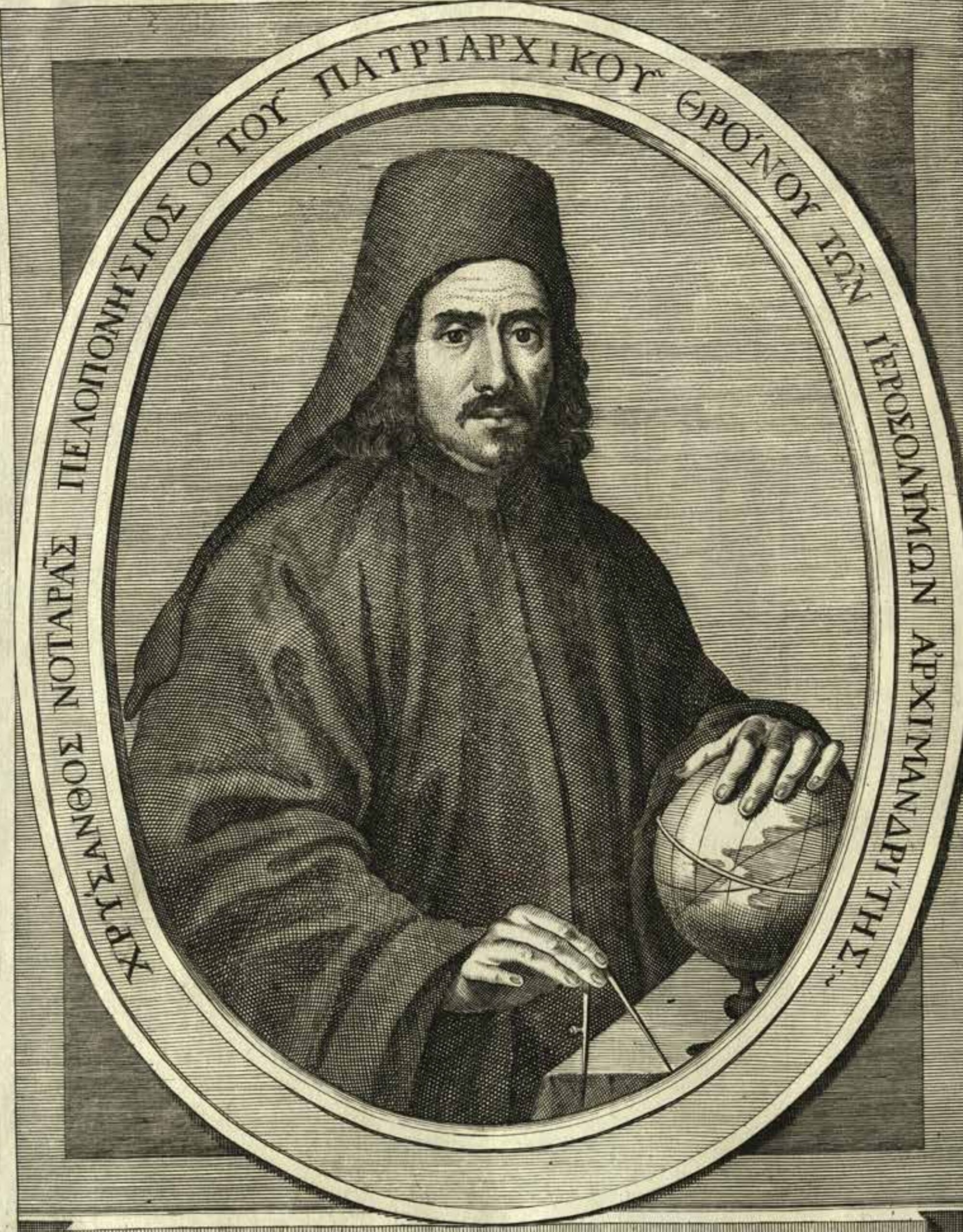
Patriarch Meletios Metaxakis

A Snapshot of Interwar Orthodoxy: The Ecumenical Patriarchate

1

Yesterday, we began publishing a series of excerpts from Matthew Spinka’s 1935 article on worldwide Orthodoxy in the years following World War I, originally published in the journal Church History.Spinka’s article is a succinct and quite balanced summary of the state of affairs in global Orthodoxy in a very chaotic period. From the standpoint of Orthodoxy in America, it helps a great deal to understand just what the Orthodox climate was like in this era. As I noted yesterday, this was precisely the time when national ethnic jurisdictions were being established in North America. A better understanding of the global Orthodox situation will help us to put the American situation in its proper context.

What follows is the section of Spinka’s article dealing with the Ecumenical Patriarchate.


To begin, then, with the group of Greek churches, we may first of all turn our attention to the patriarchate of Constantinople, the lineal descendant and heir of the Byzantine church. But this body, which had survived the fall of the Byzantine Empire and despite the prolonged misery and degradation suffered under the Turkish reign, had exercised ecclesiastical and civil sway over territories co-extensive with the Turkish Empire, scarcely escaped a total destruction when the new nationalist Turkey was set up by Mustapha Kemal Pasha. When the Kemalists refused to accept the Sevres treaty and in the end raised a standard of revolt even against the sultan himself, Greece, under the leadership of King Constantine, ventured to attack the embattled hosts of the Turkish nationalists, a megalomaniacal venture which ended in a complete fiasco and cost the king his throne. The Greeks of the patriarchate remained loyal to Venizelos, thus antagonizing King Constantine; but despite this, they could not altogether refrain from following with patriotic pride or solicitude the fortunes of the Greek armies in Anatolia. Although Turkish subjects, they held commemorative services for the fallen, collected contributions for the war cause, and openly espoused the Hellenic “grand idea” of restoration of the Byzantine Empire.

Patriarch Meletios Metaxakis

It was under these conditions that the patriarchal see, vacant since 1918, was filled in 1921 by the election of the former Archbishop of Athens, Meletios. But the new patriarch’s enthusiastic espousal of the Hellenic cause made his tenure of the patriarchal see quite impossible. After the debacle of the Greek armies in the disastrous battle of the Sakaria River in the autumn of 1922, Meletios’ situation became desperate. The victorious Turkish nationalists openly announced their intention of wholly abusing the ecumenical patriarchate, regarding it as a perpetual source of anti-Turkish agitation. At the Lausanne Conference in 1923, the British commissioner, Sir Horace Rumbold, had to exert all his diplomatic ingenuity to forestall the radical measure insisted upon by the Turks. In the end, the patriarchate was permitted to exist, but it was shorn of all the civil jurisdiction over the Greek community which it had exercised for the past four centuries, and its functions were restricted to purely ecclesiastical ones. But in the matter of Patriarch Meletios’ deposition, the Turkish delegation remained adamant. He had to go.

Beside these measures, the Lausanne Conference adopted a plan of forcible exchange of population between Turkey and Greece, from which none but the Greeks established in Constantinople and its immediate environs prior to October, 1918, were exempted. The exodus of the Christian population of Asia Minor in the wake of the defeated Greek armies as well as the forcible expulsion of the rest, in accordance with the population exchange measure, had a disastrous effect upon the ecumenical patriarchate; in fact it all but ruined it. Only four metropolitanates out of forty-one survived the measure, some of the ruined sees having been among the most ancient and celebrated, with traditions which went back to the times of Paul. The Orthodox population of Asia Minor and Thrace, which in 1914 had numbered 1,800,000, was reduced to between thirteen and twenty per cent (the church claiming 350,000, but the official Turkish count reporting 250,000). Even this number is continually dwindling, for the Greek population is moving out of Turkey. Thus the numerical strength of the ecumenical patriarchate has been so radically reduced that it now ranks among the smallest of the Orthodox communions.

The present patriarch, Photius II, who was elected in 1930, was able to establish a precarious modus vivendi with the Turkish government. Just because of the great diminution of the power and extent of the ecumenical patriarchate within Turkey, it strives with great earnestness to preserve for itself the traditional privileges inherent in its honorific status as the “primus inter pares” among the Eastern Orthodox communions. In this endeavor it has often exceeded its authority in acting as judge and arbiter in the various disputes or administrative changes which have taken place among the different Orthodox communions, over which, strictly speaking, it has no jurisdiction.


Next, we’ll publish Spinka’s discussion of the other “Greek churches” — the Church of Greece and the Church of Cyprus.

A Snapshot of Interwar Orthodoxy: Introduction

0

In the June 1935 issue of the journal Church History, Matthew Spinka of the Chicago Theological Seminary published a 20-page article entitled, “Post-War Eastern Orthodox Churches.” The “War” he was referring to was, of course, World War I, and his article offers a succinct and quite balanced snapshot of the state of the world’s various Orthodox Churches in the years immediately following the war. I’m going to publish a series of excerpts of the article, beginning with the Spinka’s introductory comments.

Of course, this period — 1918 to the mid-1930s — was the era in which the various ethnic jurisdictions were firmly established in America. It’s a critical period in American Orthodox history, and it helps to understand the global context of that time.


From the downfall of the Byzantine Empire in 1453, the center of Eastern Orthodoxy slowly shifted from the Byzantine church, which suffered a tragic deterioration under the rule of the Turk, to the Empire of the Russian Orthodox tsars. Before the World War, the predominant role in numbers and resources as well as in spiritual and theological leadership was played by the church of Russia. Out of a total of some 144 millions of Orthodox adherents, the Russian membership comprised about 110 millions. By reason of its wealth and of the generous financial aid which it freely dispensed to the rest of the needy Orthodox communions, Russia exercised a far reaching, in some instances controlling, influence among them. Moreover, Russian Slavophil[e] thought has affected all Orthodox communions and has exercised a dominant theological influence over them.

The World War has produced another radical regrouping of the separate units of the Orthodox churches, and has once more shifted the center of gravity, this time from Russia to the Balkan peninsula. In accordance with an unwritten law in which the Erastian principle, so characteristic of Eastern churches, finds its expression, each independent political unit is accorded an autonomous or autocephalous ecclesiastical status. Accordingly, the creation of new states or expansion of the already existing ones has resulted in the organization of nine new Orthodox communions, while some formerly independent organizations have lost their separate existence and have been incorporated into larger national bodies. The net result of the various changes has been that the total number of Orthodox communions has considerably increased: there are at present twenty-one autocephalous or autonomous Orthodox bodies, instead of the fifteen which existed before the War.

In order to divide the subject in some logical fashion, one might conveniently group the Greek churches together, for they in reality form a self-conscious whole; the so-called Melkite group may be treated separately [ed. note: here he refers to the Churches of Alexandria, Antioch, and Jerusalem, rather than the Melkite Catholics who are in communion with Rome], the Russian church, and its successional ecclesiastical groups, form a separate group by reason of their historical sequence and territorial propinquity. The Balkan churches likewise form a convenient grouping.


Next time, I’ll publish Spinka’s discussion of what he calls the “Greek churches” — that is, the Ecumenical Patriarchate, the Church of Greece, and the Church of Cyprus.

Orthodoxy in America – an Interconnected and Shared History

0

Presentation given by Nicholas Chapman of Herkimer NY at the OCL 25th Anniversary Conference, Washington DC on Oct 27, 2012. (Original here)

Before I begin let me thank George Matsoukas and the Board of OCL for the invitation to present today. I would also like to acknowledge Matthew Namee whose place I have filled due to his current work and other commitments. His constant support over the past three years has stimulated, informed and helped to sustain my own research.

Introduction

Your Grace’s, Reverend Fathers and Mothers, Brothers and Sisters: The study of the history of Orthodoxy in America is still at a very early stage with a substantial amount of primary documentary materials as yet unread or undiscovered, in both English and other languages. The realms of archeology and oral history are even more virgin fields. The present circumstances of the Church in America make it increasingly important to get to grips with these sources. I believe a more complete understanding of our common heritage will help to forge a single present identity, that in turn can provide a foundation for wider efforts to bring an end to the canonical irregularities of Church governance that have arisen in North America and elsewhere in the past one hundred or more years.

The work that I have done to date suggests that we have a more interconnected and shared history than is commonly realized and that an awareness of this can help to foster a clearer single Orthodox identity. Such an identity would transcend the narrow categories of modern nationalistic philosophies that have impacted the life and mentally of all Orthodox churches to differing degrees since at least the early 19th century. In the short time available I will present five themes of American Orthodox history. Dr Walsh and Dr Yiannis will then develop some of these in more detail, after which there will be opportunity to flesh them out further in open discussion.

1. The Genesis of Orthodoxy in the Americas

There has been some presence of Orthodox peoples in the Americas from the beginnings of European colonization following Columbus’s first landing in 1492. Early Spanish historians place Greeks in Santa Domingo by 1500 AD and fighting with the conquistador Cortes in the capture of what is now Mexico City in 1521. The first person identified by Spanish records as a Greek Christian is Doroteo Teodora, a member of a Spanish exploration party on the Florida coast in 1528. The early French explorer Samuel de Champlain records two Slavonians in his party exploring what is now the coast of Maine at the end of the 16th century and he has a Greek as an interpreter with the native peoples of the St Lawrence Valley in the 1620’s. Merchants, many of whom were associated with the London based companies trading with Russia and the Ottoman near east, began the first permanent English settlement at Jamestown. These settlers compared Jamestown to Constantinople and referred to the native Americans as infidels or Turks. Two of the Directors of the Virginia Company published works that include references and substantial sections on Orthodox faith and practice. These interactions between Virginia, Muscovy and the Levant continued throughout the 17th century, fueled by economic and religious considerations. Thus the Royal Governor Sir William Berkeley proposes importing workers from the Greek Morea in 1675, whilst his successor Lord Culpepper advocates for sending a delegation of Virginia planters to the Patriarch of Moscow in 1681. Ultimately these connections between Virginia and centers of Orthodox life may be seen to culminate in the conversion to Orthodoxy of Colonel Philip Ludwell III of Virginia who was received into the Russian church in London in 1738, after travelling there for this purpose. To borrow a phrase from the writer of the epistle to the Hebrews, “time does not permit me to tell” of many other early events prior to the transfer of Alaska to the United States in 1867. Suffice it to say that by 1865 the Orthodox presence in what is now the lower 48 had become substantial enough for St Metropolitan Philaret of Moscow to propose the creation of in America, a Russian Orthodox Church. (It should be noted that at no time does Philaret include Alaska within his definition of America.)

Metropolitan Philaret notes the possible presence of as many as thirteen thousand Orthodox believers in America but suggests the primary motivation for establishing an ecclesiastical structure is American spiritual leaders who first showed the desire to have an Orthodox Church in America…. This is a reference to approaches to Moscow, from the Episcopalian diocese of California, whose Bishop in San Francisco reported the presence of some four hundred persons belonging to the Greek Church who, while they recognized his authority up to a certain point, yet refused to receive communion from his hands. Such developments in California and elsewhere led to an Episcopalian delegation visiting Moscow in 1864, headed by the Episcopalian Bishop of New York.

By 1866 a decision had been made to construct an Orthodox temple in New York City. A major fundraising event for this was held in Moscow in 1866 in conjunction with the visit to Russia of Gustavus Vasa Fox, the assistant secretary of the US navy. At that banquet ( T)he attorney to the Synodal board of Moscow, spoke of the proposal to erect a Russian church in New York City, for which …., a subscription in America had produced already seven thousand dollars…. Mr. Curtin expressed in the name of General Clay… the hope that the Russians would soon find, in coming to New York, an orthodox church worthy of the Greek religion. Mr Clay, he said, would subscribe 500 rubles, and Mr Fox as much; and he believed that private subscriptions in New York would yet yield twenty five thousand more. He was certain, too, that twenty four thousand rubles, additional to the thousand given by Messrs.’ Clay and Fox, would be raised in Russia. These were substantial amounts of money, possibly millions in current dollars. I do not know what became of these monies: perhaps we are looking at the first question of financial accountability in American Orthodox history!

2. Orthodoxy as an aspect of American History

Dr. Walsh will develop this theme so I will only touch upon it briefly. Suffice it to say that the history of Orthodoxy in North America should first be studied within the wider context of the exploration and subjugation of the new world by the European powers and how their geopolitics were fueled by economic and religious considerations. These determine their interactions from the fall of Constantinople in 1453 through to the Bolshevik revolution in Russia in 1917 and beyond. The impact on the emergence of Orthodox life in the United States of American independence, the Civil War, the concept of Manifest Destiny, the Cold war, changing immigration policy etc. must be appraised. The internal situation of the Orthodox churches in the near East, Russia and the Balkans must be understood as it impinged upon their activities or lack of same in the United States. We also need to be aware of the growth of the Church in other parts of the West in the same period that interconnect with and often predate developments here.

3. The Crucial Role of Ordinary Believers

Until now the history of Orthodox mission in North America has tended to focus almost exclusively on the clergy and monastics that arrived in Kodiak, Alaska in 1794. There is almost no recognition of the work that had already taken place before their arrival whereby devout but un-ordained Orthodox believers had brought Orthodoxy to the native peoples. One such person was Osip Prianishnikov, a merchant from Tobolsk in Siberia who by 1791 was fluent in the Kodiak, Aleut and Chugach Yupik languages. Combining this with his knowledge of church services he was able to lead the native peoples in morning services, hours and evening services, even before the arrival of the missionary fathers. After their arrival he became their translator and continued to fulfill the ministry of a reader.

Prianishnikov was not the only Russian to have taught the Alaskans prayer. John Ledyard of Connecticut, the great early explorer records in his 1778 visit to Alaska that the Russians assembled the Indians in a very silent manner, and said prayers after the manner of the Greek Church….I could not but observe with what particular satisfaction the Indians performed their devoirs to God, through the medium of their little crucifixes, and with what pleasure they went through the multitude of ceremonies attendant on that sort of worship. This was 16 years before St Herman and his fellow laborers arrived!

In a similar vein, but very different cultural context we have the aforementioned Colonel Philip Ludwell III who appears to have created an Orthodox prayer house in Williamsburg, Virginia in the 1740’s and 50’s and was able to commune from the presanctified gifts that the Holy Synod of Russia had blessed him to take from London to Virginia in 1739. During this period Ludwell would also translate the liturgies of St John Chrysostom and St Basil as well as the Orthodox Catechism of Metropolitan Peter Moghila of Kiev. The latter was published in London in 1762. He is an example in his life of Orthodox piety and philanthropy and evidence points to some of his descendants continuing in the Faith until very recent times.

Some of these descendants quite probably played a part in the formation of an Orthodox prayer house in Galveston, Texas in the 1850’s. Galveston had also been the home of George Fisher, a Serbian Orthodox seminary drop out who arrived in America in 1814. He ended his life in San Francisco in 1873, having served in the 1860’s as the Greek consul and been one of the founders of the Holy Trinity parish in that city.

So the creation of Orthodox churches in America was much more the fruit of the devotion and labor of pious believers both clergy and lay, than the result of some kind of hierarchical master plan formulated in Constantinople, Moscow or anywhere else!

4. Orthodoxy in America and the emergence of Evangelicalism

Time once again does not permit me to develop this theme, but I strongly believe there was a connection between early Orthodoxy in America and the Moravian, Methodist and Episcopal churches. The more contemporary phenomena of the Evangelical Orthodox Church actually has much deeper historical roots. The Moravians from their mid 15th century beginnings in the Czech lands until at least their arrival in America in the mid 18th century perceived themselves as an orphaned Eastern church. According to the New York Gazette of Jan 21, 1751, in petitioning the British authorities for permission to settle in America they presented a public writing from the chief Patriarch of the Greek Church, in 1740, acknowledging them to be descended from the Eastern Church.

In a similar vein the early Methodists looked east for ecclesiastical legitimacy. One of the reasons the young John Wesley was expelled from Savannah was for celebrating the liturgy of St John Chrysostom when it was not an authorized rite of the Church of England. A later 18th century American source says that Wesley, with the encouragement of his Moravian friends, travelled to Constantinople in the 1780’s and was ordained a Bishop by the Patriarch.

At the same time, the then dominant Anglican Church in America looked to the Church of Russia as its model in its achievement of its independence from Constantinople, when considering its own distinctiveness from the Church of England. Following independence from Britain the American Episcopal Church obtained its first resident Bishop in the person of Samuel Seabury of Connecticut. He was ordained Bishop in Scotland by Bishops of the non- juror tradition whose early 18th century antecedents had actively negotiated for acceptance as an Orthodox Church. Seabury brought to America forms of liturgical office based on the Scottish Book of Common Prayer. His Communion Office, published in New London in 1786, contains an explicit epiclesis or prayer for the descent of the Holy Spirit on the gifts after the words of institution, following the Orthodox tradition. This tendency of the Episcopal Church in America towards Orthodoxy came to a head in the 1860’s with the formation of the Russo-Greek Committee that actively sought union with the Orthodox East.

5. Orthodoxy, Democracy and the Emergence of Nationalism

In a major speech before the General Assembly of the State of Connecticut in 1783, the seventh President of Yale, Dr Ezra Stiles, suggests that the Orthodox Church may offer a model of religious tolerance for the nascent American republic. He said:
The United States will embosom all the religious sects or denominations in Christendom… (He then enumerates all the Christian churches he knows to be present in America, including a Greek church.) All religious denominations will be independent of one another, as much as the Greek and Armenian patriarchates in the East; and having, on account of religion, no superiority as to secular powers and civil immunities, they will cohabit together in harmony, and, I hope, with a most generous catholicism and benevolence.

A few years later in Paris, France, the Orthodox believer and first naturalized US citizen, John Paradise introduced Thomas Jefferson to Adamantios Koreas, one of the fathers of the modern Greek nation and language. After their meeting Jefferson and Koreas corresponded for many years regarding the understanding of liberty, democracy etc. Koreas was also a graduate of the Orthodox founded Evangelical Greek School in Smyrna where he studied alongside his contemporary, the future St Nikodemos of the Holy Mountain. Perhaps these two could be said to typify two polarities of the contemporary Greek church in America and I will leave it to the far more capable hands of Dr Yiannis to develop these points further.

Another renowned early American philosopher was Benjamin Franklin who corresponded frequently with the early Russian enlightenment thinker and Orthodox churchman Mikhail Lomonosov. It was Franklin who arranged for John Paradise to gain American citizenship and the latter in turn corresponded with Eugenios Voulgaris, the Corfu born Bulgarian who went on to become the Archbishop of Cherson in the Russian church and is remembered with the epithet “Teacher of the Nations.” Thus the Orthodox enlightenment in Greece and Russia is seen to interact with some of the founding fathers of the American republic.

Conclusion

Our Orthodox past is not isolated from the mainstream of American history but interwoven with it. Within this past we have both saints and philosophers. The time has come to begin building upon the foundation they have laid through their prayers, writings and actions. This must be done in a spirit of charity and mutual respect whilst understanding our God given calling to pass on the faith which was once for all delivered to the saints. (Jude 1:3)

Early stages of the Bulgarian schism from Constantinople

0

We just finished running a series of six articles on the 1872 Council of Constantinople, published contemporaneously in the Methodist Quarterly Review. The following article is from about a decade earlier, and describes the early stages of the Bulgarian split from the Patriarchate of Constantinople. This piece is from an American journal called The Independent, March 28, 1861:


Separation of the Bulgarians from the Greek Church – The Hopes of the Protestant and the Roman Missionaries – Establishment of a United Bulgarian Church.

An actual separation from the Greek Church has already been commenced on the part of the Bulgarians, a tribe which counts a population of about four millions, living mostly  in the province of Bulgaria Proper and in the northern part of the provinces of Macedonia and Thrace, and in which of late a special interest has been awakened in America by reports of the missionaries of the American Board and of the Methodist Episcopal Church, who have been laboring among them, if not with great actual results, at least with good prospects for the future. The Bulgarians have been engaged for several years in a struggle against the heads of the Greek Church, for the recovery of their national ecclesiastical rights, which only needs to be more generally known in order to enlist the liveliest sympathy of all friends of religious liberty.

The Bulgarian Church was free from any dependence on the Patriarch of Constantinople up to the year 1767, when, by the intrigues of the then Patriarch Samuel, backed by the Greek archons, the Turkish Government was induced to abolish the Bulgarian archiepiscopal see of Ochrida [sic], and to place all the Bulgarian people under his jurisdiction. From that time, the Greek prelates have imposed on the Bulgarians the same odious yoke which the Church of Rome has so successfully laid on all the churches of Western Europe. They have introduced into their churches the use of a language which the people do not understand, and have sent them bishops who have always shown themselves hostile to its cultivation in church and school.

Since the issue of the Hatti-Houmayoun in 1856, the Bulgarians have urgently demanded the restoration of their ancient rights. There seems to be no difference of opinion among them on this point; bishops, priests, and laity appear to be perfectly unanimous, and the national movement, in this respect, is as strong and sound as the one which has been recently so successful in Italy. They demand the erection of an independent Bulgarian patriarchal see, and the appointment of only Bulgarian bishops, and in support of their demand they instance the fact that the Greeks themselves have four patriarchal sees, viz., those of Constantinople, Alexandria, Jerusalem, and Antioch, and one archiepiscopal see, (that of Cyprus,) all independent of each other. The justness of these claims becomes the more apparent, if it is remembered that the Bulgarians are by far more numerous in European Turkey than the Greeks.

Nevertheless, the higher Greek clergy have made to such reasonable demands the most obstinate and defying resistance. Not only did they turn a deaf ear to all the appeals for the restoration of the Bulgarian language at Divine service, but when the new ecclesiastical constitution was being framed, they treated the Bulgarians with utter neglect, and almost ignored their existence. The Bulgarians, therefore, very properly refused to be represented in the assembly electing a new Patriarch of Constantinople, either by laymen or ecclesiastics, saying that it was a matter in which they had no concern, as they would no longer acknowledge the Patriarch as their spiritual head.

The Turkish Government has unfortunately sided in this question with the Greek clergy, and not with the Bulgarians. It has believed the insinuation that the Bulgarian movement has been set on foot by agents of the Russian Government, and that the latter was using the ecclesiastical agitation as a means for effecting a closer union of all the Sclavonic [sic] tribes of Russia among themselves, and with Russia. When thus all the attempts of the Bulgarian churches had failed, a part of the people have at length listened to the cunning advice which the Roman Catholic missionaries, aided by French diplomacy, have given them. The Roman priests suggested to the leading men among the Bulgarians that, by only acknowledging the Pope as the Supreme Bishop of the Church, they might obtain their independence of the Patriarch of Constantinople, or constitute themselves after the example of the United Greeks, United Armenians, United Copts, the Chaldeans (i.e., United Nestorians,) and the Catholic Syrians, (United Jacobites,) as an Independent National Bulgarian Church, and thus be at once put in possession of all their ancient rights, including the use of the Bulgarian language at divine service. The leaders of the movement seem, at first, to have used this expedient as a means of forcing the Greek clergy into compliance with their wishes; and a memorial, holding out the probability of a union of the entire people with Rome, if the national wishes were not gratified, was very numerously signed. It was on the strength of this memorial that, a few months ago, the Roman Catholic papers of Europe and this country prematurely announced that the union had been actually consummated.

This, as yet, is far from being the case. But a beginning has been made. A correspondence from Constantinople in the Presse of Paris, gives the following description of it: “It was on Sunday morning, (Dec. 30th,) immediately preceding high mass, that the formal act of abjuration was received. The national deputation numbered 200, and consisted of two archimandrites, three priests, and twenty esness, (chief magistrates,) who bore an address containing signatures, and were supported by a body of civic officers. They were received by Monsignor Brunoni on the part of the Pope, and Monsignor Hassoun, the Primate of the United Armenians. The following transaction then took place between Mr. Ivanoff, the spokesman to the party, and Mgr. Brunoni: ‘We petition to be admitted into union with the Church of Rome.’ ‘Do ye yield to the dogma of the said  Church, that she alone is one and true?’ ‘We so believe it.’ ‘Are ye prepared to sign this declaration as an act of your faith?’ ‘We are so prepared, and we ask you to present the same as our united deed to the head of the Church — the Pope, at Rome. We would also add that we wish to retain our liturgy.’ Hereupon the Bulgarian deputies annexed their names to an official document — the clergy taking precedency in the signing. After this, the Archimandrite Macariog stood forth and pronounced an address in the Bulgarian tongue, which was full of fire. The oath of the Gospels was next received, and then the Armenian Archbishop pontificated. On the conclusion of the high mass the kiss of brotherhood was exchanged between the members of both bodies, clerical and lay, beginning with the Primate as he descended from the altar.”

The Monde of Paris reports some additional details. According to its correspondent, the Bulgarians of Constantinople on the same day issued a manifesto to the entire nation, announcing that December 30th would henceforth be celebrated as the greatest national festival. The Grand Vizier is said to have declared on the next day to a Bulgarian deputation that the Government would lay no obstacles to this new movement. The United Bulgarians have purchased a building which is to serve as a school and the dwelling of their future Patriarch.

The Roman Catholic papers are of course again very sanguine, and expect that the majority of the nation will speedily join the union. Other reports, however, ill accord with such expectations. It is maintained that all the chief Bulgarians in Constantinople, including several bishops and priests, have published a protest against the seceders, declaring them to be men of no influence or character, and unworthy to lead the Bulgarian nation. They have, moreover, appealed to the Constantinople branch of the Evangelical Alliance for aiding them in securing the recognition of their ecclesiastical independence, and the Evangelical Alliance have called the attention of the Protestant Embassadors [sic] at Constantinople, viz., those of Great Britain, United States, Prussia, Denmark, Holland, and Sweden, to the interesting movement, and begged them to exert their friendly influence in favor of the just demands of the Bulgarians. The movement thus has entered upon a new stage, and greatly increases in interest and importance.


Again, this is from 1861 — more than a decade before the Council of Constantinople. Some key takeaways, for me:

  • I don’t know a lot about Bulgarian Church history, but if in fact the Bulgarians more or less governed themselves until the 1760s, and only after that were subjected to ecclesiastical control by the Greeks, then it makes a lot of sense that they would resent that control.
  • It’s particularly notable that the Bulgarians and other Slavs outnumbered the Greeks in the European part of Turkey. Yes, there were a lot of Greeks in Asia Minor, but from the Bulgarians’ perspective, Constantinople was an elite minority that was imposing its own Greek language and practices in a region that was mostly Slavic.
  • The Bulgarians were hardly alone in their predicament. Over in Syria, the Arab Orthodox were governed by a Greek hierarchy — this was referred to as the “Greek captivity” of Antioch. Same thing in Jerusalem. I don’t know about the ethnic makeup of the Patriarchate of Alexandria (I suspect it was largely Greek), but still, that’s two ancient Arab patriarchates that were governed by, essentially, puppets of Constantinople. And St. Raphael, writing against this a generation later, got kicked out of the Patriarchate of Antioch for his views.

Soon, I’ll try to write something to tie this whole Bulgaria / 1872 Council / phyletism thing together, at least preliminarily. To be honest, I’m still trying to make sense of it all myself, but it does seem to me that what the Bulgarians were guilty of wasn’t necessarily “phyletism” so much as it was the desire to have bishops from their own region, familiar to and with their own people, and friendly to their indigenous culture. Which, come to think of it, is exactly what most Orthodox people want, everywhere, and in every age. That’s not to justify what the Bulgarians did, which seems to be pretty clearly uncanonical. But there’s a difference between uncanonical, schismatic acts and heresy.

Oh, and one final thing: I’ll be a guest on Kevin Allen’s live call-in show “Ancient Faith Today,” on Ancient Faith Radio, this Sunday, December 9. The topic is “ethnocentrism,” and among other things, I’ll be talking about the 1872 Council that condemned phyletism. The show begins at 5 PM Pacific / 6 Mountain / 7 Central / 8 Eastern, and you can listen live at this link: http://ancientfaith.com/ancientfaithtoday. You can also download the show after it’s finished and listen later. If you do listen live, feel free to call in with a question. I’d love to hear from some of our readers!

Go to Top