Posts tagged Athenagoras Spyrou

Organs in Greek Orthodox churches

As regular readers of this website know, I am particularly interested in the “Americanization” of Orthodoxy in the New World — things like clergy appearance (beards vs. shaved faces, cassocks vs. collars), pews, church music (organs and mixed choirs), early converts, the use of English, and so forth. Today, I’m going to talk about organ music.

A disclaimer, up front: I am not an historian of church music. In fact, I’m not particularly musical at all — I don’t sing in the church choir, don’t play an instrument, and can’t even read musical notation. However, I’ve become reasonably adept at picking up a phone and asking questions, and by now, I’ve accumulated enough information to have a general sense of when organs became popular in Greek churches in America. Like so much of what I write, this article is merely an introduction to a topic, rather than the last word. Hopefully, five years from now, we’ll know a lot more than we do today about the history of Orthodox music in America.

There seem to be two general theories about how organs became popular in Greek-American churches. These theories aren’t mutually exclusive, and taken together, they sound pretty darned convincing. The first theory is similar to the pew theory — that early Greek communities bought existing Protestant or Roman Catholic church buildings, inherited the previous church’s organ, and adopted it for use in the Orthodox church. Of course, it has the same problem that the pew theory has — namely, that most early Greek churches were actually built by the Orthodox community, rather than purchased. Also, the chronology doesn’t fit: as we’ll see, organs were typically added to existing Orthodox churches, rather than introduced when a building was acquired.

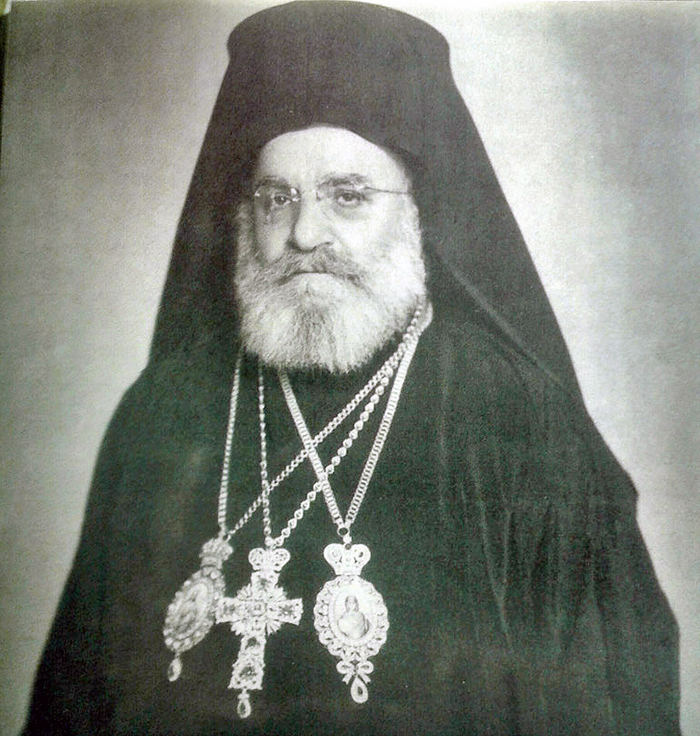
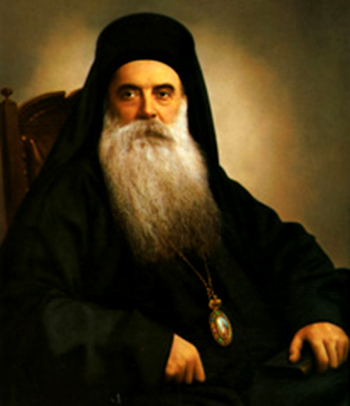
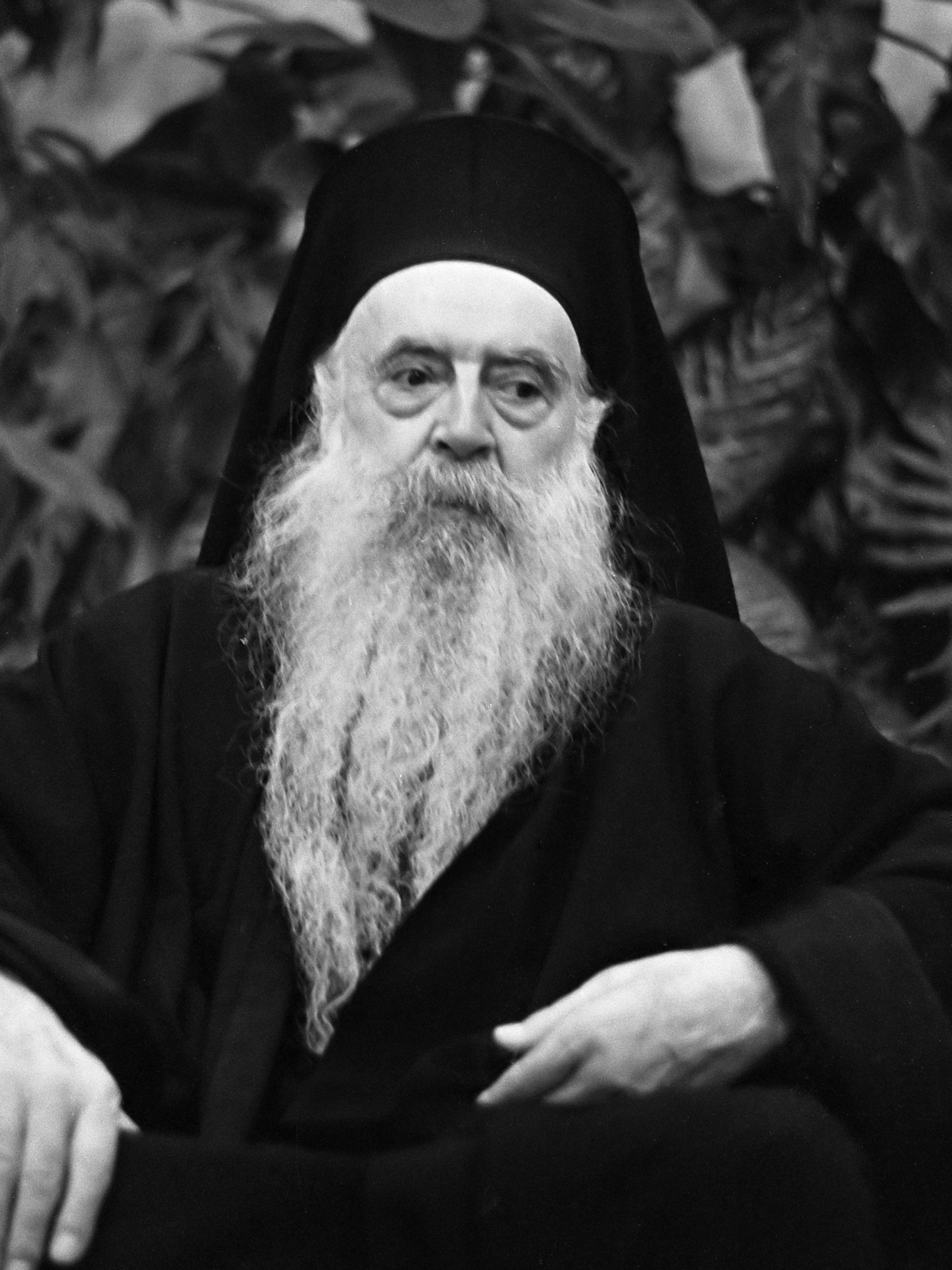
The other theory is that Archbishop Athenagoras Spyrou, who took over the Greek Archdiocese in 1931, was a big fan of organs and encouraged their use in America. In his 1976 book From Mars Hill to Manhattan, Fr. (later Bishop) George Papaioannou wrote about Abp Athenagoras and organ music:

Athenagoras was a lover of music. His ministry to the people of Corfu, who had and still retain the reputation of being the most musically inclined in Greece, encouraged him to introduce a revolutionary idea into the Orthodox worship. That was the use of the organ. His people enthusiastically endorsed the idea, but the Church hierarchy condemned it as a terrible unorthodox innovation. From the official publication, St. Spyridon, 1928, we are informed that a case was brought against him in court by members of the Holy Synod for having introduced into the church a musical instrument that was foreign to Orthodox tradition. Athenagoras refused to yield to the Synod’s pressure, claiming that a similar musical instrument had first been used by the Byzantines in the Church of St. Sophia. A renowned church historian and liturgical scholar, Fr. Constantine Callinikos, came to Athenagoras’ defense, advising him not to give in and continue his praiseworthy policy of upgrading the Orthodox worship. Athenagoras ignored the demands of his fellow hierarchs and apparently the case was dropped because the organ continued to be used in the services at the Cathedral of St. Spyridon. Today, St. Spyridon’s in Corfu remains the only church in Greece to include the organ in its services.

Be all that as it may, Abp Athenagoras did not introduce organs into Greek-American churches. Oh, he certainly contributed to the spread of organs, but well before his arrival in 1931, Greek churches in the United States had begun to adopt the instrument.

An example of the melodeon, the type of organ used by Holy Trinity Greek Church in New Orleans as early as 1895

The first organ ever used in American Orthodoxy was actually in the very first Orthodox church in the contiguous US — Holy Trinity in New Orleans. I was rather shocked to learn that the New Orleans parish introduced an organ way back in the 19th century. This is from Elizabeth Cumings, “Where it is Summer in February,” in the journal Music, April 1895: “In the tiny Greek church far down the Esplanade is an American melodeon with a fine American squawk of its own.”

Here’s what Wikipedia has to say about the melodeon:

A melodeon (also known as a cabinet organ or American organ) is a type of 19th century reed organ with a foot-operated vacuum bellows, and a piano keyboard. It differs from the related harmonium, which uses a pressure bellows. Melodeons were manufactured in the United states from 1846 until the Civil War era. While it was sometimes used as a substitute for the pipe organ in small churches, it was primarily used in domestic settings.

It seems like the New Orleans parish introduced this organ sometime between 1885 and 1895. I’ve seen a few descriptions of church services there from the mid-1880s, and they seem to suggest (but don’t say outright) that the music was acappella chanting.

I don’t know why the New Orleans parish added an organ. It’s just a theory, but perhaps it had something to do with the priest, Fr. Misael Karydis. We know that he was obsessed with building a flying machine, and if he fancied himself an inventor and tinkerer, he may have been intrigued by the innerworkings of an organ. I’m not sure whether the New Orleans church kept using the organ after Karydis died in 1901, but if they did, they would have been an anomaly. Excepting New Orleans, I have yet to find a Greek church with an organ prior to the 1920s.

St. Sophia’s in Washington, DC didn’t have an organ in 1908, when the Washington Herald (11/1/1908) said, “Not a note of instrumental music accompanies them, for in the Greek Church it is forbidden.” But by the early 1920s, the parish had added an organ. From the Washington Post (4/8/1923): ”On this Greek Easter Day the choir of St. Sophia’s, L and Eighth Streets, N.W., is of unusual interest, there being only five Greek Orthodox churches in the world having mixed choirs and an organ.” (Earlier this year, I spoke with the current priest of St. Sophia’s, Fr. John Tavlarides. Fr. John has been there since the 1950s, and he told me that he actually stopped using the organ in 1967. It is now only used for occasional wedding processions.)

The Washington church had an influence on its Baltimore neighbor, Annunciation. From Nicholas Prevas’ House of God… Gateway to Heaven:

By the mid-1920’s, choirs and organs accompanied the Divine Liturgies – a departure from customs in the homeland where this type of music was considered a ‘western innovation’ and not typically used. Historically, up to this point, only the psaltes (cantors) sang the responses to the priest during religious services. In April 1923, however, records show $50 was paid to host a Greek church choir from Washington, D.C. Their performance must have been impressive.

Soon after, the spring 1923 general assembly approved the ‘installation of European music’ with organ accompaniment and hired Spyridon Safridis as the first music director. Within a few months, a small choir was singing liturgical hymns for the first time in the church on Homewood Avenue. The community was slowly adapting to American culture though not without objections. The following year, after many debates, parishioners voted at the general assembly meeting on March 9, 1924 as to whether or not this type of music should be kept in the church. The music remained and by the mid-1930’s a vibrant choir of voices complemented liturgical services at Annunciation.

We’ll discuss the question of mixed choirs in a future article. For now, it’s enough to note that organs were beginning to grow in popularity in the mid-1920s. The innovative priest Fr. Mark Petrakis, who had introduced pews in St. Louis, oversaw the addition of pews, an organ, and a mixed choir to Ss. Constantine and Helen Church in Chicago. From the parish history: “In 1927, George Dimopoulos, a talented chanter and choirmaster, organized a choir that included women. The choir was accompanied by an organ. Pews and an organ represented a departure from traditional Greek churches and a movement towards Americanization.”

Holy Trinity Greek Church in San Francisco had added an organ by at least 1925. When Abp Athengoras arrived in 1931, the majority of Greek churches still didn’t have organs, but the instruments were not totally unheard of. After 1931, and throughout Athenagoras’ tenure as archbishop, many more Greek churches introduced organs. This was certainly with the encouragement of Athenagoras, but he was not the originator of the practice.

I don’t have a clear answer to the question, “Why were organs introduced into Greek churches?” However, it seems like the parishes that introduced organs did so with the conscious desire to “Americanize.”

Gov. Thomas Dewey of New York signing the bill creating the Federation

Federated Orthodox Greek Catholic Primary Jurisdictions in America

Gov. Thomas Dewey of New York signs the bill creating the Federation

Gov. Thomas Dewey of New York signs the bill creating the Federation


In conjunction with the recent podcast concerning the Federated Orthodox Greek Catholic Primary Jurisdictions in America, I thought I would publish a special, extra entry for Frontier Orthodoxy. I still plan on writing two additional columns this month. For this entry, however, I wish to provide a basic timeline of the Federated Orthodox Greek Catholic Primary Jurisdictions in America (FOGCPJA). This timeline may be useful when listening to the recent podcast on American Orthodox History over at Ancient Faith Radio.

I also wish to note that I failed to make an important connection within the interview itself. Near the beginning of the podcast, I mentioned the difficulties Fr. Boris Burden had with Metropolitan Platon. I meant to return to this later to note that the tense relationship between the two may have also been a factor that excluded the Metropolia from membership. It was not the only factor, as I mentioned the FOGCPJA’s requirement that each jurisdiction be under a Mother Church/Patriarch, but it may well have played a role. Metropolitan Benjamin (Moscow Patriarchate) relied quite heavily on Fr. Boris Burden.

I should further note that Phillies’s membership in the Masons may not have been as ill received since Archbishop Athenagoras and Metropolitan Antony were also Masons. Although Masonic membership would have likely concerned Fr. Boris Burden, it is possible that Metropolitan Benjamin showed some restraint in this regard.

Timeline

Fall of 1942 (September or October): The Selective Service attempted to draft Fr. John Gelsinger. When that happened, Fr. John Gelsinger, and his father, Fr. Michael Gelsinger, contacted George E. Phillies, a family friend and local attorney in Buffalo, New York.

October 9, 1942: Phillies appealed to the federal authorities, via General Lewis B. Hershey, having gone before the local and state selective service boards. The response from Washington D.C. was that they needed to see proof of an organized Orthodox Church in America. In response to this, the hierarchs of the four primary jurisdictions met.

Fr. Michael Gelsinger (New York Syrian) and Fr. Boris Burden (Moscow Patriarchate) were the instrumental people behind the movement. Fr. Michael received commitments from Archbishop Antony Bashir and Archbishop Athenagoras and Fr. Boris Burden convinced Metropolitan Benjamin and the Bishop Dionisije, the Serbian bishop.

At the subsequent hearing at the Pentagon, Bishop Germanos, an auxiliary bishop of Constantinople, was the only testifying witness. U.S. Senator James Mead (NY, hometown of Buffalo) and Representative James Wadsworth (NY) also appealed on behalf of the Orthodox Church.

December 8, 1942: Major Simon P. Dunkle signed the paperwork instructing the selective service of New York to recognize Fr. John Gelsinger as a priest and providing Orthodox the Opportunity to enlist as Orthodox. Orthodox priests were granted the opportunity to serve as chaplains.

Phillies hailed this as the first time the four primary jurisdictions had provided a united front in America. He quickly built upon this momentum to pursue another venture: amending New York state law for religious corporations. He did this because his reading of the laws of New York convinced him that it was possible the Roman Catholic Church might claim sole legal right to the terms Greek, Catholic, and Orthodox. He also had found no legal incorporation of an Orthodox Church (jurisdiction) that would mitigate this. Individual parishes had incorporated, but the only large scale incorporations were Roman Catholic, such as the Greek Catholic incorporation in Pennsylvania.

February 10, 1943: George E. Phillies wrote to Gov. Dewey, recommending that the hierarchs visit and Dewey replies by stating they should do so after the signing.

February 19, 1943: Charles J. Tobin, secretary of the New York State Catholic Welfare Committee, wrote to State Senator Charles Burney, objecting to the proposed legislation, claiming that only Rome could use the terms Catholic or Greek Catholic.

February 25, 1943: Rev. Philemon Tarnavsky (chancellor of the diocese of Philadelphia) also wrote to Gov. Dewey and agreed with Tobin. He objected to the use of the word Catholic, which he said was linked to the Holy See in Rome. He even noted that the word Orthodox is also used by Greek Catholics, questioning whether Orthodox should use it as a self designation. Rev. Turnavsky was a Greek Catholic himself.

March 5, 1943: Episcopal diocese of Western New York wrote to support the bill (Rt. Rev. Bp Cameron J. Davis)

March 8, 1943: Phillies asked “Charlie” [Burney] for a moving picture crew and claimed there were five million Orthodox in America.

March 10, 1943: Tobin wrote to consul of the governor to object again. He included the assessment of Monsignor Tarnavsky.

March 15, 1943: Memorandum by Phillies stated the purpose(s), excluded the Metropolia, responded to Roman Catholic critics, and noted that the FOGCPJA was set up to parallel the federal/state division in the United States of America.

March 25, 1943: Governor Thomas Dewey signed the bill.

August 2, 1943: The Buffalo Evening News called Phillies the “lay head,” noted that he had dual membership in the GOC and the PEC, and was a Mason.

August 8, 1943: Concelebration.

August 22, 1943: Divine Liturgy in Kleinhans Hall (GOC too small). Archbishop Athenagoras presided, with Metropolitan Antony and Bishop Bogdan assisting (Ukrainian). By this time, the Ukrainians and Carpatho-Russians who were under Constantinople were participating in the FOGCPJA. A small internal disagreement ensued, because Frs. Boris Burden and Michael Gelsinger thought the service should have been in a larger non-Orthodox church building rather than one that was strictly secular.

Bishop Dionisije was bothered by the fact that the Carpatho-Russians and Ukrainians were under Constantinople and had other unnamed concerns. He soon quit participating.

October 3, 1943: At a meeting in Bayonne, NJ, the officers of the FOGCPJA passed the “Bayonne Resolution.” This resolution stated all officers of the Federation must be Orthodox, with no sacramental participation in non-Orthodox churches. Another problem that arose was that the Federal Council of Churches of Christ in America had received a letter (likely sent by Phillies) asking for membership.

October 7, 1943: Articles signed by the bishops and the Federation is legally incorporated. Archbishop Athenagoras had been chosen as the presiding hierarch. Fr. Peter Horton-Billard was chosen as secretary, replacing Fr. Boris Burden. Phillies remained the elected chancellor.

October 8, 1943: Burden called the elections “conditional.”

November 1, 1943: Russians threatened to leave over concerns with Phillies.

December 18, 1943: Marriage served jointly by Fr. E Wolkodoff, a Metropolia priest, and PE priest J. Coseby. Metropolitan Benjamin suspended the priest. At this point, the Federation was suspended.

February 2, 1944: Meeting: 1) no “lay head” 2) hierarchs are the leaders 3) Orthodox cannot be communicants elsewhere 4) “chancellor” means “legal advisor” and nothing more. Metropolitan Benjamin also said he had the support of Patriarch Sergius.

Around this same time, Patriarch Sergius wrote to Metropolitan Benjamin, offering permission to be active in the Federation, but Metropolitan Benjamin and Fr. Boris Burden were preparing to renege on the FOGCPJA.

Early October 1944: Metropolitan Benjamin said Phillies was no longer the chancellor. Phillies claimed he was.

November, 1944: Russians officially pulled out. By early 1945, the FOGCPJA was basically dead, though Metropolitan Antony Bashir kept it alive on paper.

Jerusalem’s Abp Panteleimon in America, 1924-1931

On October 19, I wrote about Archbishop Panteleimon of Neapolis (today’s Nablus), a bishop of the Jerusalem Patriarchate who was active in America in the 1920s. Since then, thanks to help from some readers, I’ve learned more about Abp Panteleimon’s later years in America. Here’s an update.

Abp Panteleimon seems to roughly parallel the Antiochian Metropolitan Germanos Shehadi. Both came to America for specific, temporary purposes (Germanos to raise money, Panteleimon to attend an Episcopal Church conference and also to raise money). Both were initially quite popular and well-received. Both developed a liking for America, and decided to stick around indefinitely. Both attracted some parishes to join them. Germanos was opposed by the Syro-Arab leadership under the Russian Mission, as well as the later leadership of the Antiochian Archdiocese. Panteleimon was opposed by the Greek Archdiocese and the representatives of the Ecumenical Patriarchate. And finally, both ultimately left the US in the early 1930s.

On March 12, 1924, Ecumenical Patriarch Gregory I wrote to Patriarch Damian of Jerusalem, explaining that Abp Panteleimon was meddling in the affairs of the Greek Archdiocese in America. Later that year, on September 5, the Greek Bishop Philaret of Chicago complained to his superior, Abp Alexander, that Panteleimon had come to Chicago and was “trespassing on canonical territory.” Shortly after this, in November, Panteleimon assisted the Antiochian Metropolitan Zacharias of Hauran in consecrating Abp Victor Abo-Assaly to be the first head of the new Antiochian Archdiocese.

For the rest of the 1920s, Panteleimon caused one problem after another for the leaders of the Greek Archdiocese, and successive Ecumenical Patriarchs asked Jerusalem to recall him. At one point, reference was made to a “dependency of the Jerusalem Patriarchate in New York”; this seems to refer to Panteleimon’s metochion (embassy church).

By the late ’20s, Abp Panteleimon was in Canada. On February 23, 1929, leaders of an Episcopal church in Montreal wrote to the Greek Abp Alexander:

We expect to proceed against the emissaries of Panteleimon at any moment, and hope to secure their punishment and deportation. Panteleimon himself will never again be permitted to enter this country, being now known to the Canadian Department of Immigration as an imposter and fraud one, who took part in securing large sums of money in Montreal by false pretenses.

The story wasn’t over, though. In 1930, both Abp Alexander and the Ecumenical Patriarch were trying to arrange for Panteleimon to leave North America. By November, the representatives of the Ecumenical Patriarchate seem to have hit upon a solution: Panteleimon could be assigned to the Jerusalem Patriarchate’s metochion in Constantinople, thus removing him from America and offering him a comfortable alternative. Finally, in January of 1931, the Patriarch of Jerusalem recalled Panteleimon.

But in March, Panteleimon was still in America, apparently requesting funds in order to leave the country. The new Greek Archbishop, Athenagoras, worked with the Greek Ambassador, and they came up with the money: 100 British pounds, a small price to pay to get rid of what by 1931 was quite a migrane for the Greek Archdiocese.

At long last, on August 14, Abp Athenagoras sent a telegram to the Greek Ambassador, informing him that Panteleimon “is immediately departing from the United States.” Panteleimon initially planned to go, not to the Jerusalem Patriarchate, but to the Patriarchate of Alexandria. This switch was said to be for “personal reasons.” (Interestingly enough, the Patriarch of Alexandria was none other than former Ecumenical Patriarch Meletios Metaxakis, the founder of the Greek Archdiocese of America.) In the end, Panteleimon doesn’t seem to have actually gone to Egypt; as best I can tell, he returned to the Jerusalem Patriarchate. I can’t find any traces of him after 1931.

Most of this information comes from Paul Manolis’ three-volume collection of primary sources, The History of the Greek Church in America in Acts and Documents. Unfortunately, most of the documents are in Greek, which I can’t read, so I’m relying mainly on the short English summaries provided by Manolis at the beginning of each document. The gist, however, is clear enough: Abp Panteleimon, who came to the US as a sort of religious ambassador / fundraiser, ended up contributing his share to the jurisdictional chaos that was American Orthodoxy in the 1920s.

Go to Top