Posts tagged Kyrill Johnson

Fr. Kyrill Johnson, 1897-1947

0

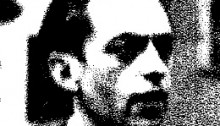
Fr. Kyrill Johnson, 1930. This is the only photo I've seen of Johnson taken while he was an Orthodox priest. (Ipswich Historical Society)

A lot of us at SOCHA happen to be really busy right now (personally, I’m in the middle of law school exams), so rather than leave you without much to read this week, here’s an article we originally published back in August 2010.

Fr. Kyrill Johnson was one of many fascinating early American converts to Orthodoxy. He was born Arthur Warren Johnson in Roxbury, Massachusetts in 1897. I don’t know what happened to his parents, but Johnson was adopted by an unmarried aunt, who raised him in Ipswich. He went to college at William and Mary in Virginia, which is probably where he first encountered the Orthodox Church. One of his classmates was a fellow named Royce Burden, and both were almost certainly students of young Professor Michael Gelsinger.

Arthur Johnson graduated in 1921. The next year, both Burden and Gelsinger were ordained Orthodox priests and assigned to serve in the “English-speaking department” of the Russian Archdiocese. This “department” had its origins in 1905, when Fr. Ingram Nathaniel Irvine converted to Orthodoxy and was charged by St. Tikhon to do “English work.” Irvine died in early 1921, by which point another convert priest, Fr. Patrick Mythen, had taken over the English-speaking department. Mythen brought numerous Americans into the Orthodox Church, but he was wayward and immature, and many of his converts (along with Mythen himself) ultimately left the Church.

I don’t know what role Mythen played in the conversions of Burden, Gelsinger, and Arthur Johnson, but that trio, unlike so many of their fellow 1920s converts, remained in the Church for the rest of their lives. I don’t know exactly when Johnson was ordained, but he was definitely a priest by 1924. The next year, he earned a Master’s degree from Harvard Divinity School.

Johnson — by now Fr. Kyrill — was a celibate priest, and he doesn’t seem to have had a parish in the 1920s. He may have been under the jurisdiction of Archbishop Aftimios Ofiesh, who oversaw the English-speaking department (and the American Orthodox Catholic Church, into which the English department morphed), but Johnson’s focus, in those years, seems to have been scholarly pursuits. In the mid-’20s, he was a key part of Harvard expeditions to Mount Athos and Mount Sinai, searching for ancient Biblical manuscripts. He also spent time in Syria, where he discovered rare proto-Semitic inscriptions.

In the early 1930s, Johnson was back in Ipswich, where he published several books on local history. In 1938, he became pastor of St. George Antiochian church in nearby Lawrence, Mass. — as far as I can tell, this was his first parish assignment in at least 14 years as an Orthodox priest. In 1940, he took on another job, becoming the head of the Society for the Preservation of New England Antiquities. The organization, which today has the more palatable name “Historic New England,” owns and preserves historic homes and other buildings in New England. The next year, 1941, Metropolitan Antony Bashir elevated Johnson to archimandrite. Johnson lived only six more years, dying in 1947, at the age of just 50.

So far, I’ve basically given you a dry biography of Fr. Kyrill Johnson. What sort of person was he, though? Pat Tyler of the Ipswich Historical Society happened to know Johnson when she was young. A few years ago, she told me, “He lived across the street from me — to the Yankees in town, he was just ‘strange,’ in that black robe.” Later, she added, “I knew him in the 30′s just as the guy across the street – I was just a child. My mother, of course, knew him. She and her friend, Helen, actually spent the night at the beach (Crane’s) with Arthur. I picture the scene as teenagers spouting Shakespeare. And Platonic to the max.”

Here’s another account of Johnson, from the book Becoming What One Is, by Austin Warren: “Friends brought acquaintances; and I remember […] Arthur Johnson of Ipswich, a swarthy, lean, Byzantine-looking bachelor, who, a pure Yankee and reared a Methodist, had become (after an Anglican interlude) an ordained deacon in the Greek Orthodox Church.”

Arthur Johnson's graduation photo from the College of William and Mary, 1921 (Ipswich Historical Society)

Back in college, Johnson’s class elected him “most eccentric man.” He was extremely involved in his school activities — class historian, student council secretary, associate editor of the student newspaper, editor-in-chief of the college literary magazine. He was in a drama club, manager of the debate council… I could go on, but I think you get the point. He never married, of course, and I get the sense that nobody who knew him was surprised by this fact. He was odd, friendly, bookish. He was also a talented writer.

Of the three William and Mary converts — Johnson, Burden, and Gelsinger — Johnson was clearly the least well-known, and probably the least influential. But he lived a fascinating life, and stands out as one of the few convert priests of the 1920s who remained in the Orthodox Church until the day he died.

Fr. Kyrill Johnson: The Prestige of the Oecumenical Patriarchate

Archimandrite Kyrill Johnson

Editor’s note: On Monday, we introduced Fr. Kyrill Johnson, who converted to Orthodoxy in the 1920s and spent most of his career in the Antiochian Archdiocese. Then, on Tuesday, we presented an article by Johnson reviewing a Protestant translation of the Divine Liturgy. Below, we’ve published another article by Johnson, on “The Prestige of the Oecumenical Patriarchate.” This piece originally appeared in the Orthodox American in its October 1944-February 1945 issue. Oh, and please be warned: Johnson can be… well, abrasive, I guess. I hope no one is offended by our publication of this historical document.

One of the pleasant myths in the uninformed Orthodox mind is that which infers that the various statements and pronouncements of certain individual Orthodox Patriarchs in conjunction with their Synods have binding force in the realm of Orthodox faith and morals. Nothing could be further from the facts.

It is true that there was a time in Orthodox history when such documents and pronouncements, although local and racial in origin, did have a certain weight and authority. That period came to an end with the reconstitution of the Greek nation and the consequent subservience of Orthodox faith and institutions to the Greek political ideal among ecclesiastics of Greek blood. Even the most casual student of Orthodox Church history is struck by the fact that all too often men of high ecclesiastical position in Orthodoxy, if they are of Greek blood, have been willing to use their positions to further and advance, not pure Orthodoxy, as such, but Greek political and racial aspirations.

Without doubt the ideal series of documents by which this thesis could be adequately proved is that which proceeded from the various Greek Patriarchates during the crises in Russian Church affairs after the Russian Revolution.

When the late Russian Patriarch Tikhon, of blessed memory, was deposed by a rump Synod of Bishops, the then Patriarch of Constantinople, Meletios, condemned this act as uncanonical. His successor, Gregory VII, reversed this pronouncement, and in his turn Gregory VII was reversed by his own successor, Basil III.

The Greeks who occupied the Patriarchate of Jerusalem reveal an equally unpleasant record of having no mind of their own, or any Orthodox mind at all for that matter, issuing document after document each in conflict with itself and with those, which had come before. Aside from the Russian Patriarchate of Moscow, only the Syrian Patriarch of Antioch seems to have had the ability to make up his own mind for himself and to stick to his decisions.

If one collates this series of pronouncements issued by Greek ecclesiastics with the political events and pressures, which paralleled their appearance, one soon discovers an obvious relation between their interpretation of Orthodox canon law and faith and the political tensions to which they were subjected.

Tempting as it is to explore this field in terms of the Russian question, we prefer at this time to direct attention to a lesser Greek political-ecclesiastical document. We do this because we have collected a considerable body of firsthand and as yet unpublished data relative to this lesser document. We refer to the pronouncement in the year 1922 by Meletios, Patriarch of Constantinople, on Anglican orders.

The facts necessary to understand the problems involved are simple enough. On July 28th, 1922, Meletios issued two documents. The first was in the form of a personal letter, not to the legal head of the Protestant religion established by law in England, the King, but to one of his political appointees, the senior of the two Protestant archbishops functioning in England. The other document was a sort of round robin addressed to “The Presidents of the Particular Eastern Churches.” The subject matter of both documents concerned itself with the much-debated question of the possible validity of Protestant ordinations in the state religion of England.

These two documents were hailed as a seven days’ wonder throughout the Protestant world. With this reaction we are in hearty agreement. Unfortunately their content was so neatly phrased in the subtle niceties of the Greek language that neither the casual nor learned reader could be quite sure what meaning they were intended to convey.

It is not our intent to add another essay in the necessarily dull exegesis of these documents. Obviously they follow the Pauline injunction, so dear to the Greek heart, of being all things to all men.

It is our purpose to throw some historical light on the confused background, which made these documents possible, and to trace the devious actions of the Greek mind when occasion demands of it that it say something without saying anything. It can be safely taken for granted that historical scholarship is fully justified in judging any document, not only in terms of its content, but also in terms of the conditions and the men, which brought it forth.

First let us consider the man over whose signature these two documents saw the light of day. He was one Meletios. By birth he was a Cretan; and if Pauline injunctions mean anything the wary should at once be put on their guard. His ecclesiastical career paralleled that of his fellow Cretan, Venizelos, in the realm of Greek politics. When this statesman was in power in the Greek world, Meletios also held a position of power. When the statesman fell, as he did many times, the ecclesiastic also fell. Let us grant at once that they were both very able men, intensely devoted to the Greek political ideal.

After the First World War Venizelos fell from power. Meletios, who was his Archbishop of Athens, fell with him and came to the United States as an exile. There is sufficient historical evidence to justify the statement that both the politician and the ecclesiastic were creatures whose power and position depended upon British foreign policy and backing. As exile in this country Meletios found favor with only a minority of Greek-Americans. He did receive much support from a section of the Protestant Episcopal Church in this country.

During this period of exile the Throne of Constantinople suddenly became vacant, and with equal suddenness Meletios was elected to the Patriarchate. How the Throne of Constantinople became vacant, and how Meletios was elected, does not concern us here.

In this country the Greeks with consternation received this election. Some were delighted; many refused to accept it as fact. It goes without saying that the Protestant Episcopalians received the news with great rejoicing. How tense the situation was in this country can be gathered from an article in the New York Tribune of Jan. 8th, 1922. The headline stated that this election “shakes the foundations of the Greek Church.” It did not hide the fact that Meletios’ chief support came from Protestant circles.

In Greece itself the Holy Synod of that country refused to accept the election of Meletios as canonical and valid. Meletios journeyed to his Throne by way of England, and it was currently reported that he entered the Golden Horn on a British man-of-war.

Let us now turn to analyze the conditions, which existed during the brief administration of Meletios in Constantinople. An inter-allied military control entered the city. It was made up of representatives of England, France, Italy and the United States. The city itself had been promised by secret treaty to Russia at the beginning of the war. All the nations represented in the city save the United States were playing the age-old game of power politics. As was natural, the religious issues of the centuries merged into the political issues. France and Italy, representing Roman Catholic ambitions, were moving with not too much caution to establish a claim to the Cathedral Church of Orthodoxy, Hagia Sophia. If anything was necessary to throw Meletios even further into the hands of the British, this was more than sufficient.

At the same time the drama of the tragedy of Christian Asia Minor was developing. A mutual and secret agreement by France and Italy on the one hand to support Turkish aspirations, and by England on the other to support Greek aspirations, to the end that a fatal collision of these two minor powers might ensue to the mutual profit of the Great Powers, sealed the doom of the ancient Christian Churches of Asia Minor.

It is quite probable that Meletios at that time knew only the externals of this situation. The hard fact was that he had to sit on his uncomfortable Throne at the Phanar and watch the growing tension between the various members of the Allied military control and to hear each day of new Greek disasters in Asia Minor.

The implications of the situation were obvious to Meletios. Each day the diminished Greek race was being decimated throughout Asia Minor; the Great Idea of a reconstituted Byzantine Empire was dissolving into dust and ashes before his eyes. Meletios, the Greek nationalist, became a desperate man. He had but one last jewel to spend on wooing British Imperialism to stop the decimation of his co-racialists in Asia Minor. The jewel was his Orthodox Faith. He would offer up this precious jewel to international politics in a last desperate gesture. Out of Meletios’ racial agony was born his pronouncement on Anglican ordinations.

A number of years after it was issued we spent a very pleasant afternoon with Meletios in Cairo, Egypt. (British influence had translated him to the Throne of Alexandria.) During our lengthy discussion of Orthodox affairs we introduced the subject of these two documents. Without any hesitation Meletios discussed them quite frankly. He admitted that they had been issued against his better Orthodox judgment. He also pointed out some pertinent facts, which should become part of the record if these documents are to be judged in their proper perspective.

From our notes on this conversation we outline those things, which seem to have some historical import. He prefaced his remarks by saying that as a Greek he could not have been expected to sit quietly and not use everything at his command in an effort to avert the Asia Minor disaster. He made it quite clear that he realized fully that if the Turks won he lost the throne of Constantinople. He did not try to excuse the incongruities contained in the documents. His only disappointment was that he misjudged British opinion (something which Greeks are always prone to do).

He made no attempt to deny that his documents accomplished nothing for the cause of Greece. This he could not quite understand. Like so many other Greek ecclesiastics he had been thrown into contact with only the High Church minority, and he had no clear notions about the staid and respectable Protestantism of the majority of the English church. He was actually convinced that the majority of the clergy and members of the Establishment were smarting under the sting of the pronouncement of Leo XIII declaring English ordinations null and void in form and intent, and would reward handsomely any statement to the contrary.

It was at this point that Meletios sighed and said, “But these English, they just do not have any sense of history.” Piqued by this statement we pursued it further, and Meletios replied fully as to his meaning, and the following is an outline of his convictions as an Orthodox theologian.

In the first place, he pointed out, as Patriarch of Constantinople he had no historical or canonical right to intrude into the ecclesiastical problems of the Christian West. He contended that the bases of the centuries’ old contention between the See of Constantinople and the See of Rome rested upon the thesis that the See of Rome had no canonical jurisdiction in the Christian East. By the same token he had to admit that the See of Constantinople had no canonical right to intrude into the domestic problems of the See of Rome; and certainly the question of Anglican Orders, deriving from Rome, was essentially a problem coming under the jurisdiction of that Patriarchate.

Obviously, he said, England could not by any perversion of logic be considered within the jurisdiction of any Eastern Patriarchate; and to presume to settle any ecclesiastical problem arising among non-Orthodox peoples in that area would destroy once and for all the foundation and corner stone upon which all contentions between the Eastern Patriarchate and Rome had been erected.

In writing his documents, Meletios contended that he made his Greek sufficiently vague and subtle so as not to commit Orthodoxy to any untenable position. When I raised honest doubts, he further pointed out that the most that any person could obtain in the way of satisfaction from his documents was a mere opinion; and that even though an opinion derived from the Patriarch and Synod of Constantinople, it still remained an opinion and nothing more, and opinions never had and probably never would have any binding force in the realm of dogma or upon the Orthodox conscience.

Because I was still unconvinced, he reiterated that if I would re-examine the documents with care I would discover that Constantinople had only reviewed the report of a committee, merely taking note of the things contained therein. He then made a distinction between his encyclical to the Orthodox Churches and his private letter to the Archbishop of Canterbury. The former he held was the document upon which Orthodoxy could pass judgment; the latter was a personal matter. An analysis of the two documents will reveal why Meletios made this distinction. It is interesting to note in this connection that all copies and translations released in England of this letter carry the simple signature of Meletios, not his rank and title. Meletios in our conversation desired me to keep in mind that in his encyclical it was clear that both he and his Synod in accepting the report of the committee accepted it as an opinion and requested further opinion from other Orthodox Patriarchates. If the English had any sense of history, Meletios continued, the English should know that the Orthodox Church can only speak as a whole.

“Opinions,” Meletios said with a twinkle in his eye, “are, after all, just opinions, and the Greeks, as a people, have a considerable reputation for being able to change them very quickly. Remember, my son, there is a world of difference between opinions and conclusions.”

This then is a brief summary of Meletios’ own estimate of his own documents.

There is another angle to this whole involved question of the historical setting of these documents, which merits passing attention. It has to do with the question of who constituted this committee and just what its full report said. When we were in residence in Constantinople, we were unable to locate this report, and so was everyone else. It was just counted as among the number of missing documents. While we are in no position to say with finality that no such report ever existed, until it is produced we will remain of the opinion that it never did exist. This does not mean that it never will be produced. Knowing the ability of the Phanar to produce documents when and where needed, we think it is entirely possible that if pressure were brought the report would come into being in short order.

At least two conclusions are justified by any historian of these particular documents. The first is, that since the reconstituting of the Greek nation to a precarious existence, Greek ecclesiastics are very prone to consider themselves as Greeks in the political sense first and as representatives of the Orthodox Faith afterward. Secondly, our Christian charity demands that we do not judge too harshly the acts of Greek hierarchs, when as men and members of a once great race they use every instrument at their command to stem the tide of the destruction of the Greek people by the Christian powers of the West. As documents these pronouncements, which we have considered, are no more than interesting ecclesiastical curiosa, reflecting the political stresses and strains of the Greeks as political beings. As statements of Orthodox teaching and dogma they are completely meaningless and not worth the paper they were written on.

Archimandrite Kyrill Johnson

Fr. Kyrill Johnson: Review of a Protestant translation of the Divine Liturgy


Archimandrite Kyrill Johnson

Editor’s note: Yesterday, we introduced Fr. Kyrill Johnson (1897-1947), a 1920s convert who spent most of his career in the Antiochian Archdiocese. What follows is an article by Fr. Kyrill which appeared in the Orthodox American (September 1943), which was a sort of forerunner to the modern-day Word Magazine. (Just to clarify: St. Raphael did have a periodical called Al Kalimat, which is Arabic for “The Word.” After St. Raphael’s death, Al Kalimat continued for a little while, but it eventually ceased publication. Many years later, in the 1950s, Metropolitan Antony Bashir started a new magazine, also called The Word. While the two periodicals have the same name and the same general audience (Antiochian Americans), they really are two distinct publications. Anyway, before the modern-day Word Magazine began, there was the Orthodox American.

Regarding Fr. Kyrill Johnson’s article (below) — one of the things that immediately struck me about Fr. Kyrill’s writing was its similiarity to the style and tone of an earlier convert priest, Fr. Ingram Nathaniel Irvine. The two priests never met each other (Irvine died before Johnson joined the Church), and they seem to have been very different in most other respects, but reading this article, it almost sounds as if Irvine wrote it. He almost certainly would have agreed with Fr. Kyrill’s conclusions.

In temporal warfare, when there is a desire to destroy those who do not agree with you, there are two methods open to the aggressor. The first is to marshal on a field of battle one’s material strength, and to engage the opposition in a test of strength and endurance to determine which side is to be destroyed and which side is to survive. The second is more a technique than a method, and was perfected by Hitler in recent years. It is to carry on undercover warfare through the functioning of a fifth column in the area for which there is the hidden and secret desire to destroy. The purpose of this technique is to avoid carrying on a frontal assault until there has been carried on a process of inner weakening. For this purpose everything is considered legitimate for gaining victory: lies, deception, bribery, the playing on natural human weaknesses and vanity, the deliberate misuses of terms and ideals to make them mean what they were not intended to mean and to use them as instruments of inner destruction. On the whole, this technique is pretty low and despicable, and it is disliked by civilized people.

Unfortunately, in the spiritual warfare in which the powers of darkness seek to destroy those of truth and light, one finds too often the use of methods of temporal wars; there is in some instances the clean clash of truth and error in the open, and an effort at honesty and sincerity on both sides. Then there is the Hitler technique, used to divide, to weaken, to invade the sanctities by fifth column methods through operation from within.

Recently we have observed an example of this second technique put into operation within the sanctity of our Orthodox fold here in America.

It appeared in the form of an innocent enough appearing publication, with the title inscribed “The Greek Orthodox Liturgy of St. John Chrysostom, Arranged for Use in English.” It comes from the press of an educational institution of one of the more wealthy protestant sects and is sent out without any official imprimatur, so that those whose point of view it represents cannot be held morally responsible for its contents.

In his introduction the “arranger” writes his purposes as follows: “Finally, in making this adaptation, the editor has had in mind two possible uses, apart from private reading: first, for public use in English speaking congregations of the Orthodox in the United States; secondly, for occasional public use in churches of the Anglican Communion,” meaning, of course, the Protestant Episcopalian Church in the United States.

We must, as Orthodox Christians, grant a certain amount of Christian charity toward this self-appointed arranger of our sacred Orthodox Liturgy for our people in this country. We trust that he was merely simple-minded enough to presume that we are so bankrupt of scholarship and initiative as to be unable to perform this task for ourselves when we need to have it done.

At the same time we must confess that the result is an amazing performance of unmitigated effrontery toward Orthodox Christians. There is not the slightest understanding of the fact that for us, our Liturgy is part of Holy Tradition and therefore is entitled to the most scrupulous respect.

Before we are misunderstood let us make it crystal clear that this work is not a translation into English of the Greek text, nor does it pretend to be. Had the author, as a scholar, set himself to render into English any of the mss. or the printed texts, we could have understood and perhaps welcomed his efforts. This was not his purpose. His task, as he saw it, was to re-write our Divine Liturgy so that it might be brought into conformity with protestant notions as to what is [sic] should be. This intrusion into a realm which the Church safeguards with the strictest limitations is something for which there can be no forgiveness either on the score of intent or of performance.

Let us also make ourself clear on this point. We do not care a hoot what Protestant Episcopalians do among themselves. For their own use and spiritual edification they can adapt the Rig Veda, the poems of Walt Whitman, the Latin Mass, or even our own Sacred Texts. But when our sacred Mysteries are tampered with in the hope that they will be used by our Orthodox People in the protestant and not in the Orthodox sense, then indeed we protest throughout the entire length and breadth of universal Orthodoxy.

Let us examine this remarkable document ever so briefly. We have not the space for a detailed analysis. First we will list those sections which are cut out entirely, viz.: the First and Second Antiphons, with their prayers; the beautiful and necessary Prayer of the Trisagion; the Ektenia for the Dead; the First Prayer of the Faithful; all that follows immediately after “It is meat [sic] and right.” the Theotokion Megalynarion. It is suggested that in place of the Megalynarion a verse from a protestant hymnal be used- which it terms a “free translation of the original,[”] which it certainly is not. Also omitted is the Ektenia which follows the Great Eucharistic Prayer.

And there is added immediately after the Words of Institution a section which does not occur in the Liturgy but which gives the whole area a protestant Theological flavor. Moreover, prayers are changed about; Petitions are shifted hither and yon; liturgical directions are given which violate the whole spirit of the accepted Diataxis. In short, our most Sacred Mystery has been re-written to make it over and to make it acceptable to protestant ways of thinking. Besides the palpable heresy which comes to notice on almost every page (such as a mistranslation of “Theotokos” which would shock the Holy Fathers of Chalcedon) the total effect is one which will strike the heart of every Orthodox Christian as something very much akin to blasphemy.

Some of the omissions the “arranger” excuses by saying that his “edition” does not pretend to be an altar-book,” but the excuse looks pretty thin because he proceeds in a manner that is more capricious and arbitrary than it is systematic. For additions to the text and deformation of it no passable excuse is conceivable in the face of the expressed desire that the Orthodox themselves shall use it.

Had the “arranger” not stated his intention and hope that it would be used by Orthodox Christians, we would ignore it as another example of the working of the untutored protestant mind intruding into fields quite beyond the spiritual and academic depth of the intruder. Under the circumstances of the expressed hope of the dual function it is presumed to fulfill, we can inform the arranger that Orthodoxy will have none of such things. Any attempt to corrupt Orthodoxy by a fifth column of protestant heresy from inside is doomed to failure. We have intelligent and learned Bishops and no text can be used at the Altar without study by competent ecclesiastical authorities and due permission.

At the same time we expect from now on, in walking through various American cities, to find advertised on the conventicles of protestantism signs reading “The Divine Liturgy of St. John Chrysostom.”

Our young people must from henceforth b[e] very much on their guard; and our ancient discipline which forbids us to worship with heretics must be vigorously enforced. We remind our people once again that to attend the religious exercises of people outside the bosom of Orthodoxy is reckoned a major sin by the Church. Even though the sign may read “The Divine Liturgy of St. John Chrysostom”, the stranger should make sure that it is under the jurisdiction of a lawful Orthodox Bishop.

We cannot view activities like this “arranging” of our Divine Liturgy otherwise than with alarm and sorrow, no matter how well intentioned are their perpetrators. God may pardon the sins of ignorance, but the Faithful must be on their guard lest the wiles of evil enter into the fold of Christ.

Fr. Kyrill Johnson, 1930. This is the only photo I've seen of Johnson taken while he was an Orthodox priest. (Ipswich Historical Society)

Fr. Kyrill Johnson, 1897-1947

Fr. Kyrill Johnson, 1930. This is the only photo I've seen of Johnson taken while he was an Orthodox priest. (Ipswich Historical Society)

For a while now, I’ve been meaning to introduce Fr. Kyrill Johnson, another of the many fascinating early American converts to Orthodoxy. He was born Arthur Warren Johnson in Roxbury, Massachsetts in 1897. I don’t know what happened to his parents, but Johnson was adopted by an unmarried aunt, who raised him in Ipswich. He went to college at William and Mary in Virginia, which is probably where he first encountered the Orthodox Church. One of his classmates was a fellow named Royce Burden, and both were almost certainly students of young Professor Michael Gelsinger.

Arthur Johnson graduated in 1921. The next year, both Burden and Gelsinger were ordained Orthodox priests and assigned to serve in the “English-speaking department” of the Russian Archdiocese. This “department” had its origins in 1905, when Fr. Ingram Nathaniel Irvine converted to Orthodoxy and was charged by St. Tikhon to do “English work.” Irvine died in early 1921, by which point another convert priest, Fr. Patrick Mythen, had taken over the English-speaking department. Mythen brought numerous Americans into the Orthodox Church, but he was wayward and immature, and many of his converts (along with Mythen himself) ultimately left the Church.

I don’t know what role Mythen played in the conversions of Burden, Gelsinger, and Arthur Johnson, but that trio, unlike so many of their fellow 1920s converts, remained in the Church for the rest of their lives. I don’t know exactly when Johnson was ordained, but he was definitely a priest by 1924. The next year, he earned a Master’s degree from Harvard Divinity School.

Johnson — by now Fr. Kyrill — was a celibate priest, and he doesn’t seem to have had a parish in the 1920s. He may have been under the jurisdiction of Archbishop Aftimios Ofiesh, who oversaw the English-speaking department (and the American Orthodox Catholic Church, into which the English department morphed), but Johnson’s focus, in those years, seems to have been scholarly pursuits. In the mid-’20s, he was a key part of Harvard expeditions to Mount Athos and Mount Sinai, searching for ancient Biblical manuscripts. He also spent time in Syria, where he discovered rare proto-Semitic inscriptions.

In the early 1930s, Johnson was back in Ipswich, where he published several books on local history. In 1938, he became pastor of St. George Antiochian church in nearby Lawrence, Mass. — as far as I can tell, this was his first parish assignment in at least 14 years as an Orthodox priest. In 1940, he took on another job, becoming the head of the Society for the Preservation of New England Antiquities. The organization, which today has the more palatable name “Historic New England,” owns and preserves historic homes and other buildings in New England. The next year, 1941, Metropolitan Antony Bashir elevated Johnson to archimandrite. Johnson lived only six more years, dying in 1947, at the age of just 50.

So far, I’ve basically given you a dry biography of Fr. Kyrill Johnson. What sort of person was he, though? Pat Tyler of the Ipswich Historical Society happened to know Johnson when she was young. A few years ago, she told me, “He lived across the street from me — to the Yankees in town, he was just ‘strange,’ in that black robe.” Later, she added, “I knew him in the 30′s just as the guy across the street – I was just a child. My mother, of course, knew him. She and her friend, Helen, actually spent the night at the beach (Crane’s) with Arthur. I picture the scene as teenagers spouting Shakespeare. And Platonic to the max.”

Here’s another account of Johnson, from the book Becoming What One Is, by Austin Warren: “Friends brought acquaintances; and I remember […] Arthur Johnson of Ipswich, a swarthy, lean, Byzantine-looking bachelor, who, a pure Yankee and reared a Methodist, had become (after an Anglican interlude) an ordained deacon in the Greek Orthodox Church.”

Arthur Johnson's graduation photo from the College of William and Mary, 1921 (Ipswich Historical Society)

Back in college, Johnson’s class elected him “most eccentric man.” He was extremely involved in his school activities — class historian, student council secretary, associate editor of the student newspaper, editor-in-chief of the college literary magazine. He was in a drama club, manager of the debate council… I could go on, but I think you get the point. He never married, of course, and I get the sense that nobody who knew him was surprised by this fact. He was odd, friendly, bookish. As we’ll see in the future, he was a pretty talented writer himself.

Of the three William and Mary converts — Johnson, Burden, and Gelsinger — Johnson was clearly the least well-known, and probably the least influential. But he lived a fascinating life, and stands out as one of the few convert priests of the 1920s who remained in the Orthodox Church until the day he died.

[This article was written by Matthew Namee.]

Go to Top