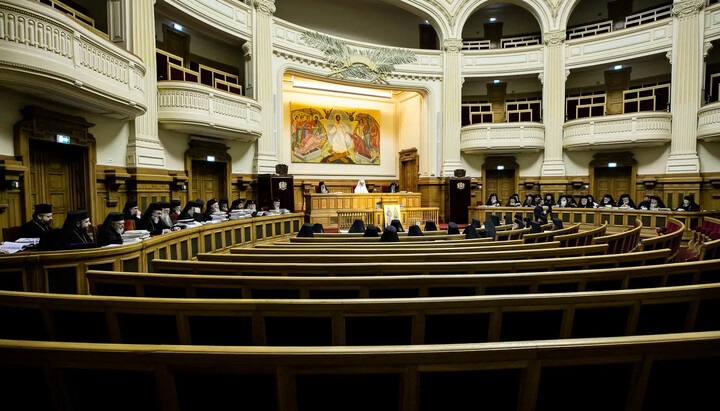
On February 9, the Holy Synod of the Patriarchate of Romania announced its decision to recognize the autocephaly of the Orthodox Church in the Republic of North Macedonia. This decision is much more significant than it might seem at first blush; in fact, what Romania has done is to resurrect the pre-conciliar pan-Orthodox process (known as “Chambésy,” after the location of the meetings) that was to lay the groundwork for the Holy and Great Council. Romania’s action takes us back to a simpler and more collaborative era in Orthodox history – a time not so long ago, and yet so very long ago – and, perhaps, gives us a way out of the mess we’re in.
***
For our purposes, the Macedonian aspect of this story begins in 1967, when the Macedonian Orthodox Church – that is, the Orthodox Church in what was then the Yugoslav Republic of Macedonia – unilaterally declared itself to be autocephalous, breaking from the Serbian Patriarchate. For the next fifty-five years, the MOC was deemed to be schismatic, out of communion with the rest of the Orthodox world. In 2009, the MOC added to its name the title “Ohrid Archbishopric,” making an explicit connection to the old Archbishopric of Ohrid, a formerly autocephalous entity that is also claimed as part of the heritage of the Bulgarian Patriarchate.
On May 9, 2022, the Holy and Sacred Synod of the Ecumenical Patriarchate decided to restore communion with the MOC, although the EP specified that it recognizes the name “Ohrid” for this church, excluding the use of the term “Macedonian.” In the Hellenic world, “Macedonia” is viewed as being part of Greek identity, and there have been major objections by Greek Orthodox leaders of various jurisdictions to the use of the name “Macedonia.” The name “Ohrid” is controversial as well, as the Bulgarian Church considers it to belong to them. In this article, I know I’m courting controversy by using the name “Macedonian” (and the abbreviation “MOC”) for this church, but it’s the title they use for themselves. Please don’t assume I’m on one side or another in this matter; as an American with no personal ties to Greece or Bulgaria or Skopje, I don’t have a dog in this fight.
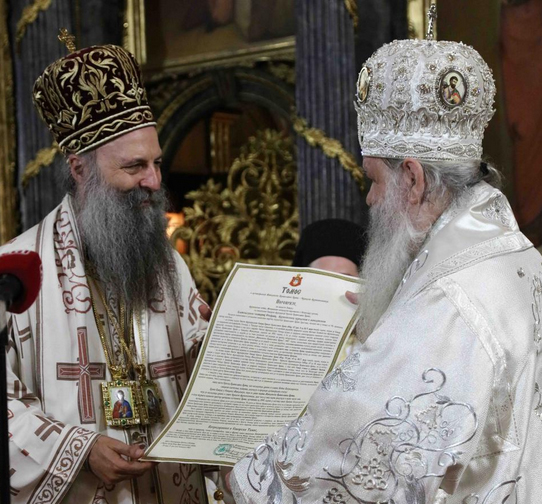
A week later, May 16, the Serbian Patriarchate ended the schism and re-established communion with the MOC. The next week, the Serbian Bishops’ Council voted to grant the MOC autocephaly. Then, on June 5, Patriarch Porfirije of Serbia presented the MOC primate, Archbishop Stefan, with a Tomos of Autocephaly. In the months that have followed, the Churches of Russia, Poland, Ukraine (i.e., the UOC under Metropolitan Onuphry), and Bulgaria recognized this autocephaly and added Archbishop Stefan to the diptychs. (Bulgaria was careful to avoid any reference to Ohrid, calling Stefan “Archbishop of North Macedonia.”) Last week, Romania, as well as the Church of the Czech Lands and Slovakia, joined in. Romania’s decision specified an all-embracing title for Stefan: “His Beatitude Archbishop Stefan of Ohrid, Skopje and North Macedonia.”
Some Churches haven’t gone quite as far. The EP still recognizes only the canonicity, but not the autocephaly, of the MOC. The Patriarchate of Antioch is in communion with the MOC but has not yet made a decision on its autocephaly, stating its “aspiration that the general Orthodox consensus about the name and legal status of this Church will be reached as soon as possible.” The Patriarchate of Jerusalem and the Orthodox Church in America have not made formal decisions but have established de facto communion via concelebration, while a handful of Churches (Alexandria, Georgia, Cyprus, and Albania) have not made any move as of yet.
***
So that’s the state of play at the moment. Now, let’s focus on the details surrounding Romania’s decision in particular.
In November 1993, the Pre-Conciliar Pan-Orthodox Conference, meeting at Chambésy, Switzerland, issued a document containing a draft procedure for the proclamation of autocephaly. Click here to read the full text of this procedure. The specific procedure was set forth in paragraph 3 of the document:
- Complete agreement was established concerning the canonical conditions which the proclamation of the autocephaly of a local Church requires, namely the consent and action of the mother Church, the obtaining of a pan-Orthodox consensus, and the role of the Ecumenical Patriarchate and the other autocephalous Churches in the procedure of the proclamation of the autocephaly. According to this agreement:
(a) The mother Church which receives a request for autocephaly from an ecclesiastical region which depends on it evaluates whether the ecclesiological, canonical and pastoral conditions are satisfied for the granting of autocephaly. In the case where the local synod of the mother Church, as its supreme ecclesiastical body, gives its consent to the request, it submits the proposal on this subject to the Ecumenical Patriarchate in order to seek a pan-Orthodox consensus. The mother Church informs the other local autocephalous Churches of this.
(b) The Ecumenical Patriarchate, according to pan-Orthodox practice, communicates by patriarchal letter all the details concerning the said request and seeks the expression of a pan-Orthodox consensus. Pan-Orthodox consensus is expressed by the unanimous decision of the synods of the autocephalous Churches.
(c) In expressing the consent of the mother Church and the pan-Orthodox consensus, the Ecumenical Patriarchate officially proclaims the autocephaly of the applying Church by the publication of a patriarchal Tomos. The Tomos is signed by the Ecumenical Patriarch. It is desirable that it be co-signed by the primates of the autocephalous Churches, but in any case it must be by the primate of the mother Church.
At the time, there was not full consensus on subparagraph (c) – that is, the part about issuing and signing the Tomos of Autocephaly. This was to be the subject of future discussion.
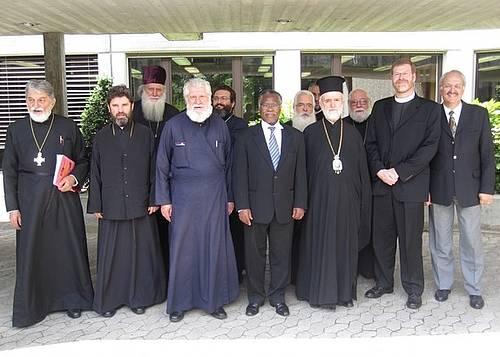
It would be another sixteen years before the representatives of the various Churches would revisit this issue. Finally, in December 2009, another Pre-Conciliar meeting was held to discuss subparagraph (c). This meeting adopted the following language:
Expressing the consent of the Mother Church and the Pan-Orthodox consensus, the Ecumenical Patriarch officially proclaims the autocephaly of the requesting Church by promulgating the Tomos of Autocephaly. This Tomos is signed by the Ecumenical Patriarch, Their Beatitudes the Primates of the Most Holy Orthodox Churches, invited for this purpose by the Ecumenical Patriarch, adding their co-testimony by affixing their signatures.
But this still wasn’t the end of the matter. The Chambésy meeting’s announcement included this note: “The contents of the Tomos of Autocephaly and the manner of presenting the signatures of the Primates of the Most Holy Orthodox Churches have been referred for examination and search for the consensus of the Churches on the matter to the next Inter-Orthodox Preparatory Commission.”
Fourteen months later, in February 2011, another meeting was held. This time, the meeting got into the weeds about how, exactly, a Tomos of Autocephaly should be signed. Four proposals were made:
a) That the Tomos be signed by the Ecumenical Patriarch, adding in his own hand the word “declare,” and then, by the Primates of the Orthodox Churches, adding the word “declare also.”
b) That the Tomos be signed as above with the addition which has an identical meaning with the term “declare also” or without any addition.
c) That the Tomos be signed as above, but adding a statement in the document regarding the equal consideration of all Primates.
d) That the Tomos be signed by the Ecumenical Patriarch, adding to it with his own hand the words “declare with all the Primates of the Most Holy Orthodox Churches.”
In each case, the Moscow Patriarchate objected. It proposed a fifth alternative: “that the Tomos of autocephaly be signed according to the order of the Diptychs by all the Heads without any addition in their signature.”
What exactly are we arguing about here, really? Everyone was in agreement with subparagraphs (a), (b), and (d) of the 1993 Chambésy procedure. And even with subparagraph (c), there was an agreement that the Tomos would be signed by all of the autocephalous Primates, in the order of the diptychs, making this a Pan-Orthodox action. The sole point of contention was the exact manner of how those signatures would be made, by implication, who was actually “declaring” the autocephaly. Was the EP declaring it with ratification from all the others? Was it being declared by all of them simultaneously? One could be forgiven for finding the whole disagreement a bit petty, given the broad agreement everyone had about everything else. Yet despite that otherwise broad agreement, because of this impasse over the way the Tomos would be signed, the autocephaly procedure never made it onto the agenda for the Great and Holy Council.
***
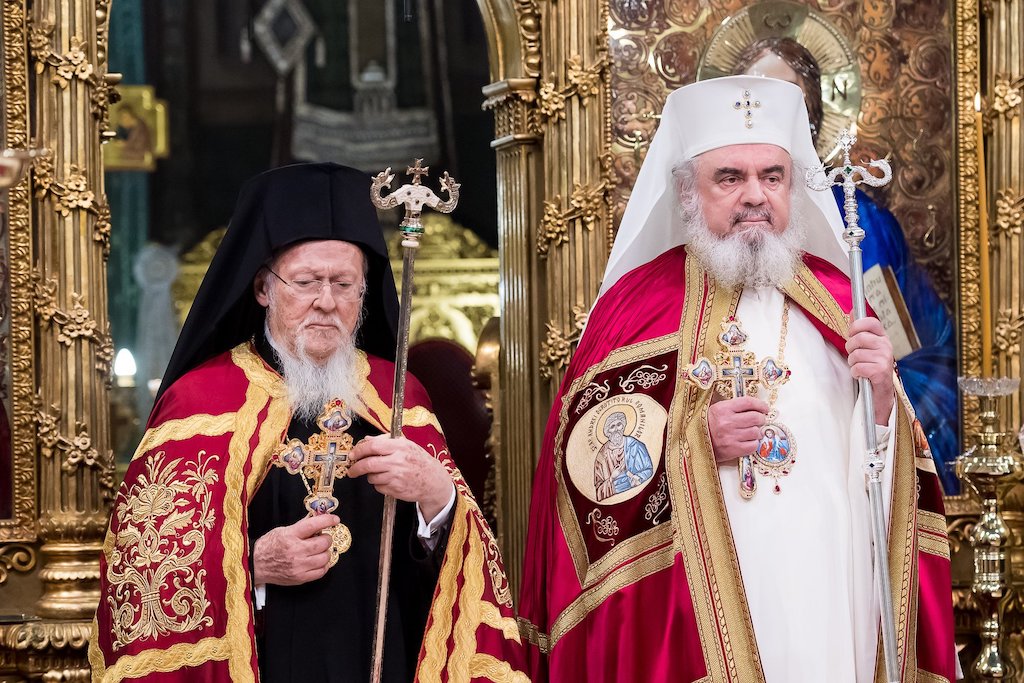
As a sort of postscript, in November 2018 – that is, in between the EP’s declaration that the Ukrainians of the so-called “Kyiv Patriarchate” and the “Ukrainian Autocephalous Orthodox Church” were now canonical, and the EP’s granting of a Tomos of Autocephaly to the new “Orthodox Church of Ukraine” – Patriarch Bartholomew visited Romania and met with Patriarch Daniel and the Romanian Holy Synod. He gave a speech explaining his rationale for the EP’s actions in Ukraine, focusing particularly on the issue of how the EP would proceed with granting a Tomos of Autocephaly. Here’s the key part:
“Of course, the pre-conciliar treatment of the issue of autocephaly provisioned a different solution. However, once consensus has not been reached – and the Ecumenical Patriarchate is in no way responsible for this – so that Autocephaly be eventually included in the agenda of the issues under consideration at the Holy and Great Council, it is self-evident that the hitherto relevant practice for centuries is applied and be ratified ad referendum at a future Ecumenical Council. And of course, those who bear the responsibility and even were absent from our Holy and Great Council are not legitimized to react violently and unholily, and without fear of God break the unity of the Church. We are certain that the Holy Church of Romania will contribute in this regard and assist in preserving the ecclesiastical unity and order for reasons of justice.”
According to Patriarch Bartholomew, then, due to the failure of the Churches to come to complete agreement on the Chambésy autocephaly procedure – and despite their agreement on everything except the specifics of the signatures – the procedure was not applicable. The current position of the Ecumenical Patriarchate is that it has long held the unilateral authority to grant autocephaly, and thus this “hitherto relevant practice for centuries” would continue to be applied.
***
Initially, Romania’s recent announcement on Macedonian autocephaly was very succinct: the Holy Synod had decided “To approve the recognition of the autocephaly granted to the Church in the Republic of North Macedonia under the name of ‘Archdiocese of Ohrid and North Macedonia, with headquarters in Skopje’ by the Patriarchate of Serbia by its Synodal Tomos issued on June 5, 2022. Its Primate will be commemorated with the title ‘His Beatitude Archbishop Stefan of Ohrid, Skopje and North Macedonia.’”
Some began to speculate about this: did Romania see no role for the Ecumenical Patriarchate? Was its position that a Mother Church can grant autocephaly unilaterally? Had Romania been influenced in some way by the Moscow Patriarchate?
On February 13, the official Romanian Patriarchate news agency Basilica.ro published an article explaining and clarifying the details of Romania’s decision. According to that article, in making its decision on the MOC’s autocephaly, the Romanian Holy Synod actually looked at the broader issue of how autocephaly is granted. Directly invoking the Chambésy procedure, Romania’s position was expressed as follows:
“The Holy Synod of the mother Church is the canonical authority that can grant autocephaly to a daughter Church through a synodal tomos signed by the Primate of the mother Church together with all the bishops of that Holy Synod. The recognition of the new autocephaly belongs to the entire Orthodox Church, achieved through a tomos of recognition of autocephaly signed, without any distinction, by all the Primates of the autocephalous Orthodox Churches, in the order of the Diptychs, within the Synaxis of the Primates of the Orthodox Churches.”
The Basilica article concluded, “After recognising the initial synodal tomos issued on June 5, 2022, by the Patriarchate of Serbia granting autocephaly to the Orthodox Church in the Republic of North Macedonia, the Holy Synod of the Romanian Orthodox Church expects the Ecumenical Patriarchate to initiate (consultations) and issue a final tomos of autocephaly to express a pan-Orthodox consensus on this topic of autocephaly recognition.” (Emphasis in original.)
In other words, in contrast with Patriarch Bartholomew’s words on his visit to Romania in 2018, the Romanian Holy Synod itself still considers the Chambésy procedure to apply. Maybe we don’t all agree about how to sign the Tomos, but the rest of the procedure had broad pan-Orthodox consensus. In approving the Tomos issued by Serbia to the MOC, Romania is casting its vote in favor of MOC autocephaly – effectively saying that the Patriarch of Romania will put his signature on a final Tomos as soon as it is ready.
Although the Chambésy pre-conciliar meetings were still happening less than a decade ago, it feels like another lifetime considering how much Orthodox unity has fallen apart in recent years. Yet Romania’s explicit invocation of Chambésy offers, perhaps, a way forward. Earlier, the Patriarchate of Antioch looked for a “general Orthodox consensus” about the MOC. Now, Romania has expressly called us back to this spirit of conciliarity; it has said to us that Chambésy is not dead and irrelevant and invites us to reject the false EP-Moscow polarity that has emerged.
By returning to the spirit of conciliarity reflected in the Chambésy procedure, perhaps Orthodoxy can find a path out of our present crisis and toward a better future.


Leave a Reply