Historiography

Turkevich_Metr_Leonty (c1950)

Met. Leonty: A Life in Moments

0

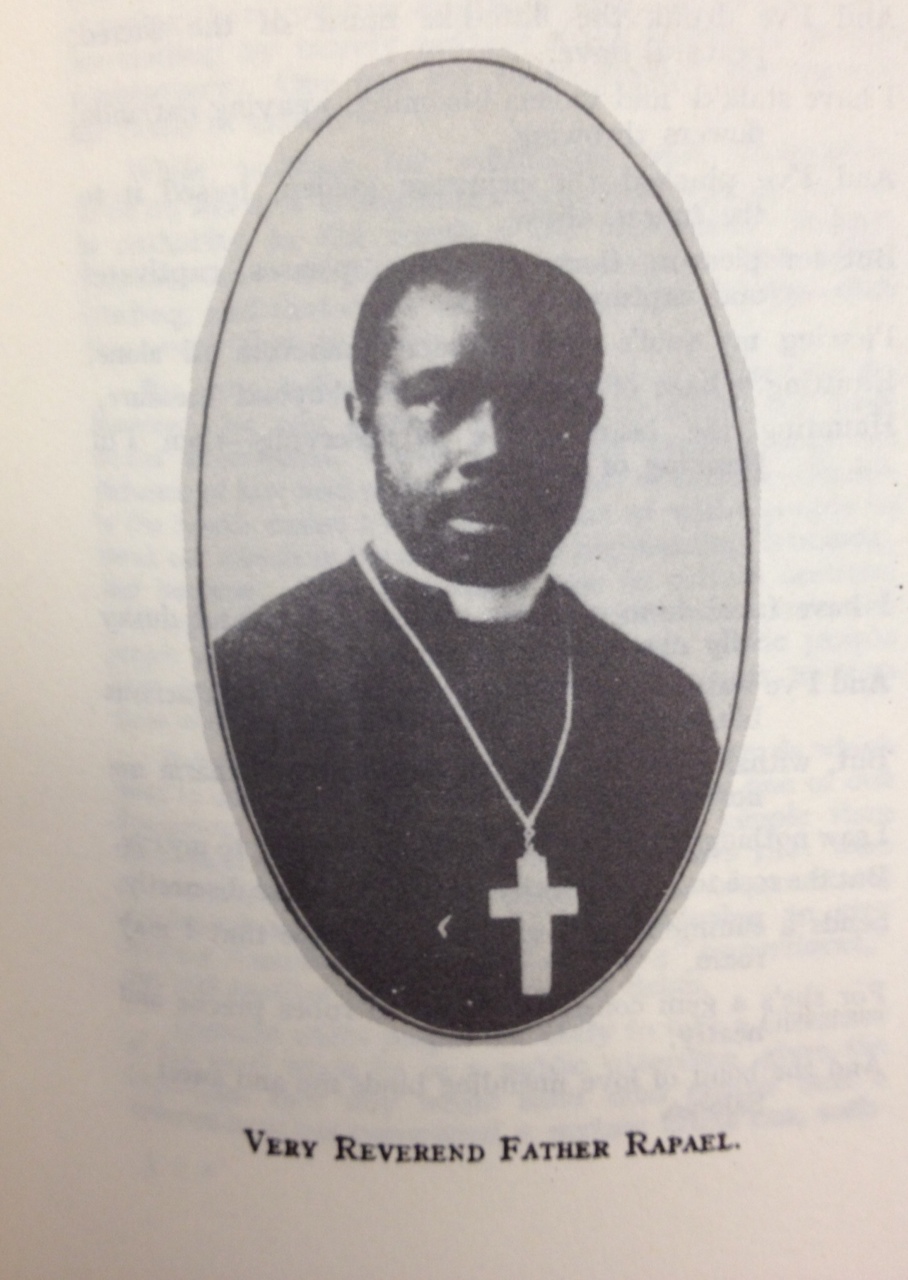
As Matthew pointed out in his post yesterday, this week marks the 47th anniversary of the death of one of the truly  great Orthodox churchmen of the 20th century, Metropolitan Leonty Turkevich.  With an ecclesiastical career in the United States spanning from 1906 to 1965, there are few figures in the history of Orthodoxy in America who can claim such longevity, much less a comparable length of time spent at the heights of church administration.  From his first assignment in America, as Dean of the North American Russian Orthodox Theological Seminary in Minneapolis, Minnesota, to his last, as Metropolitan of All-America and Canada of what was then the Russian Metropolia, Leonty served as a key figure in nearly every moment and institution of note for nearly six decades.

Met. Leonty Turkevich

When Matthew asked me to write a piece about Leonty, I kept coming back to a single moment at the end of his life, a story for which there is a rare corroboration of accounts from multiple sources (one from the Moscow Patriarchate, the other from the Metropolia) that each give a unique picture of who Leonty was, and how his personality, longevity, and the weight of his institutional memory impacted those around him.

In early 1963, at the height of the Cold War, the National Council of Churches invited a delegation from the Church of Russia to visit the United States for a goodwill visit to acquaint the American religious establishment with leaders of the living, breathing Church behind the Iron Curtain.  Led by Archbishop Nikodim Rotov of Yaroslavl, head of the Patriarchate’s Department of External Relations, a side benefit of the delegation would be an opportunity for an informal assessment the true situation of the tensions between the Metropolia and the Patriarchal Exarchate as it existed on the ground, if not possible dialogue. Through the formation of the Exarchate in 1933, a longstanding lawsuit over control of St. Nicholas Cathedral in New York City, and stalled negotiations following the decision of the 7th All-American Sobor to renew the Metropolia’s administrative ties with Moscow in 1946, a bitter period of animosity between two jurisdictions with a shared history had dominated both local and national church life for decades.  Aside from an informal meeting in 1961 at a World Council of Churches meeting in New Delhi, by 1963, no formal or significant dialogue between the two parties had occurred for over a decade.

As he would recall over a decade later, one evening in March of 1963, Fr. Alexander Schmemann, Dean of St. Vladimir’s Seminary, received a telephone call from an Episcopalian acquaintance announcing that Nikodim and the delegation wished to visit the seminary, and would be arriving on campus within a few hours.  Schmemann quickly dispatched a call to Metropolitan Leonty to ask for permission to receive the delegation.  Leonty quietly replied, “receive them with love.”  The visit went well, and Schmemann arranged for Nikodim to meet with Leonty several days later over dinner at the Metropolia’s Chancery in Syosset.

Schmemann recalled the elderly Leonty descended the Chancery stairs that evening dressed in his trademark white cassock, “so majestic… and yet so simple and joyful, so obviously the head of the Church to which he had given his entire life.”  After dinner, Leonty rose to give an informal speech, in part a narrative of his ministry in America, as well as an expression of what the events meant for the future of Orthodoxy in North America.  His was an institutional memory that stretched back to the administration of Bishop Tikhon Belavin, the bishop who had invited the young Fr. Leonid Turkevich to the United States in 1906 to oversee the Minneapolis Seminary, which Turkevich repaid in turn by personally nominating his former bishop for the office of Patriarch of Moscow on the floor of the All-Russian Sobor eleven years later.  In fact, it is likely many of the events he described that evening occurred before the relatively young Nikodim (born in 1929) was even alive.  According to Schmemann, Leonty’s words movingly expressed his love for the Church of Russia, yet also his firm belief in the future of the Church in America. (Constance Tarasar, ed. Orthodox America, 1794-1976. Syosset, 1975. 262-3.)

Met. Nikodim Rotov

Several years later, Nikodim would recall the events of the Syosset dinner to Archimandrite Serafim Surrency, a priest who served as an assistant to Metropolitan John Wendland (then head of the Patriarchal Exarchate) at St. Nicholas Cathedral in New York City.  Surrency describes the elderly Leonty asking Nikodim firmly and directly, how he viewed Leonty and the other bishops of the Metropolia.  Though Nikodim was clearly moved by his meeting with Leonty, and the momentum of the evening would carry into several more informal dialogues between the Metropolia and the Patriarchate (especially Nikodim) in the ensuing years, reality dictated he reply “as kindly as he could:”

“Your Eminence, forgive me, but I have no choice but to regard you and your bishops as schismatics.”  According to Surrency, “…tears welled in the eyes of the aged Metr. Leonty.”  (Archimandrite Serafim Surrency. The Quest for Orthodox Church Unity in America. New York, 1973. 78.)

As a historian, this moment in a lifetime of truly monumental moments offers a good entry point by which we can understand the broader picture and historical narrativity of Leonty’s impact in America.  His role as a priest in the highest levels of diocesan administration, theological education, and publication shows the ambitious vision of the pre-Revolution North American Diocese to serve a rapidly growing, geographically expansive flock, and the extent to which the Revolution would fundamentally change this trajectory.  Leonty’s episcopal career (and the process by which he became a bishop) is a lens by which we can explore the deep divisions of the jurisdictional fracture of Orthodoxy in America in the wake of the rise of Bolshevism.  And in his final years, his hospitality and dialogue with Abp. Nikodim put in motion a series of sometimes tense, yet ultimately fruitful meetings leading to the granting of Autocephaly to the Metropolia in 1970, forming what is now the Orthodox Church in America.

In the months to come, I hope to further explore this dynamic figure, exploring how his roles within the Church found him intimately involved in some of the most controversial and heated moments Orthodoxy has seen on the North American continent, yet whose demeanor, deep spirituality, and kind and quiet disposition found him almost universally revered even in the face of discord.

Wicked Wiki, Primary Sources, and SOCHA’s Ongoing Work

2

Those of us in the Academy are (our should be!) quite aware of the limitations of Wikipedia.  Of course, some of the weaknesses are the same as they have been for any encyclopedia.  Students too often think research begins and ends with them (alas, even in college).  Too many citizens share that approach.  Also, encyclopedia entries cannot take the time to be as nuanced as perhaps they should.  In the case of Wikipedia, this can become a real problem.  Recently, Timothy Messer-Kruse wrote from personal experience about how this is so (http://chronicle.com/article/The-Undue-Weight-of-Truth-on/130704/).  I’d recommend reading the article, but in a nutshell, Dr. Messer-Kruse edited a Wikipedia entry on the Haymarket trial of 1886 based upon primary source research he had done through the Library of Congress.  Wikipedia reacted by deleting his comments and noting he had to cite reliable sources!  He tried again, again citing the court documents and also his own published work.  It didn’t matter.

Now, on the one hand, one might argue that such is all an encyclopedia can do.  It must simply add up the number of secondary sources making a particular point (that no evidence was presented by the prosecution at the trial–yeah, that was the point).  Anyone stating otherwise, even if supported by primary sources, won’t be given a say.  To some degree, that is what encyclopedias have always done–tried to present the general consensus on a given topic.  Furthermore, Wikipedia is not a peer-reviewed journal.  Perhaps it shouldn’t be expected to prioritize primary source scholarship.

On the other hand, it is difficult to understand how a platform that is supposed to be open to editing can dismiss the actual primary sources (say letters or diaries or court documents) in favor of historiographical ignorance (which happens for various reasons–no judgment intended at all toward other scholars of the Haymarket riot and trial).

Furthermore, this is a perennial problem within American Orthodox history.  Both Matthew Namee and I have encountered it on more than one occasion, especially when discussing what we’ve called “the myth of unity”–the idea that all Orthodox in America were always under the Russians until 1917 and/or that the Russians always worked hard to demonstrate that they always clearly had jurisdiction everywhere and anywhere on the North American continent (or perhaps Americas more generally).  Often those screaming the loudest were used to doing “history” work by collecting a bunch of secondary sources together.  Similarly, when discussing Archbishop Arseny of Canada, those who seemed most upset with what I found in the court documents were not those who had actually read the court documents (we at SOCHA read them and made them available).  Sometimes, people simply like the “conventional mendacity” (to quote Lord Acton) built up over the ages.

One of the long-term goals of SOCHA is to provide a platform that highlights primary sources and their importance.  Exactly how this will be done is still coming into view, but certainly this blog is a beginning.  We have posts by the four of us directors as well as by others who are knowledgeable in particular primary sources.  We will continue to provide informative articles based on primary source work.  More than that, once we are able to move forward with our future digitization project, readers will have access to primary sources themselves.  We even envision a platform in which readers will be able to submit primary documents to the database.  This will make it similar to Wikipedia, in that people will  be able to add to the knowledge base and influence what is known and learned.  Yet, it will differ in that it will be source material that is added, not conventional mendacity nor even a well documented interpretation.  There will be limitations, of course, as readers won’t be spoon fed interpretations but would have to read, say, Bjerring’s writings themselves to determine what he tended to emphasize in his extant sermons, but I think this is actually better.  Encyclopedias can be nice starting points, but a platform that forces people to think critically and rely on primary sources is better.

Of course, scholars and researchers are seriously questioning the degree to which people are prepared to think critically (you could follow the trail starting with this: http://chronicle.com/article/Academically-Adrift-The/130743/) but that’s a different discussion for another time.


SOCHA, American Orthodox History, and the Digital Humanities

0

In the last several years, the discipline known as the “Digital Humanities” has come to the fore.  Digital Humanities is basically the intersection of the humanities and digital technology, for all the breadth that can mean, but often involves meta-data (data about data, if you will).  One of the sub-disciplines in the digital humanities field is digital history.

Digital history has generally meant using digital tools to help analyze historical source materials, though this can be done in different ways, from digital archives and interactive maps to text mining (assessing a text for patterns, perhaps of place-names or certain verbal structures).  By virtue of this blog and our associated Journal of American Orthodox Church History, SOCHA is certainly involved in digital history.  Furthermore, we intend to establish an online digital archive that will be searchable.  It will take time for this to occur, of course, but it is our full intention to work toward that.

That said, there are some areas of caution that one ought to have when thinking about digital history.  This recent blog post by Stanley Fish gets at one way in which text mining can be problematic:

http://opinionator.blogs.nytimes.com/2012/01/23/mind-your-ps-and-bs-the-digital-humanities-and-interpretation/

Essentially, Mr. Fish notes the problem of omitting contextual considerations.  It is too tempting for people in the digital humanities to perform their search, find some pattern of something or other and then make a bold claim.

I think he’s spot on, and even more so when applied to digital history.  It is a temptation in history generally.  It is difficult sometimes for historians not to confuse trivia with history.  Already, historians, especially new (young) historians, find a unique little snippet only to be faced with the challenge of confronting that initial excitement with the prospects of context.  That is, what is the ultimate significance of that snippet?  What does it tell us about American Orthodox Church history, for instance, or religion in American more generally in the nineteenth century, etc.?  That is, the contextual questions are there to keep the historian honest and avoid a myopic vision.  Text mining, though, as noted by Mr. Fish, is already beginning to make the temptation of mistaking trivia for history all too real.  The larger contextual and theoretical questions are sometimes pushed aside all too easily.

So, are we at SOCHA part of the problem?  I don’t think so.  I realize any singular blog post, taken on its own, could certainly seem to be analogous to the context-less argument from text mining, but I think if one realizes that the blog entry ought to be seen within the context of the blog as a whole, and really in the context of SOCHA’s work as a whole, all is well.  Matthew Namee and I have both written on early jurisdictional issues.  We also have JAOCH, which often deals with larger American-Orthodox historical concerns.  It is true that JAOCH is “narrow” in that it is concentrated on certain ecclesiastical histories, but it still requires the articles to be grounded in the larger histories of those various churches.  Also, when we do finally, some year down the road, unveil our digital, searchable archive, the intention will be to further the use of source material and not simply to encourage “pattern finding.”  There is much that digital history has to offer, but in keeping with the concerns raised by Mr. Fish, it is our hope and belief that SOCHA will be part of a creative but historically honest and grounded use of digital technology.

Toward an American Orthodox historical narrative

9

On December 30, we published an article by Daniel Silliman on the search for a narrative for Orthodoxy in America. As Daniel observed, mainstream religious scholars have paid precious little attention to Orthodoxy, and even we Orthodox haven’t done much to flesh out the narratives that shape our history.

I’ve done a fair bit of thinking over the years about overarching historical narratives. While I tend to prefer individual stories, I realize that those stories acquire much of their meaning as part of a broader narrative. And, as I believe I’ve said elsewhere, if American Orthodoxy could be summed up in one word, that word is encounter. Encounter between Orthodoxy and the West; encounter between long-isolated Orthodox ethnic groups; and encounter between the Eastern and Oriental Orthodox.

At the top, there have always been encounters. What makes American Orthodoxy unique is that, for the first time, regular laypeople from all the different Orthodox countries were thrown together in the same place. And what they discovered, back at the turn of the last century, was that they were not so very different from one another. That sentence may seem a bit odd in light of what happened afterwards — the ethnic fragmentation of American Orthodoxy. But in the beginning, there weren’t enough of any one ethnic group to justify forming a separate ethnic church. The Orthodox in America had to work together, to band together to preserve their faith in a foreign land. The seeds of fragmentation were present from the beginning, but so too were the seeds of unity. Ultimately, all of American Orthodox history seems, in my interpretation, to be converging on a point — a point which probably will never be fully realized. And that point is our unity as neither Russian nor Greek, Serb nor Arab, but one Church of Jesus Christ. In America, more than any other place or time in history, we are in a position to live out that unity. We’re all under the same roof, here. And resist it though we may, in the end, we will either come together in diverse unity, or we will marginalize ourselves and become a mere cultural museum piece.

So that’s one narrative. And as I said, “encounter” includes other factors. That obnoxious buzzword — “ecumenism” — has been a part of American Orthodoxy from Day 1. From the founding of Nicholas Bjerring’s New York chapel in 1870, to St. Tikhon’s friendship with the Episcopalian Bishop Grafton at the turn of the 20th century, to the Episcopal Church financing the Russian Metropolia during its time of troubles, to the World Council of Churches and the “Sorrowful Epistles” of ROCOR Metropolitan Philaret, to the present dialogues between the OCA and conservative Anglicans, American Orthodoxy has always engaged the non-Orthodox. Some of this engagement has led to conversions, from Bjerring and Irvine to the Evangelical Orthodox to the people who are about to be baptized this coming Theophany.

Those conversions are yet another piece of the narrative. My recent research on Fr. Ingram Nathaniel Irvine has led me to revisit the problem — and it is a problem — of converts in American Orthodoxy. Don’t misunderstand me; I don’t mean that converts are a problem. But there is most definitely a convert problem, and particularly (but definitely not only) a convert clergy problem. Beginning with Bjerring and James Chrystal in 1869-70, converts have been received by the Orthodox with great enthusiasm. They’ve received minimal catechesis; they’ve been ordained almost immediately; and in far too many cases, they’ve caused major problems and/or left the Church entirely. This isn’t really the fault of the converts themselves. Bjerring, Chrystal, Irvine, Morgan, Mythen and his circle, Fr. Boris Burden… the list goes on and on. Even the “good” early converts were, almost to a man, deeply flawed in their personal lives. And if you’ve been Orthodox for very long at all, you’ve no doubt known one (and probably many) convert clergymen who came in with a burst of energy and productivity, only to reveal themselves to be erratic (or even corrupt) men who eventually left the priesthood and/or the Church itself.

It is the oldest problem in American Orthodoxy, and I hope that we can eventually develop standards at the national level to combat it. But really, it’s tied for the oldest problem: the other big issue is the problem of the youth.

There’s nothing terribly exciting about this one. From the beginning, American Orthodoxy has struggled to retain its young people. It didn’t help that, for decades (and in some churches, up to the present) Orthodoxy was treated as more of a cultural artifact than a living faith. Old languages were preserved, and English was resisted, and most young people didn’t care about the misguided justifications for using only Greek or Slavonic or Arabic or what have you. Who wants to worship in a language they can’t understand? And no matter how beautiful a language is, if the people can’t understand it, it has failed in its fundamental purpose: to communicate meaning. We’ve been losing our youth for more than a century. Irvine railed against the resistance to English and against the indifference of nominal parents. But equally problematic is the fact that we, as a Church, have failed to communicate the essence of Orthodoxy to our children. Too often, Sunday Schools teach Orthodoxy like you’d teach Episcopalianism or Roman Catholicism — systematically, like a subject in school. Which has its place, but — as a dear friend recently put it — they teach the “what,” but they fail to teach the “why.” And this is not a new problem.

But all of this, I think, is encapsulated in the concept of “encounter.” We encountered the West, and we didn’t know what in the heck to do with it. We weren’t prepared. We flailed about, dancing with the Anglicans, wallowing in our nominalism, ordaining every male American convert who expressed the faintest interest in the priesthood. All too often, we have lacked a vision for our mission in America, and even our identity as the Apostolic Church — the Church. Sentimentalism, ethnic pride, a desire for acceptance, a pleasant feeling of surprise when we are accepted — these things all can be good, and they can have their place. But they can also be our downfall. My mentor, Bill James, has said, “Nostalgia is the greatest enemy of the truth.” And speaking as a historian of the historical Church, I share that opinion. We must always be on our guard against that passion.

But I don’t mean to be negative; I’m actually one of the most optimistic people you’ll meet regarding the prospects of American Orthodoxy. All historical narratives are ultimately incomplete and uncompleteable, but ours is particularly so. In twenty years, we will have a much clearer understanding of that narrative. If our Assembly of Bishops succeeds in creating a unified American Orthodox Church, then the circle of encounter, from the early multiethnic parishes to a single pan-Orthodox Local Church, will be, in one sense, complete. And we will look back and see that all of our history led us to this point, where we as a Church were ready to unite and, together, to engage our fellow Americans. But if the Assembly fails, we will interpret it as the greatest of many failures, and perhaps the last in any of our lifetimes, to come together as one American Church. In this way, the past depends upon the future for its ultimate meaning.

That’s not to say that the past is relative; it’s not. Past events are not relative. But our interpretation of those events is entirely dependent upon what follows them. We in the 21st century are, in a sense, still making — to say nothing of writing — the history of Orthodoxy at the turn of the 20th century. We will determine how that past is viewed by future generations.

I’m not an academic, so I’ve probably failed to address any number of issues a good academic historian would cover. But as one who spends an inordinate amount of time wandering around in the American Orthodox past, these are some of the things I’ve noticed. I would love to hear what others think.

This article was written by Matthew Namee.

Searching for a narrative for Eastern Orthodox in America

1

Editor’s note: The following article was written by Daniel Silliman, who teaches American Religion and Culture at the University of Heidelberg in Germany. The article originally appeared on Mr. Silliman’s blog, and I thought our readers here at OrthodoxHistory.org would find it interesting. – Matthew

Watch American Religious Studies and American Religious History for even a little while, and you’ll see a developing, evolving way of talking about different groups. Go back — not too far, even — and one finds almost all the attention given to denominational organizations, and everything framed in terms of continuity or discontinuity with Boston Puritanism.

It’s not like that anymore.

Just in recent years, the account of Islam in America is growing and changing. It’s now de riguer to note that the first Muslims came to America with the importation of slaves from Africa. Added to that is a new emphasis on the various ways Islam has come to the US: with the slaves, emerging out of the 20th century African American community, with immigrants from South East Asia, with immigrants from the Middle East, etc.

A similar turn has happened in accounts of immigrants in general. Talk about Judaism, talk about Catholicism, and you have to talk about immigrant communities. One of the results of this has been to break up the homogenity of these religious identities. One looks today, for example, at Catholics, plural, focusing on the practices and behaviours of lay Catholics, the way religion functioned in their lives and in their sense of themselves, rather than focusing on Catholicism as an abstraction.

One blank spot, right now, however, is the Eastern Orthodox in America.

This blank spot kind of gets poked at, but there doesn’t seem to be a standard way to talk about this religion and this religious experience yet.

Part of this may be the numbers. Pew puts all the Orthodox Christians in America today at about .6%. Muslims also come in at about .6%, though, Orthodox Jews are half that, and Buddhists and Jehovah’s Witnesses are only slightly larger, with .7%. All those groups have more established narratives, it seems to me.

When the Eastern Orthodox are talked about, it’s often with this very general rubric of “immigrant,” without any specifics as to how their experiences and histories were different, if at all, from other immigrant groups.

Charles Lippy, in his brief Introducing American Religions gives two paragraphs to the “wave” of Eastern Orthodox Christians who came in the years between the end of the Civil War and the beginning of World War I, “Adding to diversity.” “Adding to diversity” is Lippy’s thing, so by the time one is 100, 150 pages into his book, saying that this is what the Orthodox did is only slightly more enlightening than “they existed.”

Most of his two paragraphs are dedicated to noting the countries the different groups came from, as well as the economic draws that brought them to where they ended up.

This is symptematic, more than a problem specific to Lippy. It seems like there’s not really a story about the Orthodox that anyone knows. Where, with Jews in America, one talks about the Hassids, or Reform Judaism and Isaac Mayer Wise, with the Orthodox Christians, there’s no standard story, no genrally know starting points, public moments or figures.

The second volume of Edwin Gaustad and Mark Noll’s anthology, A Documentary History of Religion in America since 1877 has the start of a story, and focuses on one very public moment in the Orthodox’s American history. They give 6 1/2 pages to Russian Orthodoxy in Alaska. This is a major improvement, though obviously still really limited. They include two documents, one Father John Veniaminov’s “The Condition of the Orthodox Church in Russian America,” the other a report on religion in the Russian American colonies and the Russian American Company, which was published in Overland Monthly in 1895. Both documents are really interesting — Veniaminov, for example, writes that at first the Aleuts only believed in and prayed to “an unknown God” about whom they knew little — but still only offer the tiniest sketch.

One would even be forgiven for thinking the Orthodox churches in America died out with “Russian America,” or, that if it do still exist, it’s in the form of left overs. In one editorial notes, Gaustad and Noll write “Russian Orthodoxy continued to be a major religious force in Alaska through the nineteenth century,” and “Russian Orthodoxy was planted with sufficient nurture to endure to the present day.”

Oddly, these are both statements sort of directed towards establishing the importance of the Orthodox in America. But kind of do the opposite.

I’m not knocking Gaustad and Noll. It’s actually a really excellent anthology. The point is not that they somehow failed, but that, really, there’s at best only a really limited and sketchy narrative of Eastern Orthdox Christians in America.

There’s basically nothing, it seems, when it comes to contemporary times.

There’s just sort of not a narrative here, and certainly not one that fits into any larger, broader narrative about religion in America. There’s precious little actually on this subject (exceptions: John H. Erickson’s Orthodox Christians in America; Alexei D. Krindatch’s work, including “Orthodox (Eastern Christian) Churches in the United States at the Beginning of a New Millennium: Questions of Nature, Identity, and Mission“).

There should be, though. The more recent history of Eastern Orthodoxy in America is particularly interesting, I think (and not just because a number of good friends of mine are a part of it) and yet it seems basically absent from scholarly work on religious culture and recent history. The evangelical press, by contrast, has paid attention to and noted the movement of evangelicals converting to Eastern Orthodoxy since at least the ’80s. Yet there’s no standing, standard account of these conversions, and why (in aggregate) they happened, and what that says about American religion at the turn of the 21st century, and what that says about American culture in general.

Instead of a good account that takes this movement seriously (while not, as is sometimes the wont of the converts themselves, over-estimating it as seismic and history-altering), what one gets is along these lines:

“Some years ago a sizable number of American Evangelicals, perhaps in search of a more colorful version of Christianity, became Eastern Orthodox as a group. For some reason they chose to join the American branch of the Patriarchate of Antioch, one of the most ancient Christian bodies in the world. (Its liturgical language is traditionally Arabic. You can’t get much more colorful than that.) Apparently these refugees from Billy Graham embraced their new faith with a fervor that alarmed some who were born Orthodox.”

That is Peter Berger — the great Peter Berger, I would even say — speaking out of the abundance of ignorance.

Even if it were the case these converts were merely seeking colorfulness, that’s a remarkably unsympathetic, un-empathetic way to describe the longings of other people’s souls. He could have easily just said the were “perhaps in search of more depth, history and tradition.”

But, the point is, there’s really no standard narrative of this event in recent religious history that could have been plugged in here by Berger. He’s essentially summarizing word-of-mouth and arguments that have been made in Christianity Today and other such publications. He still could have given a better account — this isn’t an excuse — but at least part of the problem is that the Orthodox story just isn’t told.

Father Michael Oleska, a priest of the Orthodox Church in America, recently issued a call to the Orthodox in America to start telling their stories. To themselves. To each other. He’s urging the religious telling of stories, arguing for the importance of such stories to a community and a culture. He says, in the video-message, that the Orthodox should start telling their stories because “culture is the enactment of a story.”

My hope is that as those stories are told, scholars of American religion pay attention.

This article was written by Daniel Silliman and originally appeared on his blog.

Go to Top