Posts tagged Agapius Honcharenko

Alaska Herald masthead

Fr. Andreades’ 1867 New Orleans homily

0

Archimandrite Stephen Andreades was the first priest of Holy Trinity Orthodox Church in New Orleans. He arrived in late 1867, making him the very first resident Orthodox priest in the contiguous United States. Very little is known about Andreades, and most of what we know comes from a short homily he gave upon his arrival. The homily was published in the March 15, 1868 issue of the Alaska Herald (vol. 1, issue 2), a periodical published by the infamous Agapius Honcharenko.

Until recently, I had seen references to that homily, but I had never gotten my hands on the text itself. But a couple of months ago, Maggie Maag, who heads up the great historical work being done at Holy Trinity in New Orleans, sent me a copy. The homily was originally given in Greek, but it was translated into Russian for the Alaska Herald. Maggie found the Alaska Herald issue at the Library of Congress, and she arranged for Roman Alokhin of the New Orleans Museum of Art to translate it from Russian into English. I ran the translation past a Russian translator friend of mine, who made some minor edits. The result is below.

The homily is dated December 25, 1867. I suspect that’s the Julian (Old) Calendar date, so it would have been January 6, 1868 according to the Gregorian Calendar used in America. The original translation from Greek to Russian was done by a man named Thomas Kraskovsky, about whom we know nothing. Here’s the whole thing, followed by my own comments:

I see with which Heavenly glory the hearts of Orthodox Christians of the Eastern Church are filled, because of the establishment of the first Orthodox Church in the New World.

In the name of this blessed event, let’s exalt our hearts to God and thank Him for raising this church in the land of freedom, equality, enlightenment and humanity.

Here, the notion of the history of Christianity gives an acknowledgement that our Church is the only true and unshakable church. As the mother of other churches that enlightened the universe with Godly and human law is understood by those, who did not spare means, when our church in the east was subject to danger, they (Christians of Holy Trinity church) regardless of payoff decided: what to Greece is not given, is subsequently (after all) given to it (to this church).

The erection of this Orthodox Church is a great jubilation of Orthodoxy, Christian strength and virtue, it increases the magnificence of our church crown. You, coming here from so far away for trading business and for improving your fate, did not forget your motherland and your protectress Orthodox Church. You understood that God’s temple is a union of devout and illuminated by the heavenly truth society, that entering the temple as if into a place of unseen God, we strengthen our faith, receive light from the sky, receive holy mysteries and while reading the holy gospel we hear the voice of almighty God.

Such feelings of Christian love prompted you to build this delightful temple, where you invited me from Greece to conduct this first Godly Liturgy.

Rejoice with me, Orthodox Christians, and receive my heartfelt spiritual blessing. Blessed and glorified the name of God, who granted me to conduct a spiritual service in this new church, and I beg Him for help in my task. The permanent duty of my service in this church will be: to keep the commandments of God and to comply with church bylaws. To conscientiously perform the holy mysteries, as the source of immortality, so as our life is not deprived of God’s grace.

My children! Have faith with virtue and virtue with reasonableness. Accustom to sobriety, be pious and patient, love each other as this is the source and root of all goodness and foundation of Christian morals. Respect your parents and older people, equally respect property and rights of your neighbors. These qualities make humanity great, produce kind citizens, well-doers/benefactors and great people.

Holy Trinity! Infinite mercy, inconceivable light, illuminating anyone coming to you, we beg you, remain amidst your children and honor us with your grace. Illuminate us the sinful and give us the strength to praise your beneficence and dominion. Guard this new church and protect it against all dangers. Shelter the flock and the shepherd, turn away bad intentions of invisible enemies, accompany to the jubilation of Orthodoxy. Strengthen us in our reasonableness and sustain in all undertakings – Amen.

The part about Andreades coming from Greece is the one thing I had seen before. The homily makes it sound like the church building was recently constructed, which fits with my impressions from other sources. The June 13, 1867 issue of the New Orleans Times reported that the New Orleans Board of Aldermen adopted the following resolution:

Resolved, That the Surveyor be and he is hereby instructed to cause to be constructed a wooden sidewalk, 250 feet long and 2 feet wide, and a wooden crossing 42 feet long by 4 feet wide, opposite the Greek Trinity Church, on Dorgenois street, between Barracks and Hospital streets.

So obviously, by June, there was a church building — which means that the church building preceded the priest by at least six months.

This is just one of the many, many fascinating discoveries that they are making in New Orleans. The historical work being done by that community, and spearheaded by Maggie Maag, is really tremendous. We’ll have much more on that work in the future.

Matthew Namee

This week in American Orthodox history (February 27-March 4)

0

March 2, 1865: Fr. Agapius Honcharenko served the first public Orthodox Divine Liturgy in New York. Way back in 2009, I wrote a pair of articles about that liturgy; click here and here to read them. What I wasn’t aware of at the time was that Honcharenko had celebrated the Divine Liturgy at least once in New York prior to March 2 — on January 6, which was Christmas (December 25) according to the Orthodox calendar in the 19th century. But the March 2 liturgy was the first public liturgy. Rev. Morgan Dix, rector of Trinity Episcopal Church and one of the most prominent Episcopalian clergymen of his day, wrote of the liturgy in his journal, “This 2nd. day of Lent was a memorable one, because the Liturgy of the Eastern Church was sung in Trinity Chapel, at 11 A.M. This never occurred before so far as I have heard, in any Anglican Church. Bishop Potter was to have been there, but backed out, and went down to S. Paul’s instead, to the noon day communion.”

Photo of Barbara MacGahan, 1893

February 28, 1904: Barbara MacGahan died in New York. A native of Russia, MacGahan was the widow of a famous American war correspondent, and she became a renowned journalist in her own right. She was the principal founder of St. Nicholas Russian Orthodox Church (later Cathedral) in New York City, and she played an important role in the Russian Mission until her death. In MacGahan’s day, a disproportionate number of the Orthodox in America were men. And the status of women in turn-of-the-century America was certainly far more restricted than it is today. I mean, today, we don’t bat an eyelash at the thought of a woman chairing a parish council, but such a thing was probably inconceivable more than a century ago. It was in that world that MacGahan became a major player in the Russian Mission, right at the time when it was expanding beyond its original focus of Alaska. Barbara MacGahan may have been the most influential woman in the early history of American Orthodoxy.

February 28, 1914: The choir of New York’s St. Nicholas Russian Orthodox Cathedral performed at the White House for President Woodrow Wilson. Some of the robes worn by the choir members at this event have survived, and are held at the OCA archives in Syosset, NY.

February 27, 1915: St. Raphael Hawaweeny, the Syrian Bishop of Brooklyn, died. What can be said of St. Raphael that has not already been said? How about this quotation from Rev. T.J. Lacey, a notable Episcopalian priest who had a strong affinity for the Orthodox Church:

Bishop Raphael was a master-builder. He laid strong enduring foundations, gathering a large constituency and acquiring valuable property for the congregation. He was a man of wide education and keen intelligence, a master of many languages. He possessed rare gifts of administration, and was unselfishly devoted to the spiritual and material welfare of his people. His death, in 1915, deprived the Syrian Church of a strong leader.

February 28, 1937: The Ukrainian Orthodox Bishop Bohdan Spylka was consecrated by the Greek Archbishop Athenagoras Spyrou.

UPDATE: In the original version of this post, I said that Fr. Alexander Hotovitzky returned to Russia on February 27, 1914 (so, the day before his cathedral choir performed at the White House). But my fellow SOCHA director Aram Sarkisian informed me that this was incorrect — actually, Hotovitzky was present at the White House concert, and he left for Russia on March 12. The reason for the error is that March 12 is February 27 according to the Old Calendar. We’ll make note of Hotovitzky’s departure in a couple of weeks, when we get to the actual anniversary.

Also, I originally said that the choir concert was on February 29 (the date reported by other sources), but as Aram points out, 1914 was not a leap year. The concert actually took place on February 28.

Early Orthodoxy in Galveston & New Orleans

3

Archimandrite Theoclitos Triantafilides, the saintly priest of Galveston, TX

In an article about Fr. Stephen Andreades, the first resident priest in New Orleans, I quoted from Understanding the Greek Orthodox Church, by Demetrios J. Constantelos (published 1982). At the time, I had only a Google Books “snippet view” of the book, but I’ve since acquired a copy through interlibrary loan, and I thought I’d publish the section dealing with the early Orthodox communities in Galveston and New Orleans. From pages 129-30:

The earliest Greek Orthodox church in the United States was established in 1862 in the seaport city of Galveston, Texas, and it was named after Saints Constantine and Helen. Even though the church was founded by Greeks, it served the spiritual needs of other Orthodox Christians, such as Russians, Serbians, and Syrians. It passed into the hands of the Serbians, who split with the Greeks. The Greeks then established their own church several decades later; but knowledge of the early years of the Galveston Greek Orthodox community is very limited. Neither the number of Greek Orthodox parishioners there nor the name of the first priest is known. The first known Greek Orthodox priest of this community was an Athenian named Theokletos Triantafylides, who had received his theological training in the Moscow Ecclesiastical Academy and had taught in Russia before joining the North American Russian Orthodox Mission. Versed in both Greek and Slavonic, he was able to minister successfully to all Orthodox Christians.

Knowledge of the second Greek community in the United States is more extensive. It was organized in 1864 in the port city of New Orleans. Like the Galveston community, the second one was also founded by merchants. For three years (1864-1867) services were held irregularly and in different buildings. Then in 1867 the congregation moved to its own church structure, named after the Holy Trinity. It was erected through the generosity of the philanthropist Marinos [sic -- Nicolas] Benakis, who donated the lot and $500, and of Demetrios N. and John S. Botasis, cotton merchants who together contributed $1,000.

The church was located at 1222 Dorgenois Street and for several years it became the object of generosity not only of Greeks but of Syrians, Russians, and other Slavs. In addition to Greeks, the board of trustees included one Syrian and one Slav. Notwithstanding the predominance of Greeks on the board, the minutes were written in English and for a while it served as a pan-Orthodox Church.

The early Holy Trinity Church was a simple wooden rectangular edifice 60 feet long and 35 feet wide. The major icons of the iconostasis were painted by Constantine Lesbios, who completed his work in February of 1872. The name of the first parish priest is unknown, but it is believed that a certain uncanonical clergyman named Agapios Honcharenko, of the Russian Orthodox mission in America, served the community for three years (1864-1867). In 1867 the congregation moved to its permanent church and appointed its first regular priest, Stephen Andreades, who had been invited from Greece. He had a successful ministry from 1867 to 1875, when Archimandrite Gregory Yiayias arrived to replace him.

The New Orleans congregation also acquired its own parish house; a small library, which included books in Greek, Latin, and Slavonic; and a cemetery.

There’s some good information here, although Constantelos cites no sources, and he gets some important facts wrong. Most crucially, Agapius Honcharenko was in no way connected to the Russian Mission in America, which at the time was limited to Alaska and would later regard Honcharenko as an obnoxious heretic. And Honcharenko did not serve the New Orleans parish from 1864-67 — in fact, he was never the parish priest at all. He visited the community in the spring of 1865, remaining for perhaps two weeks. He did celebrate the first Divine Liturgy in New Orleans, but he was not the first parish priest.

That distinction properly belongs to Fr. Stephen Andreades, but Constantelos gets Andreades’ dates wrong. While he did come to New Orleans in 1867, Andreades was gone by 1872 at the latest; we know this because Fr. Gregory Yayas was the priest by that point.

And before I close, a word about Galveston. First of all, I wouldn’t regard the 1860s Galveston community as a full-fledged “parish.” They had no priest, no known permanent building, and no known affiliation with a bishop. I do believe that a group of Orthodox in Galveston met for prayers under the name “Saints Constantine and Helen.” They may even have been visited by an Orthodox priest traveling aboard a Russian steamer, or something like that. But I regard the pre-Triantafilides Galveston community as a “proto-parish.” In fact, I’m beginning to wonder if New Orleans wasn’t also a “proto-parish” all the way up to 1867. As Constantelos correctly notes, it wasn’t until that year that the community got a priest and a building. Perhaps we should push their founding date up a couple of years, from 1864/5 to 1867?

Anyway, the thing I want to emphasize, because I’ll be coming back to it in other posts in the near future, is that Fr. Theoclitos Triantafilides of Galveston may be The Most Interesting Man in American Orthodox History. Before he came to America, he had lived a full life — as a monk on Mount Athos, as a tutor in the employ of the King of Greece, and later as a tutor to the future Tsar Nicholas II. When he came to the United States, Triantafilides was already in his sixties. When you take into account the changes in life expectancy, that’s equivalent to being in your eighties today. And he lived another two decades, tirelessly serving the Galveston community and beyond, traveling throughout the South in service to the scattered Orthodox people, regardless of nationality. He also appears to be one of the earliest American Orthodox priests to evangelize Protestant Americans (i.e. not only Native Alaskans and Carpatho-Rusyn Uniates).

That’s enough for today, but I assure you that we’ll have more on Triantafilides in the future. In the meantime, be sure to check out Mimo Milosevich’s highly informative website and lecture on the great priest of Galveston.

Atlas Excerpt #2: Agapius Honcharenko

Recently, Holy Cross Orthodox Press published the Atlas of American Orthodox Christian Churches, edited by Alexei D. Krindatch. I contributed several pieces to the Atlas, including the article “Ten Interesting Facts About the History of Orthodox Christianity in the USA.” With Alexei’s permission, we’ll publish excerpts from that article over the next couple of months. To purchase your own copy of the Atlas(for $19.95), click here.

2. The first Orthodox liturgies in New York and New Orleans were celebrated by a controversial Ukrainian who claimed to be hunted by Tsarist agents.

Born in what is now Ukraine in 1832, Agapius Honcharenko attended the Kiev Theological Academy and then became a monk at the renowned Kiev Caves Lavra. He was ordained a deacon at 24, and the following year, he was assigned to the Russian Embassy church in Athens, Greece. From the beginning, there was trouble. Honcharenko was insubordinate, and at one point a young boy accused him of making improper advances. Honcharenko also claimed to have secretly wrote articles in a famous socialist journal. At some point, he may have been ordained to the priesthood by a Greek bishop, although the circumstances surrounding this ordination aren’t clear and our only source for this information is Honcharenko’s own later testimony. In late 1864, Honcharenko set sail for America, where he would be subject to much less oversight. He arrived in New York, and in 1865, he celebrated the first Orthodox liturgy in the city’s history. A choir of Episcopalians sung Slavonic words which had been transliterated into English.

Soon, Honcharenko received word that there were Orthodox people in New Orleans. Arriving in the city just two days after the Civil War ended, Honcharenko celebrated the first Orthodox services in the American South, borrowing an Episcopal church that had, during the recent Union occupation, been used as a stable for horses. Honcharenko spent Holy Week and Pascha in New Orleans before returning to New York. But in his short time away from the city, things had changed. As news of his landmark New York liturgy spread around the world, reports of his more controversial activities began to surface. The Orthodox of New York informed the renegade priest that they no longer had any use for him.

Thus began Honcharenko’s life outside of the Orthodox Church. He traveled across the country – marrying an woman in Philadelphia along the way – and he eventually reached San Francisco. There, in 1867, Honcharenko attempted to set up a “Russo-Greek Methodist Episcopal Church.” San Francisco already had a lot of Orthodox residents, who, motivated by the embarrassing activities of Honcharenko, decided to unite and form an Orthodox parish. Led by the local Russian consul, they asked the Russian Bishop of Alaska to send them a priest. This marked the first-ever presence of a Russian parish in an American state.

Honcharenko purchased land just outside of Oakland, and over the coming decades, reporters would occasionally find their way to the Honcharenko ranch. They wrote articles about the “Apostle of Liberty,” and Honcharenko began to make increasingly outlandish claims – that he had been the Russian ambassador to Greece; that he was Leo Tolstoy’s confessor; that he was the first to discover gold in Alaska;  and that he was hunted by Tsarist assassins. Honcharenko died on his ranch in 1916, at the age of 83.

This article was written by Matthew Namee.

Agapius Honcharenko: answers to some questions

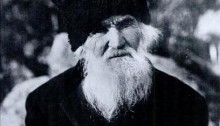
Agapius Honcharenko in his later years

Recently, Nicholas Chapman published several newly-discovered documents relating to Agapius Honcharenko here at OH.org. A reader named Reg responded with this comment:

This is getting confusing. Matthew since you wrote the original story on Honcharenko, could I ask you to post a timeline on Honcharenko:

Date & place of birth
Education
Date & place of tonsure as a monk
Date & place of ordination as deacon
Date of assignment to Russian Embassy Church in Greece
Date of change of name
Date of ordination as a priest by EP
Date of arrival in America
Date of ministry in NY
Date of connection with New Orleans Church
Date of marriage & I assume leaving the EP jurisdiction
Date of arrival in CA
Date of death.
This would be a great help to all of us.

Let me try to tackle these one by one.

1. Date and place of birth: According to Volume 2 of the Encyclopedia of Ukraine (Univ. of Toronto Press, 1988), Honcharenko was born on August 31, 1832 in “Kryvyn, Skvyra county, Kyiv gubernia.” I’m no expert on Ukrainian geography, but I take it he was born in or around Kiev. I believe the August 31 date is according to the Gregorian Calendar. In an April 9, 1911 article, the San Francisco Call reported Honcharenko’s birth date as August 19, 1832. (August 31 minus 12 days — the difference between the Julian and Gregorian in the 19th century – is August 19.)

2. Education: According to one of the documents found by Nicholas Chapman (“The Case Against Agapius Honcharenko”), Honcharenko was educated at the “Seminary in Kiev,” or the Kiev Theological Academy. This is corroborated by most modern sources.

3. Date and place of tonsure as a monk: I’m not certain of the date, but “The Case” (referred to above) has Honcharenko completing his seminary studies in 1853, entering the Kievo-Pechersk (Kiev Caves) Lavra and being ordained a hierodeacon in 1856.

4. Date and place of ordination as deacon: Honcharenko was ordained a deacon at the Kievo-Pechersk Lavra in 1856.

5. Date of assignment to the Russian Embassy Church in Greece: 1857.

6. Date of change of name: I don’t know. His given name was Andrii Humnytsky, but I don’t know what he changed it to Agapius Honcharenko. Does anyone out there know what “Honcharenko” means?

7. Date of ordination as a priest by EP: I don’t know. In fact, I’m not at all certain that he was ordained by a bishop of the Ecumenical Patriarchate. In his 1865 letter defending himself, Honcharenko does claim to have received ordination and an antimens from the “Great Church” (presumably Constantinople), but I would not be surprised if he was actually ordained by a bishop of the Church of Greece. In any event, given the language of the 1865 letter, I suspect that this happened sometime in 1864, not long before Honcharenko sailed to the US.

8. Date of arrival in America: According to Honcharenko’s 1865 letter, he arrived in America on December 21, 1864. He seems to be following the Julian Calendar; according to the Gregorian Calendar, it would have been January 2, 1865.

9. Date of ministry in New York: Honcharenko claims to have served his first American Divine Liturgy (probably in New York) on Christmas Day — January 6, by the Gregorian Calendar in the 19th century. His “ministry” in New York (if you can call it that) lasted until about April, when he left to visit New Orleans. He returned to New York, but was rejected by the Orthodox there, who had learned of his… issues.

10. Date of connection with the New Orleans church: On March 26, 1865, the New York Times reported that Honcharenko would depart for New Orleans “in a few days.” He was in New Orleans by April 11, when he published an open letter to the Orthodox of that city in the New Orleans Times. In the letter, he said that he would stay in New Orleans until April 22. As far as I know, his roughly two-week visit to the city was the extent of Honcharenko’s ministry in New Orleans.

11. Date of marriage: As best I can tell, Honcharenko married a young Italian woman in Philadelphia in the late 1860s, possibly between his departure from New York and his arrival in the San Francisco Bay area in about 1867. He doesn’t seem to have maintained any contact with church authorities in either Constantinople or Athens, and his connection to anything resembling mainstream Orthodoxy appears to have ended shortly after his New Orleans visit in April 1865.

12. Date of arrival in CA: Late 1867, as best I can tell.

13. Date of death: May 5, 1916 in Hayward, California.

UPDATE (9/21/10): In response to an earlier article, a reader named Helen informed me that the University of Minnesota holds materials on the life of Honcharenko. I have emailed the university to request copies of their holdings, and will post something here at OH.org once I get a response.

[This article was written by Matthew Namee.]

Go to Top