Posts tagged Christopher Jabara
This week in American Orthodox history (June 11-17)
0June 16, 1889: Deacon Raphael Hawaweeny was ordained to the priesthood by Bishop Sylvester, rector of the Kiev Theological Academy. Deacon Raphael had come to the Kiev school a year earlier, and the plan was for him to study there and then return to Syria, where he would become the Russian-language secretary for the Patriarch of Antioch. Toward the end of the 1888-89 school year, however, the Patriarch appointed Deacon Raphael to be head of the Antiochian metochion (embassy church) in Moscow. The previous head of the metochion was Fr. Christopher Jabara, who had worn out his welcome because of his heretical theological views. And speaking of Jabara…
June 11, 1893: Fr. Christopher Jabara dedicated a chapel for the Syrians in New York City. After being ousted from his position in Moscow, Jabara falls off the radar for a few years before turning up in New York, on his way to the World’s Fair in Chicago. For the past year or so, the Arab Orthodox of New York had been attending the city’s new Greek church, and they were excited to see a priest who spoke their own language. They quickly established a chapel, and two Russian priests from visiting warships joined Jabara in the dedication. (Click here to read more about the chapel.)
Unfortunately, the chapel didn’t last long. At the “Parliament of Religions” held at the World’s Fair, Jabara promoted his idiosyncratic theology, arguing that Orthodoxy should abandon the doctrine of the Holy Trinity and unite with Islam. That pretty much killed any chance Jabara had of an Orthodox ministry in America, and the New York chapel seems to have died out. But two years later, the man who replaced Jabara at the Antiochian metochion in Moscow — Fr. Raphael Hawaweeny — himself arrived in America, inaugurating a 20-year ministry to the Arab Orthodox in the New World.
If you want to learn more about Fr. Christopher Jabara, check out this article from 2009.
June 17, 1893: Bishop Nicholas Ziorov blessed the Russian pavilion at the Chicago World’s Fair. The Fair was a tremendous event, and it had a lot of interesting Orthodox features.
June 11, 1983: Archbishop Nikon de Greve died. He was born in the Russian Empire in 1895 and served in the White Army during the Russian Civil War. Eventually, he ended up in Paris, where he studied at the famed St. Sergius Institute and became a hieromonk. He was serving at the Russian cathedral in Paris when the Nazi army took over the city during World War II, and when Archbishop Alexander Nemolovsky (by then the Archbishop of Brussels) was arrested by the Nazis, Nikon went to Brussels and administered the diocese in Alexander’s stead.
Nikon was consecrated a bishop for Belgium in 1946, and the next year, he sailed for America. He served as bishop of Philadelphia and later Toronto until 1959, when he became primate of the Church of Japan. After four years in Japan, Nikon returned to America. By this point, he was nearly seventy. He took the title “Archbishop of Brooklyn,” but wasn’t given a diocese to oversee. He died at the age of 88, and is buried at St. Tikhon’s Monastery.
June 12, 1995: Bishop Gerasimos Papadopoulos (Greek Archdiocese) died. Some have suggested that Bishop Gerasimos may be worthy of canonization.
June 17, 2007: Archbishop Kyrill Yonchev, longtime head of the Bulgarian Diocese of the OCA, died. Fr. Andrew Damick wrote about Archbishop Kyrill and his diocese a few years ago.
June 12, 2009: The Pan-Orthodox Conference at Chambesy, Switzerland, concluded. This meeting set the stage for Assemblies of Bishops to be created throughout the so-called diaspora, including North America.
The First Antiochian Chapel in America
0In the life of St. Raphael Hawaweeny published by Antakya Press (page 24, to be precise), there’s a reference to an early Syrian/Antiochian chapel in New York, dating to 1893. The story goes that a visiting Antiochian priest, Archimandrite Christopher Jabara, established the chapel at Cedar and Washington Streets in New York City. Unbeknownst to the local Syrians, however, Jabara espoused a radical, heretical theology, rejecting the Holy Trinity and calling for the unification of all religions — and especially a merger of Orthodoxy with Islam. Jabara was a speaker at the Parliament of Religions in Chicago, and his talks were reported in the New York newspapers. Jabara was “compelled to leave the country” and eventually died in Egypt. To read more about Jabara, check out this article I wrote two years ago.
I haven’t been able to find much of anything about that original Syrian chapel, but I did recently stumble upon the following note in the June 12, 1893 issue of the New York Sun:
The members of the Syrian Orthodox Greek Church who have been worshipping in the Greek chapel in Fifty-third street have now a chapel of their own on the top floor of the building at the northeast corner of Cedar and West streets. The chapel was dedicated yesterday morning at 10 o’clock. The service, which was in Greek, Arabic, and Russian, was conducted by Archimandrite Christophoros Jebarah, assisted by two priests from the Russian war ships now in the harbor. The Russian Vice-Admiral and a party of Russian sailors attended the service.
Jabara’s own weirdness aside, this is a really fine example of early inter-Orthodox cooperation. At the time, the only Orthodox church in New York was Greek, so that’s where all the Orthodox went — regardless of ethnicity. (Other sources tell us that the local Russians also attended the Greek church.) And when the Syrians opened their own chapel, the visiting Russian clergy and sailors came out for the dedication. Orthodoxy was small and new in early 1890s America, and the Orthodox, of necessity, had to work together. Of course, once the necessity passed, the Orthodox were content to break up into their respective ethnic groups.
Anyway, the Syrian chapel failed pretty quickly. It’s clear that Jabara wasn’t the right man to lead the church, but two years later, the right man, Archimandrite Raphael Hawaweeny, arrived on the scene, leading the Syrians until his death two decades later.
This article was written by Matthew Namee.
The World’s Parliament of Religions, 1893

World's Parliament of Religions. Abp Dionysius Latas is holding a staff, the second man to the right of the podium. (Click to enlarge. Many thanks to Isa Almisry for sending me a link to this photo.)
Not long ago, I wrote a pair of articles on the visit of the Greek archbishop Dionysius Latas to the United States. The archbishop came to America in 1893 to attend the ”World’s Parliament of Religions,” which was held in conjunction with the Chicago World’s Fair. When we last left Abp Dionysius, he had visited New York and Washington and was on his way to the main event in Chicago. We’ll continue his story today.
Abp Dionysius and his deacon, Homer Paratis, arrived in Chicago in August or early September. The archbishop gave two addresses at the Parliament. His main talk focused on the history of religion in Greece, from the pre-Christian philosophers through the arrival of Christianity. He closed with this prayer:
Almighty King, most High Omnipotent God, look upon human kind; enlighten us that we may know Thy will, Thy ways, Thy holy truths; bless Thy holy truths; bless Thy holy Church. Bless this country. Magnify the renowned peoples of the United States of America, which in its greatness and happiness invited us to this place from the remotest parts of the earth, and gave us a place of honor in this Columbian year to witness with them the evidences of their great progress, and the wonderful achievements of the human mind.
The Parliament itself was a typically overambitious 19th century ecumenical gathering, and some of the participants had unrealistic goals of inter-religious union. In fact, one of those unduly optimistic compromisers was the Antiochian archimandrite Christopher Jabara, whom we’ve discussed in the past.
There were other Orthodox people there, too. Fr. Panagiotis Phiambolis, pastor of Chicago’s new Greek church, gave a speech of his own, and in many ways, it was more interesting than either of Abp Dionysius’ addresses. He was certainly not of one mind with Fr. Christopher Jabara. At the outset of his talk, Phiambolis said, “Believing is not the question — believing rightly is the question.” After referring to Rome’s schism from Orthodoxy, Phiambolis attacked Islam:
This division resulted in the prevention of Christianism and the progress of Mohammedanism, whose motto is, “Kill the Infidels,” because every one who is not a Mohammedan, according to the Koran of the prophet, is an infidel, is a dog. [...] The people of the orient suffered, and still suffer; the Christian virgins are dishonored by the followers of the moral prophet, and the life of a Christian is not considered as precious as that of a dog.
Phiambolis then spoke of the Orthodox Church:
Regarding the church, the orthodox church, we are true to the examples of the apostles and the paradigma of the synods, we follow the same road in religious questions, and after discussion do not accept new dogma without the agreement of the whole ecumenical council; neither do we adopt any dogma other than that of the one united and undivided church whose doctrine has been followed until to-day. The orthodox Apostolic Catholic church contains many different nations, and every one of them uses its own language in the mass and litany and governs its church independently, but all these nations have the same faith.
The Russian bishop of Alaska, Nicholas Ziorov, was at the Parliament on its opening day, but was conspicuously absent from the meetings themselves. According to the 1893 book The World’s Parliament of Religions, Bp Nicholas “met with the delegates and deeply regretted that his church duties called him from the city.” I’m not sure what those “church duties” were, and while I’m just speculating here, it’s possible that Bp Nicholas (or his superiors in Russia) did not want high-ranking Russian Orthodox churchman to participate in such a potentially questionable gathering. Of course, it could have been much simpler — Bp Nicholas simply could have had prior commitments.
The Parliament was more of a spectacle than anything else, and Fr. Christopher Jabara’s hopes for a single world religion were left unfulfilled. Abp Dionysius continued his tour of the United States, and we’ll pick up the rest of his journey in a future article.
[This article was written by Matthew Namee.]
The First Orthodox Liturgy in Boston

St. Paul's Episcopal Cathedral, site of the first Orthodox liturgy in Boston
Not too long ago, I wrote about Fr. Christopher Jabara, an Antiochian priest who visited America in 1893-94. Jabara preceded St. Raphael Hawaweeny, but he wasn’t the first Antiochian priest to come to the United States. That title, I believe, belongs to Fr. Constantine Tarazy.
Tarazy was a celibate priest (possibly an archimandrite) from Damascus, and he arrived in America in 1892. He doesn’t appear to have been sent by the Patriarchate of Antioch, or anything — he seems to have come on his own initiative. In June of 1893, he celebrated what appears to be the first Orthodox liturgy in Boston. From the Boston Globe (6/27/1893):
Rev. Constantin Terzis of Damascus, a priest of the Greek Orthodox Church, celebrated mass in the parish rooms connected with St. Paul’s Episcopal church, Tremont st., Sunday morning. This is perhaps the first time such an event has been witnessed in Boston. The ritual is like that of the “high church” Episcopal service. Dr. Terzis is an Arabian, and has been a professor in theology at Athens, Greece. He is quite an elderly man and unmarried.
Tarazy tried to start a church in New York, but the Syrian community was too small to support it. He eventually returned to Syria, where he later became a bishop.
Fr. Christopher Jabara paid a visit to Boston in 1894, but he was speaking with Unitarians about his strange religious ideas, not ministering to the local Orthodox population. I’m not sure when the next Orthodox liturgy in Boston took place, but I suspect it was celebrated by a visiting Greek priest in 1895 or so.
Fr. Christopher Jabara, the ultra-ecumenist
I always laugh a little bit when I hear people complain about Orthodox involvement in things like the World Council of Churches. It’s not that I support such involvement — my position on modern ecumenical relations really isn’t relevant here — but I laugh because I can’t imagine what the present-day anti-ecumenists among us would say about what was going on at the turn of the last century.
For instance, can you imagine what would happen if the World Council of Churches was expanded to include Muslims, Hindus, and Buddhists? And if Orthodox bishops and priests were some of the main participants? That’s what happened at the Chicago World’s Fair in 1893, where the “Parliament of Religions” tried to serve as a veritable United Nations for religion.
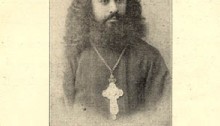
Fr. Christopher Jabara, 1894
In the future, we’ll talk in detail about the Orthodox involvement in this event. For now, though, I’d like to focus on one of the Orthodox attendees in particular — the Antiochian archimandrite Fr. Christopher Jabara, who held the most extreme views of any of the Orthodox who were present.
For a number of years, Jabara had been the head of the Antiochian metochion (representation church) in Moscow. During this period, Jabara happened to meet with the Ecumenical Patriarch, and he helped arrange for an Antiochian student to attend the Patriarchal seminary at Halki. That student? A young monk named Raphael Hawaweeny.
A decade later, Jabara ran into problems in Russia. Apparently, he started talking about all religions being the same — particularly Christianity and Islam. This incurred the ire of the Metropolitan of Moscow, who ran him out of the country. His replacement as head of the metochion? Deacon Raphael Hawaweeny.
I’m not sure exactly where Jabara went after that, but by the end of 1892, he was in New York — one of the first Antiochian priests to come to America. He was carrying credentials from the Patriarch of Antioch (or at least, that’s what he said; unless we can inspect them, we can’t really be certain). The local Syro-Arab Orthodox, who were just glad to see an Antiochian priest, welcomed Jabara, and they set up a temporary chapel at Cedar and Washington Streets in New York City. At some point along the way, Jabara authored a book entitled, The Unity of Faith and the Harmony of Religions. The next year, the Parliament of Religions met in Chicago, and Jabara was there. Among other things, he said,
My brothers and sisters in the worship of God! All the religions now in this general and religious congress are parallel to each other in the sight of the whole world. Every one of these religions has supporters who prefer their own to other religions, and they might bring some arguments or reasons to convince others of the value and truth of their own form of religion.
Therefore, I think that a committee should be selected from the great religions to investigate the dogmas and to make a full and perfect comparison, and, approving the true one, to announce it to the people. This is easy to do in America, and especially in Chicago, as here the means for realization may be found.
First, there is full religious liberty; second, there is great progress in all branches of science; third, there is presence of great learning; fourth, wealth and benevolence; fifth, the piety of the American people in general and their energy in so many things useful to humanity, making this country a refuge to all nations.
Columbus discovered America for the whole world and discovered a home for the oppressed of all nations. As Columbus discovered America, so must Americans show the people of all nations a new religion in which all hearts may find rest.
That wasn’t all. Jabara told the Globe reporter,
I think and believe that when the gospels and the Koran, which are really one, are reconciled and the two great peoples, Christians and Mahometans, are also reconciled, the whole world will come into unity and all differences fade away.
All the human kind will become brethren in worshipping the true God and following Christ, the savior of the world, and I, as a servant of religion during all my life, have come from far away Damascus on my own account and in my poverty pray, in the name of God the omnipresent, that the people may consider my ideas on the unity of religion, especially between the sacred books.
Needless to say, the Syro-Arabs ran Jabara out of New York. There’s a story, probably apocryphal, that when Jabara returned to the chapel, his key didn’t work — somebody had already changed the locks. (This story is printed in the Antakya Press life of St. Raphael.)
Jabara stayed in America, and, as I said, he was in Boston in March of 1894. But he wasn’t there to minister to the Orthodox of the city; according to the Globe, he “came to Boston especially as a center of Unitarianism where the tenets of religion and the principles of his mission can be sifted and appreciated.”
Eventually, Jabara left the US, traveling to Egypt. An American Protestant named John Henry Barrows met him there in 1896-97, and wrote this account:
Two other men, who were present at the Parliament, I unexpectedly met at the Sunday services in the American Mission. One of them is Christophora Jibara, formerly Archimandrite of Damascus. He is still very active and earnest in what he deems his chief mission, persuading Christians to give up the doctrine of the Trinity, which prevents, as it seems to him, their coming into any union with Mohammedans and Jews. He believes that Christ is the Son of God and wrought a gospel of redemption. Jibara is a master of several languages, and I tried in vain to persuade him to employ his powers of speech in preaching a positive gospel, instead of smiting all his life at a dogma which has worn out many hammers.
I don’t know what happened to Jabara after 1897. The last traces I’ve found of him are from 1901, when Gerasimos Messara, the Metropolitan of Beirut, wrote a reply to an open letter by Jabara. (I don’t have copies of either Jabara’s letter or Met. Gerasimos’ reply; all I’ve found is this Google Books reference.)
With Jabara out of the picture, the Syro-Arabs in America still needed a priest. In 1895, they finally got one. His name? Fr. Raphael Hawaweeny.