Posts tagged Constantinople

Early stages of the Bulgarian schism from Constantinople

0

We just finished running a series of six articles on the 1872 Council of Constantinople, published contemporaneously in the Methodist Quarterly Review. The following article is from about a decade earlier, and describes the early stages of the Bulgarian split from the Patriarchate of Constantinople. This piece is from an American journal called The Independent, March 28, 1861:


Separation of the Bulgarians from the Greek Church – The Hopes of the Protestant and the Roman Missionaries – Establishment of a United Bulgarian Church.

An actual separation from the Greek Church has already been commenced on the part of the Bulgarians, a tribe which counts a population of about four millions, living mostly  in the province of Bulgaria Proper and in the northern part of the provinces of Macedonia and Thrace, and in which of late a special interest has been awakened in America by reports of the missionaries of the American Board and of the Methodist Episcopal Church, who have been laboring among them, if not with great actual results, at least with good prospects for the future. The Bulgarians have been engaged for several years in a struggle against the heads of the Greek Church, for the recovery of their national ecclesiastical rights, which only needs to be more generally known in order to enlist the liveliest sympathy of all friends of religious liberty.

The Bulgarian Church was free from any dependence on the Patriarch of Constantinople up to the year 1767, when, by the intrigues of the then Patriarch Samuel, backed by the Greek archons, the Turkish Government was induced to abolish the Bulgarian archiepiscopal see of Ochrida [sic], and to place all the Bulgarian people under his jurisdiction. From that time, the Greek prelates have imposed on the Bulgarians the same odious yoke which the Church of Rome has so successfully laid on all the churches of Western Europe. They have introduced into their churches the use of a language which the people do not understand, and have sent them bishops who have always shown themselves hostile to its cultivation in church and school.

Since the issue of the Hatti-Houmayoun in 1856, the Bulgarians have urgently demanded the restoration of their ancient rights. There seems to be no difference of opinion among them on this point; bishops, priests, and laity appear to be perfectly unanimous, and the national movement, in this respect, is as strong and sound as the one which has been recently so successful in Italy. They demand the erection of an independent Bulgarian patriarchal see, and the appointment of only Bulgarian bishops, and in support of their demand they instance the fact that the Greeks themselves have four patriarchal sees, viz., those of Constantinople, Alexandria, Jerusalem, and Antioch, and one archiepiscopal see, (that of Cyprus,) all independent of each other. The justness of these claims becomes the more apparent, if it is remembered that the Bulgarians are by far more numerous in European Turkey than the Greeks.

Nevertheless, the higher Greek clergy have made to such reasonable demands the most obstinate and defying resistance. Not only did they turn a deaf ear to all the appeals for the restoration of the Bulgarian language at Divine service, but when the new ecclesiastical constitution was being framed, they treated the Bulgarians with utter neglect, and almost ignored their existence. The Bulgarians, therefore, very properly refused to be represented in the assembly electing a new Patriarch of Constantinople, either by laymen or ecclesiastics, saying that it was a matter in which they had no concern, as they would no longer acknowledge the Patriarch as their spiritual head.

The Turkish Government has unfortunately sided in this question with the Greek clergy, and not with the Bulgarians. It has believed the insinuation that the Bulgarian movement has been set on foot by agents of the Russian Government, and that the latter was using the ecclesiastical agitation as a means for effecting a closer union of all the Sclavonic [sic] tribes of Russia among themselves, and with Russia. When thus all the attempts of the Bulgarian churches had failed, a part of the people have at length listened to the cunning advice which the Roman Catholic missionaries, aided by French diplomacy, have given them. The Roman priests suggested to the leading men among the Bulgarians that, by only acknowledging the Pope as the Supreme Bishop of the Church, they might obtain their independence of the Patriarch of Constantinople, or constitute themselves after the example of the United Greeks, United Armenians, United Copts, the Chaldeans (i.e., United Nestorians,) and the Catholic Syrians, (United Jacobites,) as an Independent National Bulgarian Church, and thus be at once put in possession of all their ancient rights, including the use of the Bulgarian language at divine service. The leaders of the movement seem, at first, to have used this expedient as a means of forcing the Greek clergy into compliance with their wishes; and a memorial, holding out the probability of a union of the entire people with Rome, if the national wishes were not gratified, was very numerously signed. It was on the strength of this memorial that, a few months ago, the Roman Catholic papers of Europe and this country prematurely announced that the union had been actually consummated.

This, as yet, is far from being the case. But a beginning has been made. A correspondence from Constantinople in the Presse of Paris, gives the following description of it: “It was on Sunday morning, (Dec. 30th,) immediately preceding high mass, that the formal act of abjuration was received. The national deputation numbered 200, and consisted of two archimandrites, three priests, and twenty esness, (chief magistrates,) who bore an address containing signatures, and were supported by a body of civic officers. They were received by Monsignor Brunoni on the part of the Pope, and Monsignor Hassoun, the Primate of the United Armenians. The following transaction then took place between Mr. Ivanoff, the spokesman to the party, and Mgr. Brunoni: ‘We petition to be admitted into union with the Church of Rome.’ ‘Do ye yield to the dogma of the said  Church, that she alone is one and true?’ ‘We so believe it.’ ‘Are ye prepared to sign this declaration as an act of your faith?’ ‘We are so prepared, and we ask you to present the same as our united deed to the head of the Church — the Pope, at Rome. We would also add that we wish to retain our liturgy.’ Hereupon the Bulgarian deputies annexed their names to an official document — the clergy taking precedency in the signing. After this, the Archimandrite Macariog stood forth and pronounced an address in the Bulgarian tongue, which was full of fire. The oath of the Gospels was next received, and then the Armenian Archbishop pontificated. On the conclusion of the high mass the kiss of brotherhood was exchanged between the members of both bodies, clerical and lay, beginning with the Primate as he descended from the altar.”

The Monde of Paris reports some additional details. According to its correspondent, the Bulgarians of Constantinople on the same day issued a manifesto to the entire nation, announcing that December 30th would henceforth be celebrated as the greatest national festival. The Grand Vizier is said to have declared on the next day to a Bulgarian deputation that the Government would lay no obstacles to this new movement. The United Bulgarians have purchased a building which is to serve as a school and the dwelling of their future Patriarch.

The Roman Catholic papers are of course again very sanguine, and expect that the majority of the nation will speedily join the union. Other reports, however, ill accord with such expectations. It is maintained that all the chief Bulgarians in Constantinople, including several bishops and priests, have published a protest against the seceders, declaring them to be men of no influence or character, and unworthy to lead the Bulgarian nation. They have, moreover, appealed to the Constantinople branch of the Evangelical Alliance for aiding them in securing the recognition of their ecclesiastical independence, and the Evangelical Alliance have called the attention of the Protestant Embassadors [sic] at Constantinople, viz., those of Great Britain, United States, Prussia, Denmark, Holland, and Sweden, to the interesting movement, and begged them to exert their friendly influence in favor of the just demands of the Bulgarians. The movement thus has entered upon a new stage, and greatly increases in interest and importance.


Again, this is from 1861 — more than a decade before the Council of Constantinople. Some key takeaways, for me:

  • I don’t know a lot about Bulgarian Church history, but if in fact the Bulgarians more or less governed themselves until the 1760s, and only after that were subjected to ecclesiastical control by the Greeks, then it makes a lot of sense that they would resent that control.
  • It’s particularly notable that the Bulgarians and other Slavs outnumbered the Greeks in the European part of Turkey. Yes, there were a lot of Greeks in Asia Minor, but from the Bulgarians’ perspective, Constantinople was an elite minority that was imposing its own Greek language and practices in a region that was mostly Slavic.
  • The Bulgarians were hardly alone in their predicament. Over in Syria, the Arab Orthodox were governed by a Greek hierarchy — this was referred to as the “Greek captivity” of Antioch. Same thing in Jerusalem. I don’t know about the ethnic makeup of the Patriarchate of Alexandria (I suspect it was largely Greek), but still, that’s two ancient Arab patriarchates that were governed by, essentially, puppets of Constantinople. And St. Raphael, writing against this a generation later, got kicked out of the Patriarchate of Antioch for his views.

Soon, I’ll try to write something to tie this whole Bulgaria / 1872 Council / phyletism thing together, at least preliminarily. To be honest, I’m still trying to make sense of it all myself, but it does seem to me that what the Bulgarians were guilty of wasn’t necessarily “phyletism” so much as it was the desire to have bishops from their own region, familiar to and with their own people, and friendly to their indigenous culture. Which, come to think of it, is exactly what most Orthodox people want, everywhere, and in every age. That’s not to justify what the Bulgarians did, which seems to be pretty clearly uncanonical. But there’s a difference between uncanonical, schismatic acts and heresy.

Oh, and one final thing: I’ll be a guest on Kevin Allen’s live call-in show “Ancient Faith Today,” on Ancient Faith Radio, this Sunday, December 9. The topic is “ethnocentrism,” and among other things, I’ll be talking about the 1872 Council that condemned phyletism. The show begins at 5 PM Pacific / 6 Mountain / 7 Central / 8 Eastern, and you can listen live at this link: http://ancientfaith.com/ancientfaithtoday. You can also download the show after it’s finished and listen later. If you do listen live, feel free to call in with a question. I’d love to hear from some of our readers!

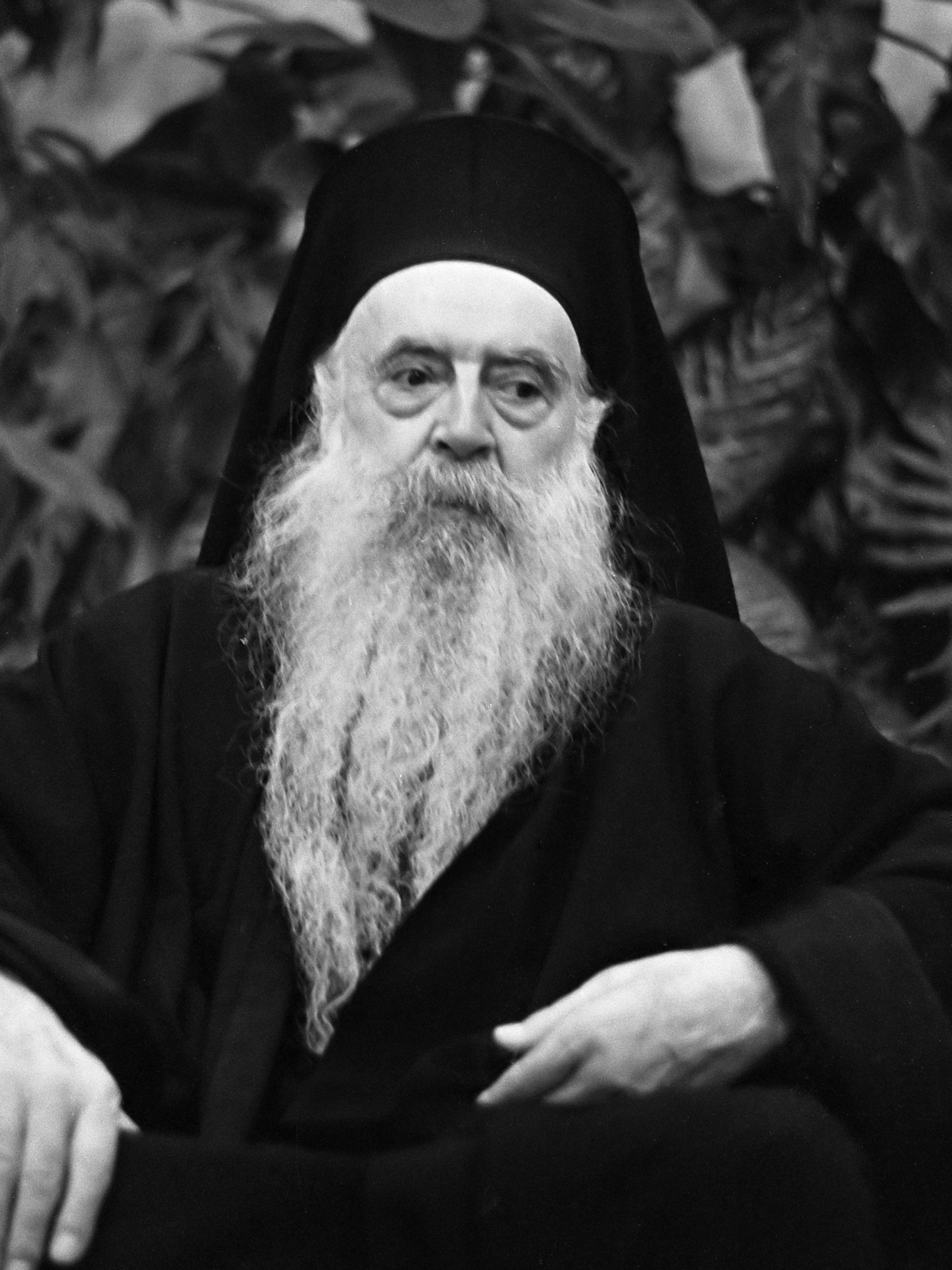
Patriarch Joachim II of Constantinople (image from Wikimedia Commons)

The “Bulgarian Question” and the 1872 Council of Constantinople, Part 6

0

This is the final Methodist Quarterly Review article dealing with the aftermath of the 1872 Council of Constantinople. From the Methodist Quarterly Review, April 1874.


Patriarch Joachim II of Constantinople (image from Wikimedia Commons)

The Bulgarian Church question has, on the whole, attracted less attention during the year 1873 than in the previous years. The Bulgarians, undoubtedly, have the sympathy of the Slavic Churches of Russia, Austria, Roumania, Servia, and Montenegro; but the Turkish government was again, as usual, very vacillating in its policy. The Bulgarians complained of the partiality of the new Minister of Justice, Midhat Pasha, in favor of the Greeks. When, however, on June 25, the Patriarch of Constantinople, Anthomos [sic], refused to join the other dignitaries of the country in congratulating the Sultan upon the twenty-fifth anniversary of his accession to the throne, because the Turkish government declined to exclude, in accordance with his request, the Bulgarian exarch from the official reception, the Turkish government declared to the Patriarch its decided disapproval of his conduct. In September the Synod of Constantinople expressed to the Patriarch their want of confidence in him, whereupon he resigned his office. In December a new Patriarch of Constantinople was elected in place of the deposed Anthomos. The Turkish government did not exercise her right of striking out one or several names of the ten candidates whom the Electoral Synod had chosen, the Grand Vizier, Raschid Pasha, declaring that all of them were acceptable to the government. The Synod, which consists of priests as well as delegates of the laity, then elected the former patriarch, Joachim II, as Patriarch of Constantinople.

As the immense majority of the members of the Oriental Church of European Turkey are Slavic, the Greeks who prevail in the government of the Church of Constantinople begin to appreciate the necessity of making concessions to them, lest the movement for the establishment of independent Churches on the basis of nationality, which already has emancipated the Churches of Roumania, Serbia, and Bulgaria from the jurisdiction of the Patriarch of Constantinople, become general. The new Patriarch, Joachim, being called upon to appoint a new Metropolitan of the Slavic Churches of Bosnia in January, 1874, has gained the universal approval of Bosnians by appointing to that office Bishop Anthomos, who is an enthusiastic supporter of the national movement among the Slavi of Turkey.


I’ll be a guest on Kevin Allen’s live call-in show “Ancient Faith Today,” on Ancient Faith Radio, this Sunday, December 9. The topic is “ethnocentrism.” The show begins at 5 PM Pacific / 6 Mountain / 7 Central / 8 Eastern, and you can listen live at this link: http://ancientfaith.com/ancientfaithtoday. You can also download the show after it’s finished and listen later. If you do listen live, feel free to call in with a question. I’d love to hear from some of our readers!

Patriarch Kyrillios (Cyril) II of Jerusalem

The “Bulgarian Question” and the 1872 Council of Constantinople, Part 5

0

This article is the fifth in a six-part series on the 1872 Council of Constantinople. In this installment, we learn about the aftermath of the Council. The one bishop who refused to sign the Council’s decree was the Patriarch of Jerusalem, and when he returned to Jerusalem, he was deposed by his Holy Synod. This led to an international incident involving the Ottoman Empire, Russia, Greece, and even Germany. From the Methodist Quarterly Review, July 1873.


Patriarch Kyrillios (Cyril) II of Jerusalem

The excommunication of the Bulgarians by the Holy and Grand Council of Constantinople, in September, 1872, (see “Methodist Quarterly Review,” January, 1873, p. 148,) soon created new troubles. The Greeks of Turkey and Greece gave to the decree of excommunication a fanatical support. The refusal of the Patriarch of Jerusalem, Kyrillos, to sign the decree, called forth on the part of the clergy and the people of his patriarchate the greatest indignation. A synod of bishops of the patriarchate of Jerusalem at once met in Jerusalem, admonished their Patriarch to submit to the declaration of the Council, and when he definitively refused, deposed him from office. The following translation of his official decree of deposition is a very interesting contribution to the recent history of the Greek Church:

To-day, Tuesday, November 7, of the year 1872, in the twelfth hour, all the episcopal members of the Holy Synod of Jerusalem, after assembling in the hall of the synodal sessions of the monastery of the Holy Sepulcher, and after taking into consideration the last definitive answer of his Holiness, the Patriarch, Kyrillos II., relative to the acceptance of the resolution of the Grand and Holy Council legally and canonically convoked at Constantinople — by which resolution phyletism (that is, the distinction of races and nationalities in the Church) was rejected and condemned, and all who approved this phyletism, and who, inspired thereby, have held up to this day illegal and clandestine meetings, were declared to be schismatics — have unanimously decreed and do decree as follows:

In consideration that his Holiness — trampling under foot all that he had written in his synodal letter of January 24, 1869, to the Grand Church — not only acted arbitrarily in Constantinople and refused to join in the recognition of the Grand Council, but that he also, in Jerusalem, obstinately, and without sufficient reason, opposed to the invitations and prayers addressed by us to him the refusal to submit with us to the resolution of the Grand Council;

In consideration of all this, we consider him as having incurred the ecclesiastical censures which are expressly contained in the said resolution of the Grand Council, and as being, de facto, schismatic. And we find ourselves in the sad and painful necessity to take back the oath of submissiveness and obedience taken by us toward him, and henceforth to break off all connection and communion with him, and we shall never more perform any function with him, or in any respect act with him, and we shall no longer recognize him as head, and as our lawful and canonical shepherd. In confirmation of which the present act has been compiled and entered into the great book of the Patriarchal Throne of Jerusalem. Moreover, copies of this act have been sent to the Grand Church and to all independent Orthodox Churches.

Both the Patriarch of Constantinople and the Turkish Government, which was likely notified of the resolution of the Council of Jerusalem, recognized the deposition of the Patriarch and gave permission for the election of a new Patriarch. But before this took place Jerusalem was the scene of considerable agitation. The deposed Patriarch refused to recognize the lawfulness of his deposition, and declared his intention to celebrate, on November 23, vespers in the Church of the Holy Sepulcher. The clergy and the monks refused to assist him. From the surrounding country an excited crowd of adherents of the Patriarch, led by the Russian dragoman, invaded Jerusalem, spreading considerable alarm among the opponents of the Patriarch. Police soldiers entered the cells of the monks in order to drag them before the Patriarch. As the monks offered resistance the state of siege was declared, and the monks shut up in the monastery of the Holy Sepulcher. The Patriarch, in the evening, and again on the next day, repaired to the Church of the Holy Sepulcher, attended by the Russian and Greek consuls.

When the consuls of the other Powers asked the Governor of Jerusalem for the cause of this uncommon movement, he replied that the Greeks wished to protect the Patriarch who had been deposed by his clergy, and that he (the Governor) regarded it as his duty to support the Patriarch against the revolutionary clergy. The Consul-General of Germany replied that the Governor seemed to him to exceed his powers, for the organic statutes of the Patriarchate provided for the election of the Patriarch by the clergy who, therefore, had also the power to depose him, while the laity were nowhere mentioned. The Governor then confessed that he was not free, and that the Russian consul had threatened him with deposition in case he should fail to support the Patriarch. Appeal was then made to the Turkish government; the consuls reported to their Governments, and the clergy elected a deputation to go to Constantinople. The Porte, in agreement with the Patriarch of Constantinople, instructed the Governor of Jerusalem by telegraph to protect the clergy, and no longer to recognize Kyrillos as Patriarch. The Greek Government at once deposed the Greek consul, and the Porte forbade all the newspapers to publish any more polemical articles on the question, and ordered the deposed Patriarch to take up his abode in the little island Prinkipo, in the sea of Marmora.

The bishops who had signed the decree of deposition were the Archbishop of Gaza and the Bishops of Lydda, Neapolis (Nablus), Sebasta Tabor, Philadelphia, Jordan, and Tiberias. They then elected the Archbishop of Gaza Patriarch of Jerusalem. The bishops and archimandrites who at first sided with Kyrillos soon deemed it the safest to declare their submission, which they did in the following letter to the Patriarch of Constantinople:

To his Holiness the Ecumenical Patriarch Anthimos, Jerusalem, December 10, [N.S. 22,] 1872.

We, the undersigned, the Metropolitans Agapios of Bethlehem and Niphon of Nazareth, and the Archimandrites Yussuf, Chrysanthos, Joseph, Gregorios, and the Protosyngels Daniel, Gabriel, and the others of our party among the monks of Mar Saba, [a monastery not far from the Dead Sea,] have for a moment sided with the ex-Patriarch, Kyrillos, and have, by our telegram of November 27, [N.S. December 9,] protested against the resolution of the Synod of Jerusalem. But having already repented, we implore the indulgence of the Church and humbly pray for pardon, as we recognize all the resolutions of the Synod of Jerusalem, and turn away from Kyrillos.”

The Russian Government soon gave another proof of its sympathy with Kyrillos and with the Bulgarians by laying embargo upon all the property of the Patriarchate of Jerusalem which is situated within the territory of Russia. The property embraced about thirty estates, situated in the best districts of Bessarabia, and yielding an annual rent of 200,000 rubles. At the same time the Russian ambassador in Constantinople must have interceded in behalf of the deposed Kyrillos with great energy, for the Turkish Government not only set him free after a few weeks, but also asked his pardon for the injury done him.

In Constantinople, in the meanwhile, the Ecumenical Patriarch had in November prevailed upon the Turkish Government to ask the Bulgarian Exarch to make propositions with regard to a change in the clerical dress of the Bulgarian clergy, so as to distinguish them from those in ecclesiastical communion with the Patriarch of Constantinople. The Exarch was afraid that the abandonment of a dress which the mass of the people looked upon as an integral part of the clerical dignity might be injurious to the interests of the Bulgarian Church, and he therefore refused to make the demanded change.


I’ll be a guest on Kevin Allen’s live call-in show “Ancient Faith Today,” on Ancient Faith Radio, this Sunday, December 9. The topic is “ethnocentrism.” The show begins at 5 PM Pacific / 6 Mountain / 7 Central / 8 Eastern, and you can listen live at this link: http://ancientfaith.com/ancientfaithtoday. You can also download the show after it’s finished and listen later. If you do listen live, feel free to call in with a question. I’d love to hear from some of our readers!

The “Bulgarian Question” and the 1872 Council of Constantinople, Part 4

0

This article is the fourth in a six-part series on the 1872 Council of Constantinople, and this particular report covers the Council itself. It contains what is, to the best of my knowledge, the only complete English translation of the decree of the Council. From the Methodist Quarterly Review, January 1873.


The rupture between the Greek Patriarch of Constantinople and the Bulgarian nation (see “Methodist Quarterly Review,” 1872, p. 329) became complete by the election, in March, 1872, of Bishop Anthim as Exarch, or head of the national Bulgarian Church. The Exarch at once made efforts to bring about an understanding with the Patriarch. The latter replied that he would give a respite of forty days, after the lapse of which he must return to the orthodox Church, and during which he must abstain from exercising any episcopal function, under penalty of canonical law.

The Exarch indeed abstained from all ecclesiastical functions, although the Passover of the Greek Church took place within this period. But in the latter part of May the Exarch yielded to the pressure brought upon him by the leaders of the national Bulgarian party, and solemnly released the three Bulgarian bishops who, in January, 1872, had been excommunicated by the Patriarch, from the excommunication. This induced the Patriarch to convoke a meeting of his synod and of many prominent laymen, which declared the negotiations with the Bulgarians to be at an end, and Anthim to have incurred the canonical censures. On the other side, the Exarch, on May 24, left out in the liturgy the prescribed mention of the Patriarch, and substituted for it the words “the orthodox episcopate,” which immediately called forth the reading of a pastoral letter by the Patriarch, excommunicating Anthim and pronouncing the great anathema against the three Bulgarian bishops.

Notwithstanding these measures, the Bulgarian Church consolidated itself more and more. The Exarch soon consecrated a new bishop, and at Wodina, in Macedonia, the Bulgarians expelled the Greek bishop, and declared that, in accordance with Article X of the firman establishing the Bulgarian exarchate, (by which article it is provided that two thirds of the inhabitants of a diocese have the power of demanding the connection of the diocese with the exarchate,) they would join the Bulgarian Church.

On September 10 the “Great Synod” of the Church met in Constantinople. All the Patriarchs and twenty-five archbishops and bishops were present. The Synod soon declared “phyletism,” that is, the distinction of races and nationalities within the Church of God, as contrary to the doctrine of the Gospel and of the Fathers, and excluded six Bulgarian bishops and all connected with the exarchate from the Church. All the bishops signed the decree except the Patriarch of Jerusalem, who left the Synod before its close, and was therefor insulted by the Greek population of Smyrna, in Asia Minor, who received him with shouts of “Traitor!” “Muscovite!” The following is a translation of the decree of the Synod, which will remain an important document in the annals of the Greek Church:

Decree of the Holy and Grand Council, assembled at Constantinople in the month of September, in the year of grace 1872.

The Apostle Paul has commanded us to take heed unto ourselves and to all the flock over the [sic] which the Holy Ghost hath made us overseers, to govern the Church of God, which he hath purchased with his own blood; and has at the same time predicted that grievous wolves shall enter among us, not sparing the flock, and that of our own selves shall men arise speaking perverse things to draw away disciples after them; and he has warned us to beware of such. We have learned with astonishment and pain that such men have lately appeared among the Bulgarian people within the jurisdiction of the Holy Ecumenical Throne. They have dared to introduce into the Church the idea of phyletism, or the national Church, which is of the temporal life, and have established, in contempt of the sacred canon, an unauthorized and unprecedented Church assembly, based upon the principle of the difference of races. Being inspired in accordance with our duty, by zeal for God and the wish to protect the pious Bulgarian people against the spread of this evil, we have met in the name of our Saviour Jesus Christ. Having first besought from the depths of our hearts the grace of the Father of light, and consulted the Gospel of Christ, in which all treasures of wisdom are hidden, and having examined the principles of phyletism with reference to the precepts of the Gospel and the temporal constitution of the Church of God, we have found it not only foreign, but in enmity to them, and have perceived that the unlawful acts committed by the aforesaid unauthorized phyletismal assembly, as they were severally recited to us, are one and all condemned.

Therefore, in view of the sacred canons, whose rulings are hereby confirmed in their whole compass; in view of the teachings of the apostles, through whom the Holy Ghost has spoken; in view of the decrees of the seven Ecumenical Councils, and of all the local councils; in view of the definitions of the Fathers of the Church, we ordain as follows:

Art. 1. We censure, condemn, and declare contrary to the teachings of the Gospel and the sacred canons of the holy Fathers the doctrine of phyletism, or the difference of races and national diversity in the bosom of the Church of Christ.

Art. 2. We declare the adherents of phyletism, who have had the boldness to set up an unlawful, unprecedented Church assembly upon such a principle, to be foreign and absolutely schismatic to the only holy, Catholic, and Apostolic Church. There are and remain, therefore, schismatic and foreign to the Orthodox Church the following lawless men whoh have of their own free will separated themselves from it, namely, Hilarion, ex-Bishop of Makariopolis; Panaretes, ex-Metropolitan of Philippopolis; Hilarion, ex-Bishop of Sostra; Anthimos, ex-Metropolitan of Widdin; Dorothea, ex-Metropolitan of Sophia; Partheonius, ex-Metropolitan of Nyssava; Gennadius, ex-Metropolitan of Melissa, before deposed and excommunicated; together with all who have been ordained by them to be archbishops, priests, and deacons; all persons, spiritual and worldly, who are in communion with them; all who act in co-operation with them; and all who accept as lawful and canonical their unholy blessings and ceremonies of worship.

While we pronounce this synodal decision, we pray to the God of mercy, our Lord Jesus Christ, the head and founder of our faith, that he will preserve his holy Church from all dangerous new doctrines, and that he will keep it pure, spotless, and fast, on the foundations of the apostles and the prophets. We pray him to grant the grace of repentance to those who have separated themselves from her, and have founded their unauthorized Church assembly upon the principle of phyletism, so that they may some day nullify their acts, and return to the only holy, Catholic, and Apostolic Church, in order with all the orthodox to praise God, who came upon the earth to bring peace and good-will to all men. He it is whom we shall honor and worship, with the Father and the Holy Ghost, to the end of time. Amen.

The decree is signed by his Grace the Ecumenical Patriarch and the three former Patriarchs, the Pontiff and Patriarch of Alexandria, the Patriarch of Antioch, the Archbishop of Cyprus, and by twenty-five metropolitans and bishops.


I’ll be a guest on Kevin Allen’s live call-in show “Ancient Faith Today,” on Ancient Faith Radio, this Sunday, December 9. The topic is “ethnocentrism.” The show begins at 5 PM Pacific / 6 Mountain / 7 Central / 8 Eastern, and you can listen live at this link: http://ancientfaith.com/ancientfaithtoday. You can also download the show after it’s finished and listen later. If you do listen live, feel free to call in with a question. I’d love to hear from some of our readers!

The “Bulgarian Question” and the 1872 Council of Constantinople, Part 3

0

In case you haven’t been following along, this is Part 3 in a 6-part series of articles we began last week, covering the 1872 Council of Constantinople, which famously condemned “phyletism.” All of these articles were published in the Methodist Quarterly Review, within months of the events they discuss.

This installment was published in the Methodist Quarterly Review in April 1872, and reports on the events that took place in 1871.

Oh, and in case you’re wondering why I’m suddenly posting all this stuff about the 1872 Council of Constantinople: this Sunday, December 9, I will be a guest on Kevin Allen’s “Ancient Faith Today” show, on Ancient Faith Radio. The live broadcast begins at 5 PM Pacific / 6 Mountain / 7 Central / 8 Eastern. The topic is “ethnocentrism.” If you can listen live, and want to call in with a question, I’d love to hear from you. You can also download the show afterward and listen to it whenever you want. (And while you can’t call in after the fact, I’m always happy to answer questions!) Anyway – Sunday night. Oh, and here’s the link: http://ancientfaith.com/ancientfaithtoday.


The Bulgarian Church question continued to agitate the Greek Church of Turkey throughout the year 1871. The committee of six Bulgarian bishops, which, in accordance with the firman of February 26, 1870, met in Constantinople, in union with prominent Bulgarian notables of the Turkish Senate, in order to prepare a draft for the organization of an autonomous Bulgarian exarchate, (the main points of this draft were given in the Methodist Quarterly Review, 1871, p. 319,) drew up at the same time an act for the election, by the committees of clerical and lay deputies of a national assembly, to meet in Constantinople in April, 1871, for the rectification of the Church statutes.

An active discussion took place in this assembly between those who advocated the application of the regulations of the old Greek Church to the new exarchate, and a progressive party which favored the introduction of the presbyterial system. The principal journal of “Young Bulgaria,” under the leadership of the “Makedonia” of Slavejkov, supported the party of progress. After long and animated debates the Church assembly declared in favor of the participation of the laity in the administration of the affairs of the Church, the establishment of the salaries of the higher and lower clergy, and the exclusive application of all surplus of ecclesiastical taxes to the elevation of popular instruction and the establishment of higher schools. It was decided also, by a vote of 28 to 15, that the exarch should be appointed, not for life, but for a term of five years. The place where he should reside was left an open question, almost equally strong reasons being presented in favor of his residence at Constantinople and in one of the larger towns near the center of the exarchate. The discussion of the draft of the Church Constitution was finished on May 26, and it was presented to Ali Pasha by three deputies of the assembly — Hadshi Ivantshov, Pentchov Gyordaki, and Dr. Tchomakov.

The Greek Patriarch, supported by the diplomatic influence of Russia, came again forward in opposition to the Sultan’s well-intentioned measures for his Bulgarian subjects, with the demand that the Bulgarian Greek Church conflict should not be regarded as an administrative question, but as one of canon law, and that it should be left to the exclusive decision of an ecumenical council. He protested against all the acts of the Bulgarian National Assembly as uncanonical and unconstitutional. In the contemplated ecumenical council the patriarchate would be sure of a majority. The few Bulgarian bishops would be easily silenced by the numerous Hellenic bishops of the Greek Churches of Constantinople, Jerusalem, Alexandria, Antioch, and Cyprus, and the continued Hellenization of the Bulgarian people would even receive the canonical approbation of the council, against which, as the Patriarch had said in a letter (November 4, 1870) to Ali Pasha, there is no appeal.

In the meantime, however, the Patriarch Gregory VI. had laid himself open to censure by his undissembled animosity against the Slavic people and his opposition to the commands of the Turkish Governments. Abandoned by the Governments of Russia and Servia, he had no alternative but to accept the suggestion of Ali Pasha, and resign the patriarchate. Antim Kutalianus succeeded him on the 18th of September. Being of a more conciliatory disposition than his predecessor, he sought, as early as October, to engage in negotiations with influential Bulgarians for a compromise of difficulties. These negotiations have been of a more conciliatory character, but from what has transpired respecting them they do not seem likely to allay the long-increasing division in the Church. Antim insists upon giving the patriarchate control of the appointment of the Bulgarian exarch, upon the levy of a tax of a piaster upon each Bulgarian household, and upon the repeal of the tenth section of the Sultan’s firman, which permits districts with a mixed population of Greek and Bulgarians to be attached to the Bulgarian exarchate upon the vote of the majority. The opposition of the patriarchate to this paragraph is easily explained, since it threatens it with a serious loss of moral and material power — a loss which it is not well able to bear since the Servian and Roumanian Churches have been cut off from their dependence upon it. On the other hand, it is natural that the Bulgarians should insist upon its being retained, as its operation will be to promote the continual growth of their exarchate in territory and power.

Members of the Bulgarian National Assembly, among them the deputies from Adrianople, Rustchuk, etc., and the Bulgarian community at Constantinople, have protested earnestly against further continuance of the negotiations with the Patriarch on this basis, to which he adheres obstinately. The decision on the whole subject, however, rests solely with the Porte.

A new conflict between the Bulgarians and the Patriarchate arose when, at the festival of Epiphany, 1872, three Bulgarian bishops, in order to show their independence, celebrated mass, in spite of the prohibition of the Patriarch, in the Bulgarian Church of Constantinople. The patriarch on the next day made a full report of the occurrence to the Turkish Government, which exiled the three Bishops. He also called a meeting of the great National Council, to which he explained the facts in the case and read the report. The Council resolved to publish a proclamation to the nation and to distribute it all over the country.

The Bulgarians were not agreed as to the best course to be now pursued. The Young Bulgarians insisted on the immediate rupture of all negotiations with the patriarchate, and applied to the Porte for the immediate appointment of a Bulgarian exarch. With this request the Porte, however, declined to comply. The more moderate party among the Bulgarians lamented the acts of the three bishops, and demanded the continuation of the negotiations with the patriarchate.

Soon, however, the Turkish Government was prevailed upon to take, once more, sides with the Bulgarians. In February, 1872, a decree of the Grand Vizier proclaimed that the Turkish Government, in consideration of the efforts of the Ecumenical Patriarchate to bring on splits between the Greek and the Bulgarian population, which the Porte had endeavored to prevent, would not establish the Bulgarian exarchate in accordance with the imperial firman. The responsibility for this measure would wholly rest with the patriarchate by which it had been provoked. It is also announced that a new Bulgarian Church Congress will assemble in Constantinople to carry out the provisions of the imperial firman.

Go to Top