Posts tagged John of Kronstadt

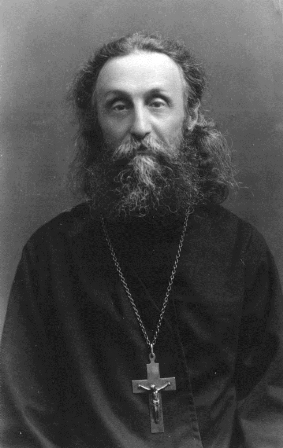
St. John of Kronstadt, 1894

Isabel Hapgood on St. John of Kronstadt

St. John of Kronstadt, 1894

St. John of Kronstadt, 1894

A couple of weeks ago, we reprinted St. Alexander Hotovitzky’s 1904 account of his meeting with St. John of Kronstadt. Nearly a decade earlier, the famous translator Isabel Hapgood wrote her own profile of St. John — then known as Fr. John Sergieff, pastor of St. Andrew’s Church in Kronstadt. The article appeared in The Independent on August 8, 1895. I’m reprinting it here in full:

Father John, of Kronstadt, who prayed with the late Emperor of Russia on his deathbed and comforted his sorrowing family, is one of the most famous men in Russia, in a quiet and peculiar way. So famous is he that Olelz Joann — Father Joann, is no more likely to be mistaken for indicating any other Priest John out of the multitudes who bear that name, than is the man himself, after one sight of him, to be mistaken for any other priest. For the last ten years, at least, he has held a unique place in Russian society and Russian hearts. I had something of an experience with him precisely in one of the directions which have rendered him famous and beloved. I confess that I do not yet quite know what to make of it. One day, in an Imperial summer resort about sixteen miles from St. Petersburg, I saw a large crowd assembled in front of a house and gazing with rapt eagerness at the door and at a carriage drawn up before it. Crowds thus gazing are not usual in Russia, except when royalty is expected. But I knew that that house belonged to a merchant, and that royalty would hardly be calling there; moreover, the private equipage, the handsome, did not bear the stamp of even the plainest imperial turnout. On inquiry, I found that “Father Joann, of Kronstadt,” was visiting a sick person in the house, and that the people were patiently waiting for a glimpse of him. They were too eager to tell me more, and I was too busy to lie in wait for “an ordinary priest,” as I put it to myself. However, I began to ask questions. I heard a very great deal, but was puzzled by the attempt to make even a small part of it fit in with the photographs of the man which I saw everywhere, and to which hitherto I had paid no attention. The pictures represented a man apparently about forty years of age, with long, smooth hair, and none of the waving locks, graceful beard or picturesqueness possessed by many Russian priests. His eyes arrested my attention; they seemed to be light in color, and peculiar in expression. That was all.

What did I hear of him? What did I not hear! And from people of every rank and degree of intelligence. Princesses and countesses assured me that he performed miracles of healing, by a mere touch, that he read one’s past at a glance, and foretold the future. Princes and counts — I mention titles by way of labeling ranks and prejudices broadly — declared that he had a way of picking out skeptical and hardened young men in a large company, which he saw for the first time, and not only winning their hearts with a few gentle words, but sending them home repentant and reformed. People in the artistic and literary class hesitated to condemn him, even when they believed in little else. Sisters of Charity, semi-religious, servants, peasants, all devoutly believed in any power which might be ascribed to the man; and many members of all these classes had personal experiences with him to relate in confirmation of their beliefs, or cures, partial or complete, which they had witnessed, to allege in proof. It was regarded as an immense honor to be singled out in a company and addressed by Father Joann; and a friend of mine told me, in open triumph, that he had once walked up to her and kissed her with a holy kiss. It meant some sort of blessing, but precisely what she had not decided. Not another priest in Russia could have kissed a woman of the highest society in company like that and escaped the natural consequences, much less have been thanked for such a flagrant breach of propriety in general, and in particular, of the propriety which regards the whole priestly class as inferior, a thing apart, not to be invited to dinner with one’s first-class friends and the like.

The plain facts, as I eventually sifted them out, were these: Father Joann is a man about twenty years older than he looks. He is a parish priest in Kronstadt, the fortified island about twenty miles from St. Petersburg, where the river Neva enters the Gulf of Finland, and almost opposite the Imperial summer resort, Peterhoff. Whether his wife (all parish priests must be married before they are ordained), weary of his eccentricities and carelessness of material interests, really separated from him, as rumor declared, I do not know. His ways with money were — and probably are still — enough to vex a saint. Whatever any one gives him “in Christ’s name, for the poor,” he takes, and thrusts into his pocket without looking at it. Equally without looking at it, he hands over the whole, be it a fat roll of bankbills, or a few bits of silver, to the next person who begs of him; and his own little stipend goes in the same way. Result — an undeserving, plausible scamp may get a thousand rubles from Father Joann, and a worthy sufferer may get next to nothing. This is regarded by Father Joann’s admirers as saintly; but a little mathematics and discrimination would not interfere with the essential quality of his nimbus, as I ventured to remark occasionally, getting plenty of frowns for my hardness of heart.

Several weeks after my first knowledge of Father Joann had prompted my interest, as I have described, I was driving from Oranienbaum palace to the wharf to take the steamer for Kronstadt, when I met a very ordinary looking merchant’s wife in a carriage with a priest, also ordinary, I thought — until he looked at me. I was startled — why, I could not tell. I asked, on the steamer, if Father Joann had just come over, and found that the strange priest was really the man in search of whom my trip to Kronstadt in great part had been undertaken, as the forts are inaccessible to visitors, the docks are soon seen, and the town itself is uninteresting. His absence was short, however, and I went to early mass to see him officiate. That is considered a rare sight and a privilege, and always attracts great crowds. He was very quiet, very impressive, very “intense.” His peculiar eyes, and manner of floating about rather than walking, would have riveted my attention had I never heard about him. The throngs which were waiting for a word with him, and his habit of slipping away to avoid people, suggested to me the advisability of seeking him at his hospital. It is due to Father Joann to say, that his Faith Cure hospital was established by his admirers, not by him, as he lays no claim to miraculous powers. At the hospital I was received by a young priest, who declared that there were no patients on hand; that Father Joann never came there unless someone needed him; but that he might happen to come in at any minute if I were ill, and that he was going to St. Petersburg by the next boat. I have omitted to state that, altho nominally attached to the parish in Kronstadt, Father Joann is in such great demand that he is, on the whole, more rarely to be found there than elsewhere; and that when his coming is expected he can take his choice from among the aristocratic carriages whose owners throng to the wharf, in the hope that they might be thus honored.

The young priest was decidedly uppish, and I was retreating in great doubt and displeasure when a nun entered to beg for her convent. She was one of the lay sisters, with “reform” petticoats nearly on a level with her knees, and stout, masculine boots meeting them, who swarm all about churches, shops, markets and places where money abounds. The young priest made short work with her persuasive whine, and gave me a delicious glimpse of his character.

“See here, you,” said he; “didn’t you come here begging before? I know your face. Get out!”

She whined on; but he, cleaning his finger nails the while, raised his brows superciliously, and repeated:

“Get out of here this moment, I tell you.”

“And won’t you even give me your blessing?”

He fairly flung a blessing at her, pushed his hand against her lips for the regulation kiss of gratitude, jerked it away, and went on with his nails. His behavior convinced me that Father Joann really was not in the house, or immediately expected, to witness such proceedings; and I departed without reluctance, tho greatly disappointed.

I sought Father Joann no more. It seemed hopeless. But many months later, I met him in a railway carriage quite unexpectedly, and recognized him at once. His clear, brilliant blue eyes were very searching, but gentle, and in nowise alarming seen thus at short range. He looked through me for a moment, then grasped one of my hands firmly in his, and softly patted me on the shoulder with the other, in an unconventional manner which must have aroused the envy of all the Russians who beheld the scene. After standing thus for what seemed to me a long time under the scrutiny of those eyes, he tightened his clasp on my hand and said: “You will have strength; yes, you will have strength!” Then he blessed me — a voluntary blessing from him is regarded as an honor and prophetic of good fortune — gently refused the handkiss due him, and clasped both my hands instead. That is a fair and characteristic specimen of a favorable interview with Father Joann, and of his prophecies. Like the prophecies of the Delphic oracle, one has to live through the fate before it is possible to interpret it. Now, so far as my own case is concerned, I can believe that his prophecy has come true, if I choose so to believe. Events have taken place since in which I have required much strength, and in which I have, most unquestionably, had all that Father Joann or the Delphic oracle could have demanded. But, to tell the truth, before guaranteeing the prophetic powers of Father Joann, I should require some sort of proof that he foresaw precisely that complicated set of circumstances, and foretold the strength precisely in that connection and in no other. Of course, that is just the point which never can be proved; but I am content with having had such a sight of this singular individual.

You might wonder, why am I reprinting these articles about St. John of Kronstadt — who, after all, never left Russia — on a website devoted to the history of Orthodoxy in the Americas?

It is difficult, a century later, to understand the fame of St. John. He was the most famous Orthodox priest in the world, and in the West, he might have been the most famous Orthodox clergyman, period — patriarchs included. How to illustrate this… Of course, he was covered by all the big papers – the New York Times, the Chicago Tribune, the Washington Post. But it went beyond that. In 1891, the Idaho Avalanche devoted nearly a full column on its front page to a description of St. John. Papers in Wisconsin, Oregon, Ohio, and Georgia wrote about his miracles. The Iowa City Citizen reported that a blind man received his sight at St. John’s funeral. The Boston Globe called him Russia’s “uncrowned pope.” His diary, My Life in Christ, was translated into English and distributed in America. For many Americans, Father Ioann, or Ivan, or John, simply was Orthodoxy. No comparable figure exists today; probably, no comparable figure could exist. The American press reported on St. John like you would expect them to report on a superhero. We will never see the like again.

And then, of course, there are the obvious connections between St. John and American Orthodoxy. St. Alexander Hotovitzky, the leading priest in the Russian Mission, had a personal audience with him. And before she had ever laid eyes on St. Tikhon, Isabel Hapgood had shaken hands with St. John. The great priest was a regular subject in the official magazine of the Russian Mission. And St. John himself took a personal interest in American Orthodoxy, sending money to support the building of St. Nicholas Cathedral in New York City. (If you visit there, they have a great icon of the saints of the cathedral — founders Tikhon and Alexander; those who served there: Raphael, John of Chicago, and Alexis Toth; and their financial benefactors Tsar Nicholas II and St. John of Kronstadt.)

Although he never set foot on American soil, one might reasonably number St. John among the saints of North America. And because of his importance, we’ll have much more to come on his life, from an American perspective.

St. Alexander Hotovitzky

St. Alexander Hotovitzky on St. John of Kronstadt


St. Alexander Hotovitzky

St. Alexander Hotovitzky

St. Alexander Hotovitzky was the rector of St. Nicholas Church (and then Cathedral) in New York City from his ordination in 1896 until his return to Russia in 1914. For almost all of that time, he was the highest-ranking priest in the Russian Mission. Of course, he was dean of the diocesan cathedral, but he traveled a great deal, ministering to Orthodox people all over the Northeast. He was also editor of the Vestnik (the official diocesan magazine).

Anyway, St. Alexander traveled to Russia in 1903, and while there, he paid a visit to Fr. John Sergiev — known even then as the wonderworker John of Kronstadt. After his return to America, St. Alexander spoke with a reporter from the Wilkes-Barre Times. The resulting article is one of the best things I have ever read in a newspaper, and, while it’s quite long, it is so good that I’m reprinting most of it in full. (The date, incidentally, is April 7, 1904.)

In the study of Rev. Alexander A. Hotovitzky, Archpriest of the church of St. Nicholas, the chief adornment is a large picture of Father John bearing his autograph. This was presented to Father Hotovitzky last Summer when, during a visit to Russia, he called upon Father John to thank him for the interest he had taken in his little flock. A portion of the funds necessary for the erection of the handsome new church edifice was collected in Russia, and Father John both by personal donations and by enlisting the interest of others in the cause became a substantial contributor.

The visit of Father Hotovitzky to Cronstadt [sic] occurred on July 19 (old style). It so happened that this was Father John’s name day. Faithful to a custom of many years, the Russian divine on that day celebrated a solemn mass in the cathedral and then entertained at dinner the many friends who had come to extend their good wishes. The Rev. Father Hotovitzky was one of the guests.

“Vice Admiral Marakoff was toast-master at the dinner,” said Father Hotovitzky yesterday. “It was only natural that he should be, for he and Father John are bound together by ties of warm personal friendship. There were present at that dinner many dignitaries of Church and State, but, nevertheless, it was a most democratic affair. Father John has some quaint notions, and even in a land of such marked class distinction as Russia, rich terms of equality. It was a good dinner, and good things to drink went with it, for Father John, though ordinarily he lives as frugally and abstemiously as a monk, believes that God put the good things of life on earth for the cheer of man, and he loves to see others enjoy themselves.

“Father John in some respects is the most remarkable man in Russia to-day, and certainly is the most talked of. He represents a type all by itself in the Russian Church, and no one has so vividly brought home to the people its power and potentialities with a complete leaving out of all the ostentation, pomp, and grandeur with which it formerly charmed and awed the people.

“Those who have been wont to consider Father John as a mystic or as a man of a monastic cast of mind have erred. He is the opposite. He took a wife, and he mingles freely in the common life of the people, and he enjoys a good joke. He has secularized religion and both by life and teaching has steadily striven to lift the common life to the level of religion. He is a strong advocate of the living help, and he turned his back on monastic orders just because he felt he was needed and could be a potent influence for good by remaining in the open life where those that needed him could constantly besiege the doors of his simple dwelling in Cronstadt when he is there and the crowds that gather at railroad stations during his many journeys through Russia which occupy the greater part of his time have shown that he was right.

“His influence reaches from the throne of the Czar to the meanest hovel in Russia. He takes from the abundance of the rich with both hands and scatters it as freely among those that need it. It is only through the remarkable gifts he receives that he has been able to maintain something like twenty-five asylums and institutions in different parts of Russia, of which he is the founder.

“One charm about Father John is his broadness. While orthodox in the essential meaning of that word, he makes no distinction between those that follow his and other beliefs. He bestows his blessing on all alike, for he recognizes as divine every channel through which a devout spirit and a realization of the highest life can flow into the human soul.

“In his study you will find a desk, a bed and some holy pictures. It is as simple as the cell of a monk. He spends little time there, however, for his time is mostly taken up with relieving suffering among the poor, comforting the dying, and on missionary journeys. Were a call to attend a deathbed at the other end of the empire to reach Father John in the middle of the night he would rise and take the first train.

“There are many in Russia who ascribe supernatural powers to Father John. He does not claim any, except the power of prayer. He is a firm believer in that, and the most remarkable thing is that his prayers are very brief. But one cannot look into his wondrous violet eyes without feeling that the look in them is not of this world. They seem to be looking, one minute far beyond the border line of life, and at other times they seem to penetrate into one’s very soul. Strangely, also, those who have observed him during the last twenty-five years of his life – he is now over seventy – declare that age seems to have wrought no change in his appearance.”

1903 drawing of St. John of Kronstadt, from the Chicago Tribune

1903 drawing of St. John of Kronstadt, from the Chicago Tribune

Further along in the article, the author (not St. Alexander) tells this story, which, while not really relevant to American Orthodox history, is still so good that I have to print it here.

During the lifetime of the late Czar [Alexander III] he [Fr. John] was often summoned to the Imperial Palace. Once he was sent for on behalf of the Princess Elizabeth, consort of Duke Sergius and a sister of the present Czarina. The Princess was ill and his prayers were wanted. Father John is said to have asked the Czar whether the Princess had entered the Greek Church from conviction or merely as a matter of policy – she was a German and originally a Lutheran. Astounded at his holiness, the ruler of All the Russias sharply told the prelate to mind his own business. Father John drew himself to his full height, fixed a penetrating glance on his imperial master and replied:

“That is just what I am doing, your Majesty. God, whose humble servant I am, demands that this question should be answered.”

Whether it was answered or not is not known. But when the Czar was dying in Crimea an urgent call was sent to Father John, and he was rushed across Russia on an imperial special [train] to the bedside of the monarch.

It’s hard to imagine something like this in a newspaper today, but in St. John of Kronstadt’s lifetime, the American press was fascinated with him. Beginning in the early 1890s, St. John appeared quite regularly in US newspapers, complete with accounts of miracles (including even the raising of someone from the dead). But this Wilkes-Barre Times article stands out from all the rest. Here, you have one saint talking about another (a rare enough thing), and for a secular audience no less.

Go to Top