Posts tagged Athenagoras Spyrou

Fr. Vladimir Guettee

This week in American Orthodox history (March 19-25)

0

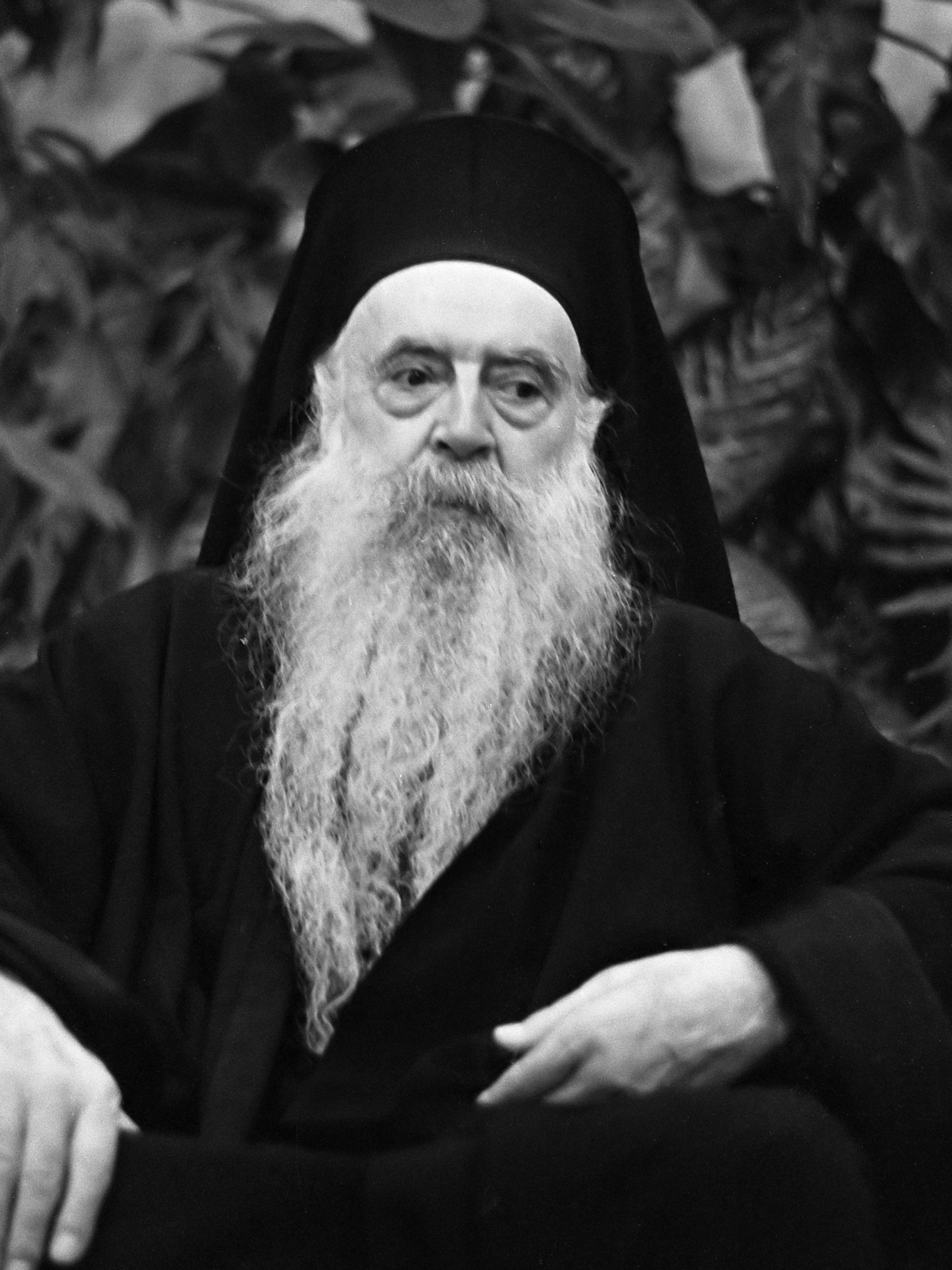
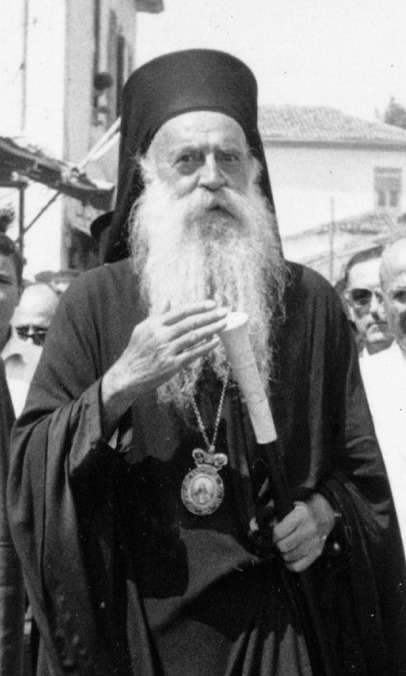
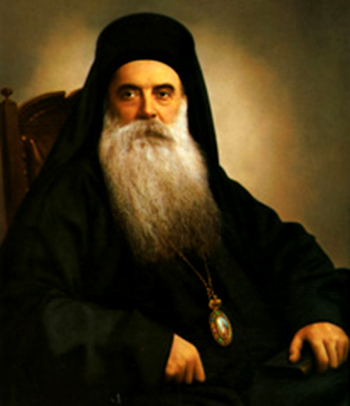
March 25, 1886: The future Greek Archbishop and later Ecumenical Patriarch Athenagoras Spyrou was born. Athenagoras led the Greek Archdiocese from 1930 to 1948, when he was elected Patriarch of Constantinople. He served in that position for nearly a quarter-century, until his death in 1972.

March 25, 1891: St. Alexis Toth and his Greek Catholic parish in Minneapolis joined the Russian Diocese of the Aleutian Islands and Alaska.

Fr. Vladimir Guettee

March 22, 1892: The French Orthodox convert priest Fr. Vladimir Guettee died. Guettee had been a respected Roman Catholic historian and Jesuit priest, but through his study of history, he came to believe that the Orthodox Church alone had preserved the true faith. He joined the Russian Church, taking the name “Vladimir,” and published a widely read journal on Orthodoxy which reported on American Orthodox events. He also wrote a lengthy refutation of papal claims, which can be read here.

March 25, 1896: The future hieromartyr Fr. Jacob Korchinsky was ordained to the priesthood by Bishop Nicholas Ziorov. Korchinsky’s travels make his fellow circuit-riding priests look wimpy by comparison — Alaska, Canada, Pennsylvania, New Jersey, Ohio, Mexico, Hawaii, the Philippines, Australia, and finally back in his native Odessa (modern Ukraine). At 80, he was executed by the Soviets, and he is now being considered for glorification as a saint. To read more about Korchinsky, check out this article I wrote in 2010.

March 24, 1907: Russian Archbishop Tikhon Bellavin concelebrated his last Divine Liturgy in America, with Bishops Raphael Hawaweeny and Innocent Pustynsky.

March 22, 1908: In Boston, Fr. Theophan Noli celebrated the first-ever liturgy in the Albanian language, anywhere in the world. The service took place in Boston, where Noli was a student at Harvard. To read about that first liturgy in 1908, check out my article from 2010.

March 24, 1918: Almost exactly a decade later, Fr. Theophan Noli was appointed as the administrator of the Albanian Mission under the Russian Archdiocese of North America. Not long afterward, he returned to Albania, became the head of the Albanian Orthodox Church, and finally was elected Prime Minister of Albania. He held that post for five months before he was exiled to America, where he led an Albanian jurisdiction for decades.

March 22, 1925: The former Archimandrite Patrick Mythen died in New York. Two years ago, I wrote about Mythen’s life prior to his conversion to Orthodoxy, and I never got around to telling the rest of the story. So here’s the rest of the story, very briefly: Mythen, an Episcopal priest and former Roman Catholic, converted to Orthodoxy in 1920. Within months, he was elevated to the rank of archimandrite and put in charge of a brand-new project called the American Orthodox Catholic Church of the Transfiguration. This was supposed to be an English-speaking parish for American converts. It didn’t last more than a handful of months, but it included several convert priests, most of whom appear to have been Mythen’s friends. When chaos broke out in the Russian Archdiocese in the early 1920s, Archbishop Alexander Nemolovsky relied more and more heavily on Mythen. According to Mythen’s own claims — the accuracy of which is uncertain — he (Mythen) was given power of attorney for the whole Archdiocese. I’ve heard that he even signed clergy ordination certificates. Within a few years, though, Mythen re-converted to Roman Catholicism. He was found dead in 1925, at the age of just 42.

March 25, 1925: Three days later, a man who could not be more different than Mythen — St. Tikhon, by now the Patriarch of Moscow — died in Russia.

March 24, 1935: Bishop Polycarp Morusca was consecrated in Romania to lead the Romanian Diocese in America. He was enthroned in Detroit a few months later, and over the next several years, he did a lot to organize the Romanian Orthodox of America. In 1939, he returned to Romania to attend a session of the Holy Synod, but World War II broke out, and Bishop Polycarp wasn’t able to return to the United States. In 1947, he notified the American diocese that it had been eliminated from the church budget. He was forced to retire, and future heads of the diocese would have to be approved by Romania’s Communist government. In 1951, the American diocese elected the exiled Bishop Valerian Trifa to be the nominal auxiliary to Bishop Polycarp, but given that Bishop Polycarp hadn’t set foot in America in more than a decade, for all intents and purposes Bishop Valerian was the new head of the diocese. Bishop Polycarp died in Romania in 1958.

Gov. Thomas Dewey of New York signing the bill creating the Federation

March 25, 1943: Governor Thomas Dewey of New York signed into law a bill incorporating the Federated Greek Catholic Primary Jurisdictions of America. The Federation was sort of a primitive version of SCOBA. It included most of the primary Orthodox jurisdictions in America, but there were notable exceptions, including the Russian Metropolia, ROCOR, and the Antiochian Archdiocese of Toledo. In the Federation’s short life — only about a year or so — it achieved some modest but still significant accomplishments. The Federation managed to get Orthodoxy recognized by the Selective Service, exempting Orthodox priests from military service and allowing Orthodox Christians in the military to put “Eastern Orthodox” on their dog tags. It also led to the legal incorporation of several jurisdictions. The Antiochian Archdiocese is still governed by the legislation, from way back in the 1940s. As far as I know, the last meeting of the Federation took place in February 1944, but the Antiochian Metropolitan Antony Bashir kept it going on paper for another 15 or so years, when the dream of the Federation was revived as SCOBA.

March 25, 1998: The renowned church historian Jaroslav Pelikan converted to Orthodoxy. Pelikan was an intellectual giant, a longtime professor at Yale and a prolific writer. He had been well acquainted with Orthodoxy for decades before his conversion, which Fr. John Erickson has described in this way: “In a conversation shortly after his entrance into the Orthodox Church, Jary likened his path to Orthodoxy to that of a pilot who kept circling the airport, looking for a way to land. Orthodox Christians can be thankful that he landed before running out of fuel.” In his later years, Pelikan served as a key member of the St. Vladimir’s Seminary Board of Trustees. He died in 2006. For more on Pelikan, read this 2003 article by Fr. John Erickson. I particularly liked this quote from Pelikan, on being a historian: “Everybody else is an expert on the present. I wish to file a minority report on behalf of the past.”

March 20, 2003: The Orthodox Church of Poland formally glorified St. Vasily Martysz, who had once served in America. To read more about St. Vasily, click here.

March 22, 2009: Archbishop Dmitri Royster of Dallas retired as head of the OCA Diocese of the South.

This week in American Orthodox history (February 20-26)

0

February 20, 1874: The future hieromartyr Vasily Martysz was born in Poland. He served in America — first in Alaska, and then in Pennsylvania, Connecticut, New York, and Canada — from 1901 to 1912. He died in 1945 and was canonized by the the Orthodox Church of Poland in 2003. To read a biography of St. Vasily, click here.

February 20, 1900: At the behest of Bishop Tikhon, the Russian Holy Synod officially changed the name of its North American missionary diocese, from “Diocese of the Aleutians and Alaska” to “Diocese of the Aleutians and North America.”

February 21, 1923: Serbian clergy held a meeting in Gary, Indiana, where they formally declared their independence from the Russian Church and their affiliation with the Serbian Church.

February 23, 1934: The Ukrainian Bishop Joseph Zuk died.

February 23, 1984: Archimandrite Serafim Surrency died in New York, at the age of 58. He was a historian, best known for his important work The Quest for Orthodox Church Unity in America (published in 1973). Until recently, Surrency’s book was the source for information on many American Orthodox historical subjects, including the American Orthodox Catholic Church, the Federation, and the early years of SCOBA. And, despite its limitations, the book remains an essential resource. One mystery which Fr. Oliver and I have been trying to solve for years is what became of Surrency’s personal files — we think they’re full of important material, but we don’t know what happened to them after he died.

February 24, 1904: The newly-consecrated Bishop Innocent Pustynsky arrived in America to take up his post as auxiliary bishop of Alaska. As Scott Kenworthy recounted in an interview with me last year, Bishop Tikhon had been trying for years to get an auxiliary to help govern his immense diocese. Eventually, Tikhon just went to Russia and refused to leave until he had a duly consecrated bishop in hand for his return voyage to America. Very soon after Bishop Innocent’s arrival, he and Tikhon consecrated Fr. Raphael Hawaweeny to the episcopate — the first Orthodox consecration in the New World.

February 24, 1931: The newly-elected Archbishop Athenagoras Spyrou arrived in America to take charge of the Greek Archdiocese.

February 25, 1896: The future hieromartyr Alexander Hotovitzky was ordained to the priesthood by Bishop Nicholas Ziorov. Fr. Alexander was assigned as rector of the fledgling St. Nicholas Russian Orthodox Church in New York.

February 26, 1895: Fr. Sebastian Dabovich celebrated the first Orthodox services in the newly established multiethnic chapel in Portland, Oregon. (To read more, check out my 2009 article on early Orthodoxy in Portland.)

Bishop Joseph Zuk

Bishop Joseph Zuk: A brief biographical overview

Bishop Joseph Zuk

Joseph A. Zuk was the first Ukrainian Orthodox bishop in America, but little has been written about his life. I don’t know a lot, but from the sources I’ve collected, we can piece together a brief biographical sketch. This isn’t much, but I thought it might be worthwhile to get the very basics out there, so we can begin filling in the gaps.

Zuk was born in Eastern Galicia in the early 1870s. He graduated from the University of Lemberg, and then earned a Doctorate of Divinity at the Theological Seminary at Innesbruck. At 33, he became the seminary rector. Later, he was elevated to the rank of mitred prelate, and Pope Pius X appointed him a papal delegate and administrator in Bosnia.

In 1922, Zuk came to America. Six years later, in 1928, he and other Ukrainian Catholic clergy left Rome to join the Orthodox Church. As a priest, Zuk served in Syracuse, NY; Passaic, NJ; Allentown, PA; and McAdoo, PA. He became affiliated with the American Orthodox Catholic Church of Archbishop Aftimios Ofiesh, and in 1932 Zuk was consecrated a bishop by Ofiesh and Bishop Sophronios Bishara in New York City. According to Fr. Seraphim Surrency in The Quest for Orthodox Unity in America, Zuk had about half a dozen parishes in his jurisdiction.

Zuk presided over the first Ukrainian diocese in America for just 17 months. On February 23, 1934, Zuk died in St. Petersburg, Florida, “after an illness since the time he was consecrated bishop” (Syracuse Herald, 2/28/1934). He was reported to be about 60 years old.

By 1934, Ofiesh had married a young girl and the AOCC was functionally dead. Archbishop Athenagoras Spyrou of the Greek Archdiocese presided at Zuk’s funeral, which took place in Carteret, NJ. Zuk was buried in Perth Amboy, NJ. Two years later, the Ukrainian diocese formally joined the Ecumenical Patriarchate — an affiliation which continues to this day.

This article was written by Matthew Namee.

Orthodox hierarchs meet at the Greek Archdiocese headquarters

Who Will Replace Athenagoras?

Orthodox hierarchs meet at the Greek Archdiocese headquarters. Archbishop Michael is fifth from the left, in between Metropolitans Antony Bashir and Leonty Turkevich.

Editor’s note: In our continuing effort to learn more about Greek Archbishop Michael Konstantinides, we are publishing the following article by Ernest Villas, former director of the GOA Department of Religious Education. Mr. Villas died in 2006. This article is reprinted with permission from the Greek Archdiocese of America.

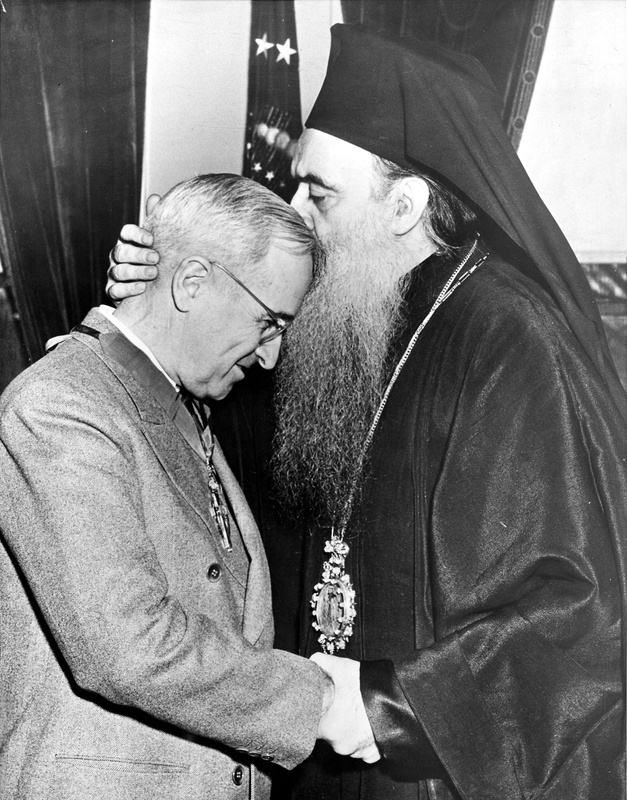
In 1949, after eighteen years of shepherding the Church in the Americas, Archbishop Athenagoras was elected Ecumenical Patriarch. He was flown to Constantinople in the presidential plane of Harry S. Truman, and the question of the day was, “Who will succeed Athenagoras?” That name had become synonymous with Greek Orthodoxy in the Americas, and another Archbishop would be a totally new experience for everyone.

In 1950 his successor, Archbishop Michael, arrived. He was a kindly, soft spoken man, fluent in English, of moderate stature with a white flowing beard. Almost a year passed before the new Archbishop met many of his parish leaders at the 1950 Clergy Laity Congress in St. Louis during the cold days of late November. Who could then imagine that our new spiritual leader would only live long enough to lead his flock through four more Clergy Laity Congresses before being called home to God?

The arrival of Archbishop Michael coincided with the flurry of Greek Orthodox youth activity following World War II. Youth groups from parishes in Chicago, New York, the Upper Midwest, New England and the Rocky Mountain area were already organized and following initiatives by the youth leaders in Chicago.  The first gathering of youth delegates met in November at the 1950 Clergy Laity Congress. This meeting set the stage for the first national youth conference in Chicago eight months later where GOYA and the Archdiocese youth movement were born.

While the goal of uniting our youth was high among the priorities of the new Archbishop, so was the need to stabilize Archdiocese finances. For ten years the “monodollarion” instituted by Archbishop Athenagoras in 1942, had sustained the needs of the Archdiocese. In 1952 at the Clergy Laity Congress in Los Angeles, where the magnificent new Cathedral of St. Sophia was consecrated, Archbishop Michael ignited financial shock waves when he convinced Congress delegates to legislate the “dekadollarion.” He also pricked our moral consciousness with a controversial edict prohibiting dances on Saturday evenings as inappropriate to our participation in the Divine Liturgy on Sunday. There was no lack of items for discussion when delegates returned to their parishes after the Los Angeles Congress!

Meanwhile, Michael moved ahead in another area that was new to most of us, ecumenism. He ushered the Greek Orthodox Church into the National Council of Churches, and began the preliminary efforts of convening his fellow Orthodox prelates into what eventually would become the Standing Conference of Orthodox Bishops in the Americas (SCOBA) organized by Archbishop Iakovos.

His attention also focused on the inner life and order of the Church. Congregations were urged to recite the Lord’s Prayer and Creed in both Greek and English, the taking of flash pictures during weddings and baptisms was forbidden, and, to focus attention on smaller parishes, he had the 1954 Clergy Laity Congress convene in Savannah, GA to demonstrate what could be accomplished by a small Parish.

In 1956, the President of the United States, Dwight D. Eisenhower, accepted an invitation from the Archbishop to participate in the cornerstone laying ceremony of St. Sophia Cathedral in Washington D.C. Later that year, following his reelection to a second term, the President extended to His Eminence the historic invitation to offer the first Orthodox prayer at a U.S. Presidential inauguration. This was a huge step toward the recognition of Orthodoxy as a major faith in America.

The life of Archbishop Michael on earth ended shortly after the 1958 Clergy Laity Congress in Salt Lake City. He had not been feeling well, and eight years of spartan-like existence, plus the never-ending pastoral visitations and duties of the Archbishop took its toll.

His Last Liturgy

Only he knew it, but his sermon on that day was his own eulogy. He must have known the end was near, for at the conclusion of the Divine Liturgy, which opened the 1958 Clergy Laity Congress in Salt Lake City, he came out of the altar to deliver the sermon, but he paused, and instead of proceeding to the Bishop’s throne he took off his Mitre, placed it on the altar and went directly to the pulpit. Why he chose to spurn tradition and deliver his sermon from the pulpit instead of the Bishop’s throne we will never know. Perhaps for physical reasons, for he leaned heavily on its sides and drank deeply from the glass of water placed conveniently there before him. For whatever reason, the sermon he delivered on that day will eternally be enshrined in the minds of those who heard it. There, white beard and hair flowing, ablaze with spiritual fire, His Eminence fervently preached on his favorite topic, St. Paul the Apostle; his words, his great tribulations and temptations, his travels and his famous epistles, and it could  not have been more fitting, that this Sunday coincided with the feast day of Saints Peter and Paul, the latter of who has had a living champion in the person of the Archbishop. Immediately after the Congress banquet, he returned to New York, by an  ambulance plane sent by President Eisenhower, and entered the hospital. On Sunday July 13, 1958, a telegram announcing his unexpected death was read in all of our Churches. It shocked everyone.

The unforgettable funeral with over 150 priests chanting the funeral hymns ended with the long cortege that made its way to St. Basil’s Academy where, amid tears and final goodbyes, Archbishop Michael was laid to rest. His entire life was a total testimony to the Church he loved and served so well, and a dynamic witness to the living God, our Lord and Savior Jesus Christ. The Will of God had been served, and once again history had been set in motion for the next major chapter in the life of our Greek Orthodox people in North and South America.

This article was written by the Ernest Villas. Copyright Greek Orthodox Archdiocese of America and used with permission.

Archbishop Michael Konstantinides

The Treasure of Archbishop Michael

Archbishop Michael Konstantinides

Editor’s note: In its nine decades of existence, the Greek Archdiocese has been served by only six primates — Alexander, Athenagoras, Michael, Iakovos, Spyridon, and Demetrios. And 55 of those years are covered by just two men, Athenagoras and Iakovos. That pair looms large over American Orthodoxy, and an argument can be made that either one is the most influential person in our history. Sandwiched in between those two, the nine-year tenure of Archbishop Michael Konstantinides is often forgotten. Outside of Greek circles, his name is almost totally unknown. Yet Archbishop Michael provided an important bridge between Athenagoras and Iakovos, and his own influence on American Orthodox history was substantial. To help fill in this gap in our historical understanding, SOCHA has received permission from the Greek Archdiocese to reprint a series of articles on the life and work of Archbishop Michael. These articles overlap one another to some degree, but they provide a helpful variety of perspectives. The first of these articles, below, was written by the late Bishop George Papaioannou of New Jersey and originally published in the Hellenic Chronicle (7/11/1996). Bishop George was an historian of Greek Orthodoxy in America, and he was the first widower to be consecrated a bishop in the Greek Archdiocese. He unexpectedly died just six months after his enthronement, on November 22, 1999.

Among the first and most difficult tasks of Ecumenical Patriarch Athenagoras as spiritual leader of World Orthodoxy was to select an Archbishop for the Greek Orthodox Archdiocese of North and South America, a replacement for himself.

On October 11, 1949, Patriarch Athenagoras, in a telegram to Bishop Germanos of Nyssa, locum tenens of the Archdiocese, announced to the Greek American faithful that the Holy Synod, under the guidance of  the Holy Spirit, had elected as legal and canonical Archbishop, Metropolitan Michael of Corinth. Like his predecessor, Michael resembled a biblical personality, imposing yet gentle, sweet and joyful. Like Athenagoras, he was a graduate of the Theological School of Halki but unlike him, Michael had served as a priest in London, was fluent in English, and had pursued theological studies abroad. Corinth enjoyed days of spiritual exaltation during the tenure of Michael in that city. He was a very spiritual man, in the truest sense of the word, unshakable in his dedication to his calling.

Archbishop Michael arrived in New York on December 15, 1949 to take up the reins of the Greek American Church. In contrast to the deplorable conditions that Athenagoras had found when he assumed his duties in 1930, the conditions awaiting Michael were very favorable. His Greek American flock was in harmony and peace and there was prosperity throughout the land. These favorable conditions, however, did not mean that the ministry of Michael was to be an easy one. On the contrary, the beginning of Michael’s tenure coincided with the growing pains, the hopes, the dreams and the expectations of a community in transition from the old guard to the new, from the generation of the pioneer immigrants to the American-born generation.

He entered the picture and devoted all his energy to his people. Michael’s personality was different from that of Athenagoras, who was a diplomat churchman, Michael was an intellectual pietist, he emphasized matters of piety, discipline and sacramental life, especially spiritual and sacramental reawakening. Michael dealt admirably with the two most pressing problems facing the Greek Orthodox community in the United States: religious education and youth.

It was Michael who first allowed a limited use of English in the church. It all began with the teaching of religion in Sunday School. Michael’s predecessor had refused to yield to the pleas of the native born generation and allow the use of English in their teaching of the faith. Although Michael was no less a lover of Greek culture and language than Athenagoras, his deep religious convictions made him recognize the need for the use of English in teaching the Faith.

At the Tenth Clergy-Laity Congress in St. Louis in 1950, he painfully but most eloquently articulated. change that would allow the use of English in Sunday Schools. This innovation was followed by the preaching of the sermon in both Greek and English and the use of English in the sacraments, especially in the western states. Michael’s greatest contribution, however, was in dealing with the second most pressing problem of the Archdiocese, the youth. He labored more than anyone else to advance the rights of the youth in the church.

In April 1951, Archbishop Michael announced through an encyclical letter to the parishes that a national youth conference was to be held in Chicago and asked for their support. The Conference was held as scheduled and heralded as a new era in the Orthodox Church in the United States. The national youth organization became a reality: its name, “GOYA,” was destined to capture the imagination and fulfill the dreams of tens of thousands of young people throughout the American Continent. Michael took personal command of the crusade for GOYA’s acceptance as an inseparable part of our communities.

A churchman of ecumenical dimensions, he advanced the cause of Christian unity; in 1954 he was elected and served as president of the World Council of Churches. Archbishop Michael’s tenure as Primate of the Greek Archdiocese of North and South America was cut short by his untimely death in July of 1958, depriving Orthodoxy of a learned Bishop who was vastly informed, had a wonderfully retentive memory, was fluent in many languages, was an eloquent orator and a brilliant writer. Michael had many talents and virtues. The genius of the man, however. was his spirituality. He was a spiritual man with a deep devotion to his sacred mission of promulgating the Faith in the United States, a man who was loved and respected for his exemplary life and for having personified the motto of his beloved GOYA, Live Your Orthodox Faith.

This article was written by the late Bishop George Papaioannou of New Jersey. Copyright Greek Orthodox Archdiocese of America and used with permission.

Go to Top