Posts tagged Paul Kedrolivansky

Unsolved mysteries of American Orthodoxy

1

Yesterday, I published a brief article on Fr. Stephen Andreades, the first resident priest of the first Orthodox parish in the contiguous United States — Holy Trinity in New Orleans. The entire early history of that parish is something of a mystery. We know who the early priests were — Andreades, Fr. Gregory Yiayias, Fr. Misael Karydis — but we don’t know much about them, and we don’t have a clear understanding of the early life of that parish. The hints that we do have are tantalizing. For instance, Holy Trinity used an organ decades before any other American Orthodox church is known to have added one. But we don’t know the story behind it.

Anyway, all this got me to thinking about some of the toughest cases to crack in my research into American Orthodox history. I’ll run through some of them today.

The Ludwell-Paradise story

This is really Nicholas Chapman’s turf, and it’s just loaded with great mysteries. Among them:

  • How exactly did a young Philip Ludwell III decide to convert to Orthodoxy?
  • What was his family’s connection to the Orthodox Church prior to his conversion?
  • Were there any other Orthodox converts in colonial Virginia, aside from the Ludwell family?
  • How long did Ludwell’s descendants remain Orthodox?
  • What — if any — connection existed between the Ludwell-Paradise family, the New Smyrna colony, and the Russian mission to Alaska?
  • Etc.

St. Peter the Aleut

Did he exist? If so, was he martyred? If not, how and why did the story of his martyrdom develop? We’re making progress on this front, but the critical questions remain unanswered. The frustrating thing is that I know that the Russian government contacted the Spanish government about this at the time, and the Spanish did an investigation, and there are records of this investigation in Madrid. But I can’t get anyone there to get back to me.

The aborted New York church of 1850

The January 1850 issue of the Home and Foreign Record of the Presbyterian Church in the United States of America reported this:

Efforts are now making in New York to form a congregation of Greek Christians. We observe an announcement that a priest of that denomination, with an interpreter, is now in New York, and will doubtless take charge of the movement.

But the first documented Orthodox congregation in New York wasn’t organized until Fr. Nicholas Bjerring arrived in 1870 — 20 years later. So what was going on in 1850? I haven’t found any other traces of this story.

The phantom Galveston parish of the 1860s

Lots and lots of secondary sources refer to a very early Orthodox parish in Galveston, Texas. This parish was supposedly formed in the 1860s and used the name “Ss. Constantine and Helen.” But the earliest traces I’ve found of organized Orthodoxy in Galveston are from the mid-1890s, when Fr. Theoclitos Triantafilides founded a parish of the same name, which still exists. In fact, according to Triantafilides’ biography by Milivoy Jovan Milosevich, Triantafilides intentionally revived the old parish name. From the bio:

It is known that with the outset of the American Civil War, a group of multi-ethnic Orthodox Christians were having regular prayer meetings in Galveston, as early as 1861, and they called themselves “the Parish of S.S. Constantine and Helen.” [...] [I]t was Arch. Fr. Theoclitos’ decision to use the name S. S. Constantine and Helen Church, because the congregation that started on its own should be remembered.

But was this “congregation” a full-fledged parish, as some have suggested? Was it simply a group of Orthodox laypeople gathering for reader’s services? Was it somehow connected to the New Orleans parish — perhaps the earliest “mission” community (as we now commonly use the term) in the contiguous United States? We just don’t know.

Another tantalizing piece of information: at exactly the time when this congregation was supposedly formed, the descendants of Philip Ludwell III were living in Galveston. Were they still Orthodox? And were they connected to this “parish”?

The mysterious death of Fr. Paul Kedrolivansky

We’ve covered this one before: Kedrolivansky, the dean of the Russian cathedral in San Francisco, died under suspicious circumstances in 1878. I’m pretty sure that Kedrolivansky was murdered, but I don’t know by whom. Was it his rival priest, Fr. Nicholas Kovrigin? Gustave Niebaum and the powerful Alaska Commercial Company? A “nihilist,” as some later speculated? We don’t know, and this is a mystery that will probably never be solved.

The Kodiak Bell

The bell from the first Orthodox church in the New World — Holy Resurrection in Kodiak, AK — currently hangs in a Roman Catholic church in California. And nobody really knows how it got there.

Fr. Raphael Morgan

For a long time, all we knew for sure was that the first black Orthodox priest in America was alive in 1916, and disappeared from the historical record afterwards. Now, we can say with confidence that he was dead by 1924. But 1916-1924 is a pretty big range, and we still don’t know how and where he died, where he’s buried, and whether he remained Orthodox until the end.

This little run-down is just the tip of the iceberg as far as American Orthodox historical mysteries go. If you have any insight into these conundrums, shoot me an email at mfnamee [at] gmail [dot] com.

This article was written by Matthew Namee.

L-R: Fr. Paul Kedrolivansky, Bp Paul Popov, and Hieromonk Feopl. (Alaska's Digital Archives)

A photo of Fr. Paul Kedrolivanksy

L-R: Fr. Paul Kedrolivansky, Bp Paul Popov, and Hieromonk Feopl. (Alaska's Digital Archives)

A few weeks ago, I did a podcast on the apparent murder of Fr. Paul Kedrolivansky, dean of the San Francisco Russian cathedral. At the time, I wasn’t aware of any surviving images of Kedrolivansky. Recently, however, I discovered the above photo, in the wonderful Alaska’s Digital Archives. It was taken in 1868, prior to Kedrolivansky’s appointment as dean of the San Francisco cathedral, and a decade before his death.

Kedrolivansky is on the left, with Bp Paul Popov in the center and a hieromonk named “Fr. Feopl” on the right. I don’t know anything about Fr. Feopl, aside from the fact that he’s listed as being a “missionary to Nusagak,” that is, Nushagak, in Alaska.

Bp Paul was the last vicar bishop of Novoarkangelsk (Sitka). He served under the bishop of Irkutsk, in Siberia. In 1870, the Russian Church reorganized its North American territory, creating a new diocese especially for Alaska. Bp Paul was recalled to Russia and replaced with Bp John Mitropolsky. And while Bp John technically held the title, “Bishop of the Aleutian Islands and Alaska,” he lived in San Francisco.

From another source, I also found some more biographical information about Fr. Paul Kedrolivansky. The 1990 book Russian America: A Biographical Dictionary, by Richard A. Pierce, includes the following entry:

Kedrolivanskii, Pavel I. (1834?-1878), priest, born about 1834, the son of a deacon. The family name is said to have originated when his father, a seafarer, saw the cedars of Lebanon and said “I henceforth change my name to Kedro-Livanskii [cedars of Lebanon]”. In 1856, he graduated with honors from Riazan seminary, and then taught school in Russia. In 1858 he was ordained as a priest and assigned to Iakutsk. In 1862 he was rewarded with epigonation, and in 1863 ordered to Sitka and raised to the rank of Dean of the American churches.

I never would have guessed that his surname was a reference to the cedars of Lebanon! What this biographical entry doesn’t tell us is the rest of the story — that Kedrolivansky moved to San Francisco with the new Bp John Mitropolsky in 1870, and that he died in 1878, at the age of about 44.

Source of the Week: the 1877 Holy Synod edict

For months now, I’ve been posting a new article virtually every weekday. I’ve got some things coming up in my life that will prevent me from writing quite that often, so in an effort to organize my time a bit more efficiently (and continue to offer new historical information on a regular basis), I’ve decided to introduce a couple new features for our website. One will be an occasional “Today in American Orthodox History” article, looking back on a given historical event that occurred on the same day that the article is published. (We’ve done this twice already.)

The other feature I’m introducing is something I’m tentatively calling, “Source of the Week.” We’ll reprint a particular source document, and offer some basic commentary on its meaning and significance.

Today, we’re going to look at “the edict of His Imperial Highness the Autocrat of All Russia, from the Most-holy Governing Synod to the Alaska Spiritual Consistory,” issued on May 27, 1877. Obviously, this document was originally in Russian; an English translation appeared in Holy Trinity Cathedral LIFE (the newsletter of the San Francisco OCA cathedral) in May 1997, and is included in their archive.

By edict of His Imperial Highness, the Most-holy Governing Synod reviewed the proposal of the Chairman of the Special Committee on the affairs of the Orthodox Bishop’s Cathedra in America, which was received on 20 April 1877 along with the minutes of the Committee’s meeting.

On the basis of this information, we do DECREE:The Special Committee, consisting of three members and, established by the Synod for the preliminary review of the affairs related to our Orthodox Bishop’s Cathedra in America, in the second minutes of its meeting has come to following conclusions:

1) The necessity for the existence in America of the mentioned cathedra is determined by the special situation in which our local churches, clergy-missionaries assigned to them, and the Orthodox population there find themselves — they are far removed from the Siberian dioceses and are deprived of any regular communications with the shores of Siberia via the Eastern Ocean, which makes it impossible to subjugate said churches and clergymen to the supervision of the Kamchatka diocesan authorities. Meanwhile, our clergy in America, in their missionary and pastoral activities among heterodox and pagan population, are in special need of the proper directorship, and only a local diocesan Hierarch can be such a director.

2) Since our Orthodox Bishop’s Cathedra in America is widowed, our churches and clergy there at the present time remain without proper hierarchical supervision, and subdeacons assigned to the cathedra have found themselves almost totally idle since their only regular occupation is reduced to hierarchical services. The Right Reverend Innocent of Moscow stated that our American clergy can better, and with fewer obstacles, communicate with Saint Petersburg from New York, than from California to Kamchatka. Therefore, it appears to be more convenient, while the Bishop’s Cathedra in America remains widowed, to entrust our local churches and clergy to the jurisdiction of the Saint Petersburg diocesan authorities, and to charge subdeacons assigned to the cathedra with teaching at the school attached to the cathedra.

3) A member of the Spiritual Consistory in San Francisco and district dean, Archpriest Paul Kedrolivansky, can not be left in America any further since he has not cleared himself from the accusation of transporting contraband, brought upon him by the Alaskan Trade Company, as a result of which our Ambassador in Washington and our Consul in San Francisco declare it extremely necessary to remove him from America; and now he is being accused of incorrectly reporting the expenditure of sums allocated for the diocese; and

4) Sailor Wilson’s statement about a blameworthy liaison between a member of the Spiritual Consistory in San Francisco, Priest [Nicholas] Kovrigin, and the wife of a certain Philip Kashevarov, must be investigated because of the gravity of the accusations detailed in this statement.

On the basis of these facts, the Most-holy Synod decides:

1) At this time, not to enter into a discussion on the abolishment of our bishop’s cathedra in America.

2) Following the example of other churches abroad, to subordinate our churches and clergy located in America to the jurisdiction of the Saint Petersburg diocesan authorities for the entire period of the widowhood of said cathedra.

3) To charge subdeacons assigned to the cathedra with teaching at the school attached to the cathedra such subjects as are accessible to them according to their knowledge.

4) To leave to the Right Reverend Metropolitan of Saint Petersburg the selection of a person who can be useful in the position of a member of the Spiritual Consistory in San Francisco and a dean of the churches and clergy of the Aleutian and Alaskan Diocese; to send this person to the city of San Francisco, and upon this person’s arrival there, to recall from San Francisco to Russia the Archpriest Paul Kedrolivansky who should turn over all sums and documents in his possession to the person who is replacing him, who is also charged with the investigation of the sailor Wilson’s statement regarding the Priest Kovrigin.

The Alaska Spiritual Consistory is to be notified of these decisions.

May 27, 1877.

Ober-Secretary: A. Polonsky

Secretary: Ushakov

This is a rich document, full of information about the Russian Orthodox presence in America in the late 1870s. Recently, I discussed the mysterious death of Fr. Paul Kedrolivansky in June 1878. We see here that, one year earlier, serious accusations were made against Kedrolivansky, and the Holy Synod decided to recall him to Russia. This was on the advice of both the Russian ambassador and the Russian consul in San Francisco. Yet, a year later, Kedrolivansky was still in San Francisco. Why? Did he somehow clear himself of the charges? Did he find a way to make them, essentially, go away? 130-plus years later, it’s impossible to know whether he was blackmailing somebody in a position of power, but such a thing seems at least somewhat likely. After all, when the powerful Alaska Commercial Company accuses you of serious crimes, and the Russian ambassador and consul demand your recall to Russia, and the Holy Synod orders you to come back… Well, all things being equal, you’re going back. But Kedrolivansky did not, and I don’t know why.

The very next item in the list details the accusation that Fr. Nicholas Kovrigin, Kedrolivansky’s assistant, had a “blameworthy liason” with a married woman. The woman’s name is not given, but her husband’s name is Philip Kashevarov. Who was he? The Kashevarov family was in both Alaska and San Francisco. In fact, Vasily Kashevarov was the deacon of the San Francisco cathedral. As for Philip Kashevarov, his name doesn’t appear on any of the parishioner lists from the period, published in the Holy Trinity Cathedral archives. I did find an online reference (which, alas, I’ve since lost) to a certain Filipp Kashevarov, who was born in Sitka in 1844 and died there in 1904. I also found this little tidbit — an excerpt from the minutes of the Sitka Ecclesiastical Consistory, dated 10/4/1868:

Olga P. Nedomolvin, a creole girl, asked Bishop Paul’s permission to be married to Philip Kashevarov, a Russian pilot, before reaching the legal marriage age of sixteen, which age she would be in one month and four days. Bishop Paul ordered the Consistory to grant permission, if there were no other objections to the marriage.

Was Olga Kashevarov the woman with whom Fr. Nicholas Kovrigin allegedly had a “blameworthy liason”? It’s hard to say. Kovrigin traveled from Sitka to San Francisco in March of 1868, returned to Sitka in the summer, and then brought his whole family to San Francisco in 1869. He thus would have been in Sitka at the time of Philip Kashevarov’s marriage to Olga Nedomolvin, and he probably knew the couple. The 1877 Holy Synod edict (the only mention of the specific accusation regarding Mrs. Kashevarov) was issued more than eight years later.

More significant is the fact that Kovrigin was repeatedly accused of immorality. In 1879, Bishop Nestor sent him back to Russia. Nestor wrote to the Bishop of Irkutsk, “Right after beginning my administration of the Aleutian diocese I found myself forced to remove Priest Nikolai Kovrigin, who had become known, sadly, all over Russia for his deeds.” He hoped that “the Lord God will call and put poor Fr. Kovrigin on a better and right road.” To Metropolitan Isidore of St. Petersburg, Nestor said, “Considering all circumstances, the future tenure of Priest Nikolai Kovrigin in America, because of many matters existing against him, will cast a shadow on Orthodoxy.”

I suspect that some additional document must exist in the archives of the Russian Orthodox Church, which would explain why Kedrolivansky didn’t return to Russia as ordered, and whether Sailor Wilson’s accusations against Kovrigin were ever investigated.

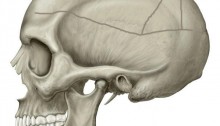
The location of Fr. Paul Kedrolivansky's skull wound, based on the surviving portion of the autopsy report. Image courtesy of Richard Green.

The Mysterious Death of Fr. Paul Kedrolivansky

The location of Fr. Paul Kedrolivansky's skull wound, based on the surviving portion of the autopsy report. Image courtesy of Richard Green.

On today’s episode of my American Orthodox History podcast on Ancient Faith Radio, I tell the story of Fr. Paul Kedrolivansky’s suspicious death. For the whole story, you’ll want to listen to the podcast. There are quite a few characters involved, and I thought it might be helpful to provide a brief introduction to each of them here:

Archpriest Paul Kedrolivansky: Dean of St. Alexander Nevsky Cathedral in San Francisco from 1870 to 1878. There was no Russian bishop in America from 1877 to 1879, so at the time of his death, Kedrolivansky was the highest-ranking Orthodox clergyman in the Alaskan Diocese.

Priest Nicholas Kovrigin: Assistant priest of the Cathedral. Kovrigin was actually the founding pastor of the church, back in 1868, but Kedrolivansky was soon assigned to be dean. In what must have been an awkward arrangement, Kovrigin was made his assistant. Kovrigin was repeatedly accused of being a corrupt philanderer, and in 1879, Bishop Nestor basically kicked him out of the Alaskan Diocese.

Mindeleff: Kedrolivansky’s roommate, with whom he went drinking on the night of his fatal injury.

Mr. Rosenthal: Owner of a tobacco shop, one of the places Kedrolivansky visited on his last night. Rosenthal said that Kedrolivansky had exhibited an official-looking document, and claimed that Fr. Nicholas Kovrigin “would give $10,000 to have it from him.”

Dr. Stivers: The police surgeon. He tried to save Kedrolivansky’s life, but it was too late. He also said that Kedrolivansky was almost certainly the victim of murder, and not an accident. On the basis of Dr. Stivers’ testimony, the coroner’s jury declared the death to be murder by person or persons unknown.

Vladimir Welitsky: The Russian consul in San Francisco. From the very beginning, Welitsky insisted that Kedrolivansky’s death was just an accident, not murder. He also downplayed the importance of the “$10,000 document,” which he claimed to have translated.

Gustave Niebaum: Head of the Alaska Commercial Company. Niebaum’s company had previously accused Kedrolivansky of transporting contraband. After Welitsky returned to Russia, Niebaum became the acting Russian consul. He accused Kedrolivansky’s widow of having an extramarital affair, thereby driving her husband to drink and thus to his (accidental) death. Alexandra Kedrolivansky sued Niebaum for defamation of character; the case went to the California Supreme Court, and Mrs. Kedrolivansky won.

Elizabeth Kedrolivansky: Widow of Fr. Paul. As I said above, Gustave Niebaum accused Mrs. Kedrolivansky of having an affair and driving her husband to drink. She later won a defamation lawsuit against Niebaum.

Detective Jehu: San Francisco police detective. He was investigating the Kedrolivansky case, and found three witnesses who claimed to have seen Kedrolivansky fall and hit his head on the ground. On the basis of this testimony, the police declared the death to be an accident, and they closed the case.

Chief John Kirkpatrick: Chief of the San Francisco police. Kirkpatrick wrote a letter to Consul Welitsky, explaining the conclusions of the police.

Bishop Nestor Zass: Bishop of the Alaskan Diocese from 1879 to 1882. Upon arriving in America, Bp Nestor immediately expelled Fr. Nicholas Kovrigin from his diocese. In 1882, Bp Nestor died at sea.

Bishop Vladimir Sokolovsky: Bishop of the Alaskan Diocese from 1888 to 1891. Bp Vladimir’s tenure was occupied by almost constant scandal. While he was nowhere near America when Kedrolivansky died, Bp Vladimir accused the Alaska Commercial Company and a man named Amosov of killing Kedrolivansky.

Amosov: A mysterious man who some later claimed had murdered Kedrolivansky. It’s not clear whether Amosov even existed in reality, much less whether he was guilty of murder.

Also, for the record, I am going to reprint the description of Kedrolivansky’s wound. This was printed in the San Francisco Examiner on May 23, 1889. It is all that survives of the original autopsy report.

The autopsy disclosed the fact that the scalp of deceased was very thick and strongly adherent, and on the whole of the left side there was a large amount of suffused blood. On the left side was found a fracture of the skull, commencing in the temporal bone, running upward and slightly backward into the parietal bone, being three inches in length; thence at right angles backward half an inch; thence downward and slightly backward two inches; thence at right angles forward one and three-fourth inches intersecting the first line described, leaving a detached piece pressing upon the brain. This portion of the skull was quite thin. From the point of intersection there was a fracture running across the temporal bone and ending in the median line of the frontal bone at a distance of about four and a half inches. There was also a fracture from the lower corner of the detached piece running backward across the parietal bone a distance of about half an inch. The brain directly under the fracture was lacerated and a brain clot weighing four ounces was found. The brain was in a healthy condition.

Kedrolivansky’s death remains an unsolved mystery. Was it an accident, or murder? If murder, then, by whom, and why? We may never know.

Go to Top