Posts tagged primary sources

Convention of the Russian Orthodox Catholic Mutual Aid Society, May 15-21, 1910

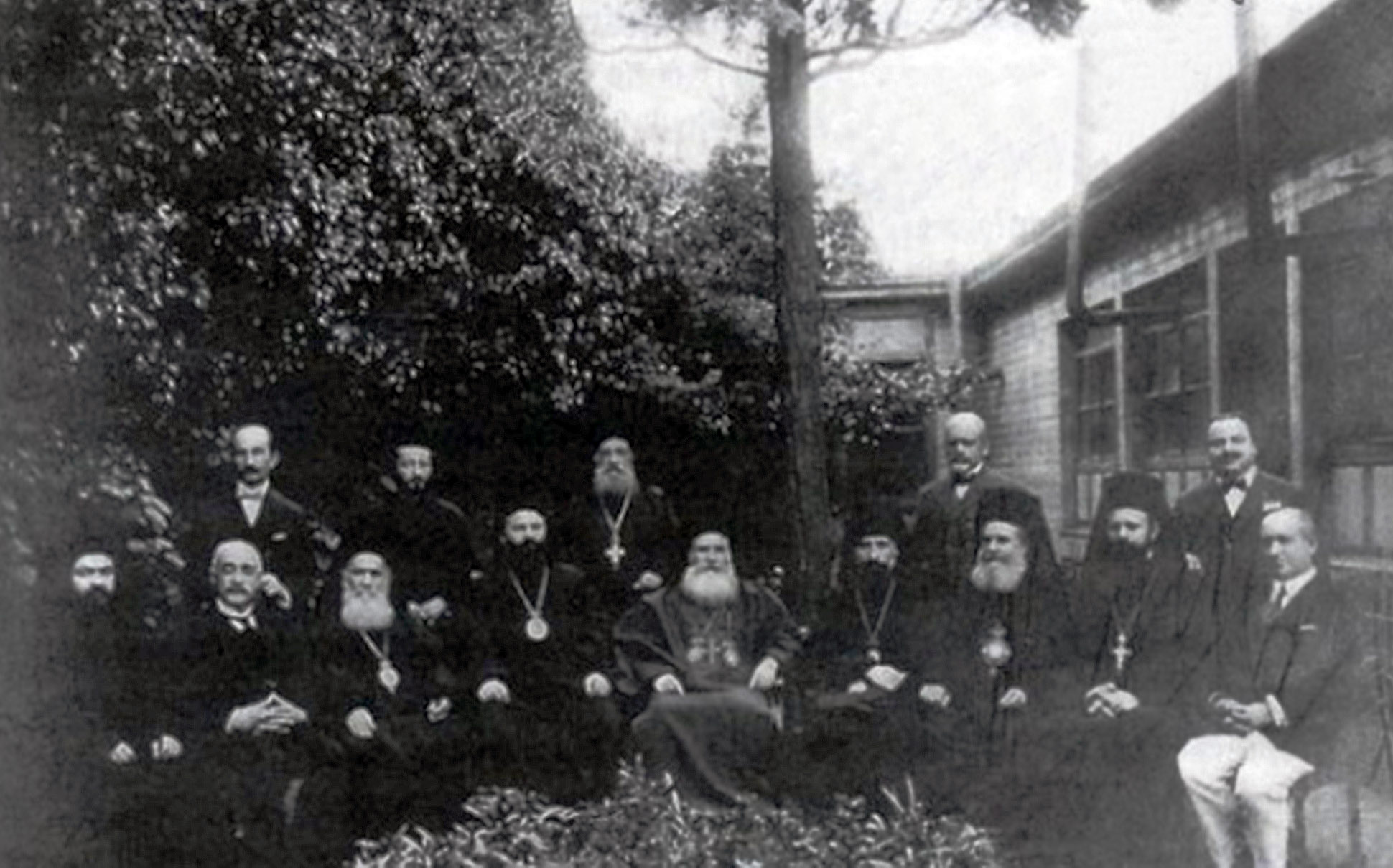
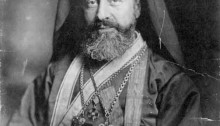
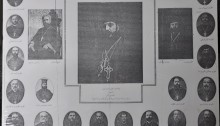
Group photo from the 1910 Convention of the Russian Orthodox Catholic Mutual Aid Society

0
Convention of the Russian Orthodox Catholic Mutual Aid Society, May 15-21, 1910

Convention of the Russian Orthodox Catholic Mutual Aid Society, May 15-21, 1910

I recently received the above photo in an email from Deacon Steven Kroll, who offered the following details:

Over the past several months I have been traveling up to Hartshorn, OK to serve alongside the priest who is caring for the remainder of the the faithful at Sts. Cyril & Methodius. This month I took my iPad with the intention of photographing several items around the church (old ledgers & metrical books, icons, and photograph in the church hall. One of these photographs in particular I want to share with you. Its from 1910 and there are quite a few orthodox clergymen in the photo, as well as a bishop’s portrait at the top of the photo. I was hoping you could take a look at it and see if you can identify any of the clergy by sight. The priest near the center seated in the front row resembles pictures I’ve seen on your website of Alexander Hotovitzky. The bishop at the top reminds me of St. Raphael of Brooklyn, but you may know better.
As the photo itself indicates, it was taken during the convention of the Russian Orthodox Catholic Mutual Aid Society, held from May 15-21, 1910. Right off the bat, I can say with confidence that the black-bearded bishop in the front row is Bishop Alexander Nemolovsky, future head of the Russian Archdiocese. I agree with Deacon Steven that Fr. Alexander Hotovitzky, the future martyr, is sitting to the left of Bishop Alexander. No idea who the bishop is in the big photo at the top, though. It’s definitely not St. Raphael Hawaweeney.

Thanks very much to Deacon Steven for passing this along. If any of our readers can identify some of the people in this photo, let me know and I’ll update this post.

Update: According to Fr. David Mastroberte, over on our Facebook page, the priest to the left of Fr. Alexander Hotovitzky is Fr. Peter Kohanik, who served in the Russian Archdiocese for many years.

Antiochian clergy collage

Amazing photo collage of Antiochian priests, circa 1920

0
Antiochian clergy collage

[Click to enlarge]

First of all, I’m really sorry for my extended absence from this website. Beginning in December, my life went pretty crazy — first the end of law school, then studying for the bar exam, and then moving and starting my legal career. Unfortunately, I’ve had no time at all for historical research.

Right in the middle of this chaos, I received a really awesome email from Fr. Timothy Ferguson, an Antiochian priest in Boston. He had discovered a photo collage of Syrian/Antiochian priests from the late 1910s/early 1920s — 21 clergymen in all. The collage is posted above, and here’s a list of the clergy depicted (and I’m retaining the spelling provided by Fr. Timothy’s sources):

Center:

  • Archbishop +Aftimious, Bishop of Brooklyn, Syrian Orthodox Mission in North America (Center)
  • V. Rev. Basil M. Kerbawy, Dean of the Clergy (Left of Bishop)
  • Rt. Rev. Emmanual Abu Hattab (Right of Bishop)

From Top Left:

  • Rev. Daniel Tanoos Jerguis
  • Rev. Eli El Hamati
  • Rev. Ayoub Salloom
  • Rev. Antonious Abu Alan Farah

Across the Bottom, Left to Right:

  • Rev. Sliman Boulos
  • Rev. Theodore Yanni
  • Rev. Yousef Kacere
  • Rev. Abraham Zaine
  • Rev. Hanna Hakim
  • Rev. Abdallah Khoury
  • Rev. Constantine Dawani
  • Rev. Philipous Abu Assaley Shaheen

From the Top Right:

  • Rev. Mousa Abi Haider
  • Rev. Elias Fraij
  • Rev. Michael El Khoury Saba
  • Rev. Solomon Faireny

Insert Below Fr. Kerbawy:

  • Rev. Sophronious Beshara

Insert Below Fr. Abu Hattab:

  • Rev. George Kattouf

Not Pictured:

  • Rev. Solomon Merighe
  • Rev. Simion Issa
  • Rev. George Dow Maloof
  • Rev. Yousef Elia
  • Rev. Basil Mahfouz

Many thanks to Fr. Timothy Ferguson for sharing his amazing find!

The Righteous Shall Be in Everlasting Remembrance: Further Reflections on Colonel Philip Ludwell III

1

Introduction

March 14/27 this year will mark the 266th anniversary of the falling asleep in the Lord of Colonel Philip Ludwell III of Williamsburg, Virginia. As many readers of this web site will know he is the first documented convert to Orthodoxy in the Americas, following his reception into the Church in London in December 1738. Last year, Metropolitan Hilarion, the First Hierarch of ROCOR and Ruling Bishop of its Eastern American Diocese blessed for panikhidas to be held in his memory on the anniversary of repose. Since this blessing was given more information has come to light that further enhances our picture of Colonel Ludwell and the relevance of his life to Orthodoxy in America today.

Philip Ludwell III was born in Virginia in 1716, some sixty years before the revolution that would give birth to the United States of America and the modern concept of the “nation state” founded on ideological ties rather than those of family, kinship and language. He travelled to London, England in 1738 and was received into Orthodoxy at one of the first parishes of the Russian Church established outside the boundaries of the Empire: But it should be clear that this was not a Russian church in any modern narrowly defined nationalistic setting. The priest of the parish who received him was Fr Bartholomew Cassanno, a half French, and half Alexandrian Greek who spent most of his adult life in England and had married an English women converted to Orthodoxy in the 1720’s. Following her repose he would become a hieromonk. Like the priest and his matushka most of the parish were either from the Greek speaking lands of the eastern Mediterranean or English converts to Orthodoxy.

From the Archives of the Holy Synod

Thanks to the tieless efforts of my dear friend Misha Sarni in London, I have recently obtained copies of documents regarding Colonel Ludwell from the archives of the Holy Synod in St Petersburg. As regards Ludwell’s arrival in London, Fr. Stephen Ivanovsky, the second ethnic Russian priest of the parish writes to the Holy Synod in St Petersburg in 1761:

In 1738, during the incumbency of the late Hieromonk Bartholomew Cassano at this holy Church, an English gentleman named Ludwell [transliterated as Лодвел – Lodvel – tr.], born in the American lands and living there in the province of Virginia, came to London seeking the True Faith, which he, with God’s help, has swiftly found in the Holy Graeco-Russian Church. And so on the 31st of December of the same year he was confirmed in the same with the holy Chrism. The next year, 1739, he returned to his native land, from whence he, having lived there for twenty years, came back to London last month of September, and brought with him his three daughters, two of whom are eleven years of age, and the third, twenty, who long time ago in America lost their mother, minding to have them united with the Holy Eastern Church here, gaining through this union the one Mother for them and himself.

Ivanovsky goes on to explain that during his years in America Ludwell had translated into English “The Orthodox Confession” of Metropolitan Peter Moghila of Kiev and now sought the Synod’s blessing to publish and distribute it to all sons of the Holy Eastern Church dwelling in London, without charge, for their spiritual nourishment.

He continues:

The same man, filled with Orthodox piety, requested that I, unworthy, humbly petition the Most Holy Ruling Synod concerning the future condition of his soul. How should he conduct himself after returning to his home land with his family, what shall he and them do, keep the practice of prayer only at their home, or would they be permitted to go temporarily to an English church, having no church of their own? So that they could offer their Creator some due in public, even thrice a year, thus drawing away from themselves the anger of the local people, since there, and in the whole Province of Virginia, and in the whole of America, except nearby Pennsylvania, any other Religion except Protestant, is forbidden. Besides in his home country still nobody knows about his change of Religion, since he is a councilor in a high position in the King’s service.

Concerning the Holy Gifts, he humbly petitions the Most Holy Ruling Synod, whether it would consider it possible to send them from here once a year some Consecrated Holy Gifts, as was practiced by the Early Christians, so that they, having been deprived of this Spiritual Nourishment after their departure from here, should not fall into despair. Since he had no greater concern throughout his twenty years there than the absence of these Divine Gifts, which he oftentimes longed to partake for the strengthening of his faith. And this petition of the selfsame man who is full of pious zeal, which is stemming from his great love for the Holy Church, I, unworthy, make bold to bring for the Most Holy Ruling Synod’s compassionate consideration, and humbly beg for a decision that will bring him joy.

In response to Ivanovsky’s petition the Holy Synod very swiftly blessed the printing and distribution of the catechism and for Ludwell to  dispense it freely to those who would like to own it for their benefit.

The Synod also responded:

That he, Priest Ivanovsky, having properly instructed and established the three daughters of the said gentleman Ludwell in the knowledge of our Orthodox faith, shall receive them into the Holy Eastern Church, of their own volition, through the appropriate Church service. As to ways to preserve their Orthodox faith after their departure, what order of prayer to follow in their native land, and other matters related to Church mysteries, you, priest Ivanovsky, shall, having diligently obtained from them the knowledge of all circumstances and customs observed there, and having carefully considered these, advise them with suitable caution.

Finally, as regards the Holy Gifts:

At the time of departure of said Ludwell and his family to their native land, in consideration of their needs and circumstances as reported by you, priest Ivanovsky, and also his, Ludwell’s, most fervent desire. If there is an unfailing hope in his perfect will to hold fast, now and henceforth, to our Orthodox faith, and in view of the above needs, the Most Holy Synod gives you, priest Stefan Ivanovsky, the blessing to provide him with the Holy Gifts, for himself and his children, in a proper Tabernacle, having given him appropriate instruction concerning their keeping.

Philip Ludwell and Benjamin Franklin

Last December I was able to visit the only extant house in the world of Benjamin Franklin, in Craven St, London. Colonel Ludwell also lived in Craven St during the last seven years of his life and the extent of his friendship with Franklin is gradually becoming clearer. In the mid 1760’s Franklin briefly returned to America and in February 1763 he wrote from there to Ludwell back in London:

I must shortly make a journey to your Country, which I should undertake with much greater Pleasure, if I could promise myself the happiness of meeting there with my dear Friend, (but this is not to be expected, for I hear you are to continue this year in England). I pray sincerely that every Blessing may attend you, wherever you are, and particularly that of Health. O that I could invent something to restore and establish yours! But we shall meet, I trust, in a better Country, and with better Constitutions, vigorous health and everlasting youth; and since t’will be an additional pleasure so great in itself and so easily afforded us, I am persuaded we shall know one another.

From this letter it is clear that Ludwell did not intend to remain in London, but rather to return to his native Virginia. God’s will was otherwise and he was to repose in London in 1767. Its seems highly probable that Benjamin Franklin may have been present at his funeral in the Russian Church at the end of March that year.

Franklin and Ludwell worked together in a number of important educational and charitable initiatives in early America. Franklin is credited with founding America’s first hospital, in his native Philadelphia, the Pennsylvania Hospital in 1751. Two years prior to this he began the educational establishment that was to grow into America’s first full University – the University of Pennsylvania. What is much less widely realized is that Ludwell was the founding donor for both these institutions. Ludwell and Franklin together along with others funded an organization known as “The Associates of Dr Bray” who in 1760 opened the first schoolhouse for African American children in Williamsburg, Virginia.

The Piety of Philip Ludwell

All these actions attest to Ludwell’s love for his fellow man. His love for God is equally demonstrated by his adherence to the Orthodox Faith he embraced in his youth, retained for over twenty years whilst cut off from outward Church life and then brought his family into. In those wilderness years he labored to translate the catechism into English and also the Divine Liturgies of St John Chrysostom and St. Basil the Great. He penned a brief exhortation to piety entitled “How to Behave Before, In and After Divine Services in the Church.” In this he demonstrates the importance of reverence for God and awe in the presence of His holiness:

As then passest along to the Church present thy self before  the King as the awfull majesty before whom thou art going to content thy self in the Courts of his house.

Enter the Church with gravity and composure and present thy self before the sanctuary and devoutly adore thrice; bless thy self with the sacred sign and say:

Surely the Lord is in this place!

How awfull is this place!

This is none other than the house of God and this is the Gate of Heaven!

How amiable is thy dwelling O Lord of Hosts!

My soul hath a desire a longing to enter the Courts of the Lord; my heart and flesh rejoice in the living-God.

…………………………………………………………………………………………….

Let the Words of my Mouth and the Meditation of my heart be always acceptable in thy Sight O Lord my Strength and my Redeemer.

Conclusion

It is surely a remarkable thing that a man so connected to the early history of this Republic was also a devout Orthodox Christian who faithfully and diligently strove to live and witness to the Orthodox Faith, to love God and to care for the poor and disadvantaged. May his memory be eternal and may he be numbered among the blessed!

St. Raphael of Brooklyn on the Episcopalians

0

Today being the ninety-eighth anniversary of the repose of St. Raphael of Brooklyn (+1915), here is a pastoral letter he sent out in 1912 regarding relations with the Episcopal Church, mostly likely written on his behalf by Fr. Ingram Nathaniel Irvine. Thanks to Fr. Joseph Huneycutt of Houston for posting it today.

To My Beloved Clergy and Laity of the Syrian Greek-Orthodox Catholic Church in North America:

Greetings in Christ Jesus, Our Incarnate Lord and God.

My Beloved Brethren:

Two years ago, while I was a Vice-President and member of the Anglican and Eastern Orthodox Churches Union, being moved with compassion for my children in the Holy Orthodox faith “once and for all delivered to the Saints” (St Jude ver. 3), scattered throughout the whole of North America and deprived of the ministrations of the Church; and especially in places far removed from Orthodox centres; and being equally moved with a feeling that the Protestant Episcopal (Anglican) Church possessed largely the Orthodox faith, as many prominent clergy professed the same to me before I studied deeply their doctrinal authorities and their liturgy — the “Book of Common Prayer” — I wrote a letter as the Bishop and Head of the Syrian Catholic Mission in North America, giving permission, in which I said that in extreme cases, where no Orthodox priest could be called upon at short notice, the ministrations of the Protestant Episcopal (Anglican) clergy might be kindly asked. However, I was most explicit in defining when and how the ministrations should be accepted, and also what exceptions should be made. In writing that letter I hoped, on the one hand, to help my people spiritually, and, on the other hand, to open the way toward bringing the Anglicans into the communion of the Holy Orthodox faith.

On hearing and in reading that my letter, perhaps unintentionally, was misconstrued by some of the Episcopalian (Anglican) Clergy, I wrote a second letter in which I pointed out that my instructions and exceptions had been either overlooked or ignored by many, to wit:

(a) They (the Episcopalians) informed the Orthodox people that I recognized the Anglican Communion (Protestant Episcopal Church) as being united with the Holy Orthodox Church and their ministry, that is holy orders, as valid.

(b) The Episcopal (Anglican) Clergy offered their ministrations even when my Orthodox clergy were residing in the same towns and parishes, as pastors. And,

(c) Protestant Episcopal clergy said there was no need of Orthodox people seeking the ministrations of their own Orthodox priests, for their (the Anglican) ministrations were all that were necessary.

I, therefore, felt bound by all the circumstances to make a thorough study of the Anglican Church’s faith and orders as well as of her discipline and ritual. After serious consideration I realized that it was my honest duty, as a member of the College of Bishops of the Holy Orthodox Greek Apostolic Church, and Head of the Syrian Mission in North America, to resign from the vice-presidency of and membership in the Anglican and Eastern Orthodox Churches Union. At the same time, I set forth, in my letter of resignation, my reason for so doing.

I am convinced that the doctrinal teaching and practices as well as the discipline of the whole Anglican Church are unacceptable to the Holy Orthodox Church. I make this apology for the Anglicans whom as Christian gentlemen I greatly revere, that the loose teaching of a great many of the prominent Anglican theologians are so hazy in their definition of truths, and so inclined toward pet heresies that it is hard to tell what they believe. The Anglican Church as a whole has not spoken authoritatively on her doctrine. Her Catholic minded members can call out her doctrines from many views, but so nebulistic is her pathway in the doctrinal world that those who would extend a hand of both Christian and ecclesiastical fellowship dare not, without distrust, grasp the hand of her theologians, for while many are orthodox on some points, they are quite heterodox on others. I speak, of course, from the Holy Orthodox Eastern Catholic point of view. The Holy Orthodox Church has never perceptibly changed from Apostolic times, and, therefore, no one can go astray in finding out what she teaches. Like her Lord and Master, though at times surrounded with human malaria — which He in mercy pardons — she is “the same yesterday, and today, and forever” (Hebrews 8:8) … the mother and safe deposit of “the truth as it is in Jesus” (Eph.4:21).

The Orthodox Church differs absolutely with the Anglican Communion in reference to the number of Sacraments and in reference to the doctrinal explanation of the same. The Anglicans say in their Catechism concerning the Sacraments that there are “two only as generally necessary to salvation, that is to say, Baptism and the Supper of the Lord.” I am well aware that, in their two books of homilies (which are not of a binding authority, for the books were prepared only in the reign of Edward VI and Queen Elizabeth for priests who were not permitted to preach their own sermons in England during times both politically and ecclesiastically perilous), it says that there are “five others commonly called Sacraments” (see homily in each book on the Sacraments), but long since they have repudiated in different portions of their Communion this very teaching and absolutely disavow such definitions in their “Articles of Religion” which are bound up in their Book of Common Prayer or Liturgy as one of their authorities.

The Orthodox Church has ever taught that there are seven Sacraments. She plainly points out the fact that each of the seven has an outward and visible sign and an inward and spiritual Grace, and that they are of gospel and apostolic origin.

Again, the Orthodox Church has certain rites and practices associated and necessary in the administration of
the Sacraments which neither time nor circumstances must set aside where churches are organized. Yet the Anglicans entirely neglect these, though they once taught and practiced the same in more catholic days.

In the case of the administration of Holy Baptism it is the absolute rule of the Orthodox Church that
the candidate must be immersed three times (once in the name of each Person of the Holy Trinity). Immersion is only permissory in the Anglican Communion, and pouring or sprinkling is the general custom. The Anglicans do not use holy oil in the administration, etc., and even in doctrinal teaching in reference to this Sacrament they differ.

As to the doctrine concerning Holy Communion the Anglican Communion has no settled view. The Orthodox Church teaches the doctrine of transubstantiation without going into any scientific or Roman Catholic explanation. The technical word which She uses for the sublime act of the priest by Christ’s authority to consecrate is “transmuting” (Liturgy of Saint John Chrysostom). She, as I have said, offers no explanation, but She believes and confesses that Christ, the Son of the living God Who came into the world to save sinners, is of a truth in His “all-pure Body” and “precious Blood” (Liturgy of Saint John Chrysostom) objectively present, and to be worshiped in that Sacrament as He was on earth and is now in risen and glorified majesty in Heaven; and that “the precious and holy and life-giving Body and Blood of Our Lord and God and Saviour Jesus Christ are imparted” (to each soul that comes to that blessed Sacrament) “Unto the
remission of sins, and unto life everlasting” (Liturgy of Saint John Chrysostom).

Confirmation or the laying on of hands, which the Orthodox Church calls a sacrament—”Chrismation”—in the Anglican Church is merely the laying on of hands of the Bishop accompanied by a set form of prayers, without the use of Holy Chrism, which has come down from Apostolic days as necessary.

Holy Matrimony is regarded by the Anglican Communion as only a sacred rite which, even if performed by a
Justice of the Peace, is regarded as sufficient in the sight of God and man.

Penance is practiced but rarely in the Anglican Communion, and Confession before the reception of Holy Communion is not compulsory. They have altogether set aside the Sacrament of Holy Unction, that is anointing the sick as commanded by Saint James (see James 5:14). In their priesthood they do not teach the
true doctrine of the Grace of the Holy Orders. Indeed they have two forms of words for ordination, namely, one which gives the power of absolution to the priest, and the alternative form without the words of Our Lord, whosoever sins ye remit, etc. (John 20: 23). Thus they leave every bishop to choose intention or non-intention in the act of ordination as to the power and Grace of their priesthood (“Ordination of Priests,” Book of Common Prayer).

But, besides all of this, the Anglican Communion ignores the Orthodox Church’s dogmas and teachings, such as the invocation of saints, prayers for the dead, special honor to the blessed Virgin Mary the Mother of God, and reverence for sacred relics, holy pictures and icons. They say of such teaching that it is “a foul thing, vainly invented, and grounded upon no warranty of Scripture, but rather repugnant to the word of God” (Article of Religion, XXII).

There is a striking variance between their wording of the Nicene Creed and that of the Holy Orthodox Church;
but sadder still, it contains the heresy of the “filioque.”

I do not deem it necessary to mention all the striking differences between the Holy Orthodox Church and the Anglican Communion in reference to the authority of holy tradition, the number of the General Councils, etc. Sufficient has already been said and pointed out to show that the Anglican Communion differs but little from all other Protestant bodies, and, therefore, there cannot be any intercommunion until she returns to the ancient holy Orthodox Faith and practices, and rejects Protestant omissions and commissions.

Therefore, as the official head of the Syrian Holy Orthodox Catholic Apostolic Church in North America and as one who must “give an account” (Hebrews 13:17) before the judgment throne of the “Shepherd and Bishop of Souls” (1 Peter 2:25), that I have fed the “flock of God” (1 Peter 5:2), as I have been commissioned by the Holy Orthodox Church, and inasmuch as the Anglican Communion (Protestant Episcopal Church of the United States) does not differ in things vital to the well being of the Holy Orthodox Church from some of the most arrant Protestant sects, I direct all Orthodox people residing in any community not to seek or to accept the ministrations of the Sacraments and rites from any clergy excepting those of the Holy Orthodox Catholic and Apostolic Church, for the Apostolic command, that the Orthodox should not commune in ecclesiastical matters with those who are not of “the same household of Faith” (Galatians 6:10), is clear: “Any Bishop; or presbyter or deacon who will pray with heretics, let him be anathematized; and if he allows them as clergymen to perform any service, let him be deposed” (Apostolic Canon 45). “Any bishop, or presbyter, who accepts baptism or the Holy Sacrifice from heretics, we order such to be deposed, for ‘what concord hath Christ with Belial, or what part hath he that believeth with an infidel?’” (Apostolic Canon 46).

As to members of the Holy Orthodox Church living in districts beyond the reach of Orthodox Catholic clergy, I direct that the ancient custom of our Holy Church be observed, namely, in cases of extreme necessity, that is, danger of death, children may be baptized by some pious Orthodox layman, or even by the parent of the child, by immersion three times in the names of the (persons of the) Blessed Trinity, and in case of death such baptism is valid: — but, if the child should live, it must be brought to an Orthodox priest for the Sacrament of Chrismation.

In the case of the death of an Orthodox person where no priest of the Holy Orthodox Church can be had, a pious layman may read over the corpse, for the comfort of the relatives and the instruction of the persons present, Psalm 91 and Psalm 118, and add thereto the Trisagion (“Holy God, Holy Strong One,” etc). But be it noted that so soon as possible the relative must notify some Orthodox bishop or priest and request him to say the Liturgy and Requiem for the repose of the soul of the departed in his Cathedral or parish Church.

As to Holy Matrimony, if there be any parties united in wedlock outside the pale of the holy Orthodox Church because of the remoteness of Orthodox centers from their home, I direct that as soon as possible they either invite an Orthodox priest or go to where he resides and receive from his hands the holy Sacrament of Matrimony; otherwise they will be considered excommunicated until they submit unto the Orthodox Church’s rule.

I further direct that Orthodox Christians should not make it a practice to attend the services of other religious bodies, so that there be no confusion as to the teaching or doctrines. Instead, I order that the head of each household, or a member, may read the special prayers which can be found in the hours of the Holy Orthodox Service Book, and such other devotional books as have been set forth by the authority of the Holy Orthodox Church.

Commending our clergy and laity unto the safe-keeping of Jesus Christ, and praying that the Holy Spirit may keep us all in the truth and extend the Borders of the Holy Orthodox Faith, I remain.

Your affectionate Servant in Christ,

RAPHAEL
Bishop of Brooklyn, Head of the Syrian
Greek Orthodox Catholic Mission in America

Issued late in the year 1912; from The Most Useful KNOWLEDGE for the Orthodox Russian-American Young People, compiled by the Very Rev’d Peter G. Kohanik, 1932-1934 (pp. 297-303).

Early stages of the Bulgarian schism from Constantinople

0

We just finished running a series of six articles on the 1872 Council of Constantinople, published contemporaneously in the Methodist Quarterly Review. The following article is from about a decade earlier, and describes the early stages of the Bulgarian split from the Patriarchate of Constantinople. This piece is from an American journal called The Independent, March 28, 1861:


Separation of the Bulgarians from the Greek Church – The Hopes of the Protestant and the Roman Missionaries – Establishment of a United Bulgarian Church.

An actual separation from the Greek Church has already been commenced on the part of the Bulgarians, a tribe which counts a population of about four millions, living mostly  in the province of Bulgaria Proper and in the northern part of the provinces of Macedonia and Thrace, and in which of late a special interest has been awakened in America by reports of the missionaries of the American Board and of the Methodist Episcopal Church, who have been laboring among them, if not with great actual results, at least with good prospects for the future. The Bulgarians have been engaged for several years in a struggle against the heads of the Greek Church, for the recovery of their national ecclesiastical rights, which only needs to be more generally known in order to enlist the liveliest sympathy of all friends of religious liberty.

The Bulgarian Church was free from any dependence on the Patriarch of Constantinople up to the year 1767, when, by the intrigues of the then Patriarch Samuel, backed by the Greek archons, the Turkish Government was induced to abolish the Bulgarian archiepiscopal see of Ochrida [sic], and to place all the Bulgarian people under his jurisdiction. From that time, the Greek prelates have imposed on the Bulgarians the same odious yoke which the Church of Rome has so successfully laid on all the churches of Western Europe. They have introduced into their churches the use of a language which the people do not understand, and have sent them bishops who have always shown themselves hostile to its cultivation in church and school.

Since the issue of the Hatti-Houmayoun in 1856, the Bulgarians have urgently demanded the restoration of their ancient rights. There seems to be no difference of opinion among them on this point; bishops, priests, and laity appear to be perfectly unanimous, and the national movement, in this respect, is as strong and sound as the one which has been recently so successful in Italy. They demand the erection of an independent Bulgarian patriarchal see, and the appointment of only Bulgarian bishops, and in support of their demand they instance the fact that the Greeks themselves have four patriarchal sees, viz., those of Constantinople, Alexandria, Jerusalem, and Antioch, and one archiepiscopal see, (that of Cyprus,) all independent of each other. The justness of these claims becomes the more apparent, if it is remembered that the Bulgarians are by far more numerous in European Turkey than the Greeks.

Nevertheless, the higher Greek clergy have made to such reasonable demands the most obstinate and defying resistance. Not only did they turn a deaf ear to all the appeals for the restoration of the Bulgarian language at Divine service, but when the new ecclesiastical constitution was being framed, they treated the Bulgarians with utter neglect, and almost ignored their existence. The Bulgarians, therefore, very properly refused to be represented in the assembly electing a new Patriarch of Constantinople, either by laymen or ecclesiastics, saying that it was a matter in which they had no concern, as they would no longer acknowledge the Patriarch as their spiritual head.

The Turkish Government has unfortunately sided in this question with the Greek clergy, and not with the Bulgarians. It has believed the insinuation that the Bulgarian movement has been set on foot by agents of the Russian Government, and that the latter was using the ecclesiastical agitation as a means for effecting a closer union of all the Sclavonic [sic] tribes of Russia among themselves, and with Russia. When thus all the attempts of the Bulgarian churches had failed, a part of the people have at length listened to the cunning advice which the Roman Catholic missionaries, aided by French diplomacy, have given them. The Roman priests suggested to the leading men among the Bulgarians that, by only acknowledging the Pope as the Supreme Bishop of the Church, they might obtain their independence of the Patriarch of Constantinople, or constitute themselves after the example of the United Greeks, United Armenians, United Copts, the Chaldeans (i.e., United Nestorians,) and the Catholic Syrians, (United Jacobites,) as an Independent National Bulgarian Church, and thus be at once put in possession of all their ancient rights, including the use of the Bulgarian language at divine service. The leaders of the movement seem, at first, to have used this expedient as a means of forcing the Greek clergy into compliance with their wishes; and a memorial, holding out the probability of a union of the entire people with Rome, if the national wishes were not gratified, was very numerously signed. It was on the strength of this memorial that, a few months ago, the Roman Catholic papers of Europe and this country prematurely announced that the union had been actually consummated.

This, as yet, is far from being the case. But a beginning has been made. A correspondence from Constantinople in the Presse of Paris, gives the following description of it: “It was on Sunday morning, (Dec. 30th,) immediately preceding high mass, that the formal act of abjuration was received. The national deputation numbered 200, and consisted of two archimandrites, three priests, and twenty esness, (chief magistrates,) who bore an address containing signatures, and were supported by a body of civic officers. They were received by Monsignor Brunoni on the part of the Pope, and Monsignor Hassoun, the Primate of the United Armenians. The following transaction then took place between Mr. Ivanoff, the spokesman to the party, and Mgr. Brunoni: ‘We petition to be admitted into union with the Church of Rome.’ ‘Do ye yield to the dogma of the said  Church, that she alone is one and true?’ ‘We so believe it.’ ‘Are ye prepared to sign this declaration as an act of your faith?’ ‘We are so prepared, and we ask you to present the same as our united deed to the head of the Church — the Pope, at Rome. We would also add that we wish to retain our liturgy.’ Hereupon the Bulgarian deputies annexed their names to an official document — the clergy taking precedency in the signing. After this, the Archimandrite Macariog stood forth and pronounced an address in the Bulgarian tongue, which was full of fire. The oath of the Gospels was next received, and then the Armenian Archbishop pontificated. On the conclusion of the high mass the kiss of brotherhood was exchanged between the members of both bodies, clerical and lay, beginning with the Primate as he descended from the altar.”

The Monde of Paris reports some additional details. According to its correspondent, the Bulgarians of Constantinople on the same day issued a manifesto to the entire nation, announcing that December 30th would henceforth be celebrated as the greatest national festival. The Grand Vizier is said to have declared on the next day to a Bulgarian deputation that the Government would lay no obstacles to this new movement. The United Bulgarians have purchased a building which is to serve as a school and the dwelling of their future Patriarch.

The Roman Catholic papers are of course again very sanguine, and expect that the majority of the nation will speedily join the union. Other reports, however, ill accord with such expectations. It is maintained that all the chief Bulgarians in Constantinople, including several bishops and priests, have published a protest against the seceders, declaring them to be men of no influence or character, and unworthy to lead the Bulgarian nation. They have, moreover, appealed to the Constantinople branch of the Evangelical Alliance for aiding them in securing the recognition of their ecclesiastical independence, and the Evangelical Alliance have called the attention of the Protestant Embassadors [sic] at Constantinople, viz., those of Great Britain, United States, Prussia, Denmark, Holland, and Sweden, to the interesting movement, and begged them to exert their friendly influence in favor of the just demands of the Bulgarians. The movement thus has entered upon a new stage, and greatly increases in interest and importance.


Again, this is from 1861 — more than a decade before the Council of Constantinople. Some key takeaways, for me:

  • I don’t know a lot about Bulgarian Church history, but if in fact the Bulgarians more or less governed themselves until the 1760s, and only after that were subjected to ecclesiastical control by the Greeks, then it makes a lot of sense that they would resent that control.
  • It’s particularly notable that the Bulgarians and other Slavs outnumbered the Greeks in the European part of Turkey. Yes, there were a lot of Greeks in Asia Minor, but from the Bulgarians’ perspective, Constantinople was an elite minority that was imposing its own Greek language and practices in a region that was mostly Slavic.
  • The Bulgarians were hardly alone in their predicament. Over in Syria, the Arab Orthodox were governed by a Greek hierarchy — this was referred to as the “Greek captivity” of Antioch. Same thing in Jerusalem. I don’t know about the ethnic makeup of the Patriarchate of Alexandria (I suspect it was largely Greek), but still, that’s two ancient Arab patriarchates that were governed by, essentially, puppets of Constantinople. And St. Raphael, writing against this a generation later, got kicked out of the Patriarchate of Antioch for his views.

Soon, I’ll try to write something to tie this whole Bulgaria / 1872 Council / phyletism thing together, at least preliminarily. To be honest, I’m still trying to make sense of it all myself, but it does seem to me that what the Bulgarians were guilty of wasn’t necessarily “phyletism” so much as it was the desire to have bishops from their own region, familiar to and with their own people, and friendly to their indigenous culture. Which, come to think of it, is exactly what most Orthodox people want, everywhere, and in every age. That’s not to justify what the Bulgarians did, which seems to be pretty clearly uncanonical. But there’s a difference between uncanonical, schismatic acts and heresy.

Oh, and one final thing: I’ll be a guest on Kevin Allen’s live call-in show “Ancient Faith Today,” on Ancient Faith Radio, this Sunday, December 9. The topic is “ethnocentrism,” and among other things, I’ll be talking about the 1872 Council that condemned phyletism. The show begins at 5 PM Pacific / 6 Mountain / 7 Central / 8 Eastern, and you can listen live at this link: http://ancientfaith.com/ancientfaithtoday. You can also download the show after it’s finished and listen later. If you do listen live, feel free to call in with a question. I’d love to hear from some of our readers!

Go to Top