Posts tagged ROCOR

Herman cover 9780884651925W

Herman, A Wilderness Saint: From Sarov, Russia to Kodiak, Alaska

0

The following is a book review from our friend and colleague Nicholas Chapman:

Herman, A Wilderness Saint: From Sarov, Russia to Kodiak, Alaska is a new book that I think will be of interest to many readers of this web site. It has been translated from Russian and contains material not previously available in English, which only became accessible in Russia after the fall of communism. Through its use of primary sources such as letters and reports, St. Herman’s life and character is revealed with startling clarity, together with many aspects of the wider Russian ecclesiastic mission to America of which he was an integral part. The three appendices bring the story of New Valaam up to our own time, offer details of the saint’s canonization by both the OCA and ROCOR in 1970 and provide more biographical background to some of the eyewitnesses to the saint’s life. The primary text is supported by easily referenced endnotes and rounded off by an index.

Of particular note for readers of this web site following previous articles published here will be the account of the martyrdom of St Peter the Aleut with a brief discussion of its historicity.

Further information about the book and how to order it in either print or digital formats can be found here. The monastery also published an earlier edition of this book in Russian, details of which may be found here. A look inside preview is available courtesy of Amazon here.


Freemasonry in American Orthodox history

Once upon a time, it was the norm for American men to be members of fraternal organizations. These were especially attractive to new immigrants, who wanted to be integrated into American society and make progress in business. And in that earlier era, fraternal membership was the best and quickest way to achieve both goals. They joined the Rotary Club, the Lions, the Elks, the Odd Fellows, the Knights of Columbus, and a host of others. But the most famous — and infamous — of them all was Freemasonry. Countless men in American Orthodox history, including priests and bishops, have been Freemasons. This, despite the fact that membership in secret societies is widely viewed as incompatible with Orthodoxy.

For some background, let’s first look at the relevant canons. Now, I am not a canonist, nor am I a historian of the Eastern Roman (or “Byzantine”) Empire. But, as best I can tell, the key canons are Canon 18 of Chalcedon and Canon 34 of Trullo. Let’s take the latter one first:

But in future, since the priestly canon openly sets this forth, that the crime of conspiracy or secret society is forbidden by external laws, but much more ought it to be prohibited in the Church; we also hasten to observe that if any clerics or monks are found either conspiring or entering secret societies, or devising anything against bishops or clergymen, they shall be altogether deprived of their rank.

The Trullo canon was referred to as simply a renewal of Canon 18 of Chalcedon:

The crime of conspiracy or banding together is utterly prohibited even by the secular law, and much more ought it to be forbidden in the Church of God.  Therefore, if any, whether clergymen or monks, should be detected in conspiring or banding together, or hatching plots against their bishops or fellow-clergy, they shall by all means be deposed from their own rank.

On their face, these canons seem to be focused on prohibiting clergymen from conspiring against other clergymen. I don’t think that the bishops who composed the canons had in mind groups like the Freemasons. That isn’t to say that Freemasonry is acceptable in Orthodoxy, but I don’t think there’s an explicit forbiddance in the ancient canons themselves. If anyone knows of other relevant canons, please let me know, because, as I said earlier, I am definitely not an expert on this stuff.

Freemasonry and other secret societies were extremely prevalent in Russia,  Greece, and other traditionally Orthodox countries in the 19th century. Meletios Metaxakis — the Archbishop of Athens who founded the Greek Archdiocese and later became Ecumenical Patriarch — was a Freemason. So was Archbishop Athenagoras Spyrou, who led the Greek Archdiocese for two decades and then became a hugely influential Ecumenical Patriarch. Likewise Metropolitan Antony Bashir, the longtime head of the Antiochian Archdiocese of New York. And these were just three of the biggest names; numerous other Orthodox bishops were Freemasons in the 20th century. (In the case of Athenagoras and Bashir, I’ve talked to people who knew them, and it was common knowledge that they were Freemasons. But I must admit that I don’t have any hard evidence to prove this fact. Unfortunately, evidence beyond word of mouth is hard to come by on this sort of thing.)

In 1917, Fr. Ingram Nathaniel Irvine argued strongly against the consecration of Aftimios Ofiesh as bishop for the Syrians. One of Irvine’s main contentions was that Ofiesh was a Freemason. I’ll quote Irvine’s letter at length here, because it’s directly relevant to the topic at hand. The letter, dated 2/5/1917, was written to the North American Ecclesiastical Consistory and is preserved in Irvine’s file in the OCA archives. All the emphases and misspellings are Irvine’s.

 A Schism can be healed but the consecration of the wrong party for the Episcopate never. [...] Who is the candidate for the Syrian Vicar Bishoprick? A Freemason. It may be said that, he has given up Masonry. While I doubt it, it makes the matter more terrible than if he persisted in being an active member. And why?

First: Because by being an in-active member for the sake of a chance of being made a Bishop he must have lost the respect of both the Masonic Order and loyal Orthodox Christians.

Second: There is an old and well authenticated fact to wit: — “Once a Mason always a Mason.” An ignorance of the watchword because of delinquency of a member etc., for the time being, does not hinder the opportunity of having that ignorance remedied and the knowledge granted at an opportune moment. Insincerity under the first point would suggest the second idea.

The history of Freemasonry is a night-mare to Christianity in the West. Pardon a little bit of my own knowledge being interjected. Practical knowledge after all is the best.

[Irvine goes on to discuss his own negative experience with a Freemason bishop in the Episcopal Church.]

Freemasonry, today, is a mixture of spurious Christianity, agnosticism, infidelity, aethism [sic], Judaism, and in very many instances, immorality. I have carefully studied it for over fifty years. It’s [sic] nobility of long ago, while it has still had some noble men as members, has long since departed. It has damned the State and the Church by its under-hand influence and corruptive practices.

If a Bishop of the Church is a Freemason then every priest had better be a Mason in his Diocese, for otherwise it may follow that a Jew, an Infidel, an Aethiest etc. or the lowest saloon keeper, or house of ill fame manager, as a member would have more influence as a mason with the Masonic Bishop than the priest who was not a member of the Order.

One of the questions asked of me when I was a candidate for the Russian Orthodox Priesthood was “Are you a Freemason?” My reply was “I am not.” Have we changed? Are our conditions variable?

Now if the Episcopate is one, any member of it affects the whole. And if the Church is one, any member of the same may feel agrieved [sic] if he believes that a member of an alien and pernicious organization is permitted to rule in the high and sacred office of a Bishop in the Church of God Almighty.

The Orthodox Church has gained the Confidence and love of right-thinking people. Let us not tarnish her banner now by inserting amongst the title letters “Masonery.” Rome is marveling at our success and Orthodox Catholicity. Let us not give her a chance to say that, we have retrograded to rationalism and chicanery. Above all things let us guard the Episcopate from that which is worldly and earthly.

Therefore if all others keep silent, I for one, as a faithful priest of the Russo-Greek Holy Orthodox Catholic Church, most solemnly protest against the admission of Archimandrite Afiesh or any other Mason into the Episcopate.

And if he is admitted or any Mason, even under pain of Ecclesiastical penalties, I will never recognize him as a Bishop. I can not serve God and Mammon in the Episcopate. Masons as Laymen may be sinners, but as Bishops hypocrites and creatures of circumstances.

In spite of Irvine’s campaign against him, Ofiesh was consecrated a bishop. And his career did end badly — he exhibited erratic behavior and ended up marrying a young girl in 1933 — but I don’t think any of that was connected to his status as a Freemason.

Have any Orthodox Churches formally condemned Freemasonry? Yes, they have. The Russian Orthodox Church Outside of Russia (ROCOR) condemned it in 1932. The Church of Greece followed suit the next year, issuing a rather lengthy statement. The Holy Synod of Greece had appointed a commission of four bishops to study Freemasonry, and on October 12, 1933, the commission presented its initial findings. The Holy Synod also heard reports from the Theological Faculty of the University of Athens. After this, the Synod unanimously adopted several conclusions.

  1. “Freemasonry is not simply a philanthropic union or a philosophical school, but constitutes a mystagogical system which reminds us of the ancient heathen mystery-religions and cults—from which it descends and is their continuation and regeneration.”
  2. “Such a link between Freemasonry and the ancient idolatrous mysteries is also manifested by all that is enacted and performed at the initiations.”
  3. “Thus Freemasonry is, as granted, a mystery-religion, quite different, separate, and alien to the Christian faith.”
  4. “It is true that it may seem at first that Freemasonry can be reconciled with every other religion, because it is not interested directly in the religion to which its initiates belong. This is, however, explained by its syncretistic character and proves that in this point also it is an offspring and a continuation of ancient idolatrous mysteries which accepted for initiation worshippers of all gods. [...] This means that by masonic initiation, a Christian becomes a brother of the Muslim, the Buddhist, or any kind of rationalist, while the Christian not initiated in Freemasonry becomes to him an outsider.”
  5. “On the other hand, Freemasonry [...] shows itself in this sense to be in sharp contradiction with the Christian religion.”
  6. “Thus, the incompatible contradiction between Christianity and Freemasonry is quite clear. [...] [T]he Orthodox Catholic Church, maintaining in its integrity the treasure of Christian faith [has] proclaimed against it every time that the question of Freemasonry has been raised. Recently, the Inter-Orthodox Commission which met on Mount Athos and in which the representatives of all the Autocephalous Orthodox Churches took part, has characterized Freemasonry as a ‘false and anti-Christian system.’”

I’ve truncated all of those conclusions; click on the above link to read the full statement. The Holy Synod of Greece concluded:

Freemasonry cannot be at all compatible with Christianity as far as it is a secret organization, acting and teaching in mystery and secret and deifying rationalism. Freemasonry accepts as its members not only Christians, but also Jews and Muslims. Consequently clergymen cannot be permitted to take part in this association. I consider as worthy of degradation every clergyman who does so. It is necessary to urge upon all who entered it without due thought and without examining what Freemasonry is, to sever all connections with it, for Christianity alone is the religion which teaches absolute truth and fulfills the religious and moral needs of men. Unanimously and with one voice all the Bishops of the Church of Greece have approved what was said, and we declare that all the faithful children of the Church must stand apart from Freemasonry…

This is an especially remarkable statement given the prevalence of Freemasonry in Greece, and its role in the Greek Revolution a century earlier. The Church of Greece didn’t (and doesn’t) have an American jurisdiction, but in 1949 the Holy Synod of the Russian Metropolia in America (today’s OCA) formally affirmed the statement of the Church of Greece. In 1960, the Metropolia’s Synod reiterated that affirmation (click here to read the 1960 affirmation).

As far as I know, those three bodies — ROCOR, the Church of Greece, and the Russian Metropolia (OCA) are the only Orthodox Churches/jurisdictions that have formally condemned Freemasonry. That isn’t to say that it is acceptable among the other Orthodox Churches, but it’s also a somewhat sensitive issue, given how many Orthodox men have been Freemasons over the past century.

This is all by way of introduction. There’s quite a bit of material online about Orthodoxy and Freemasonry, but unsurprisingly, most of it focuses on condemning Freemasonry, rather than talking about history. If anyone out there has more details on the historical side of things, please let me know.

Matthew Namee


Metropolitan Anastasii Gribanovsky, First Hierarch of ROCOR

May 1964: A Radical Change in the History of the Russian Church Abroad

0

Metropolitan Anastasii Gribanovsky, First Hierarch of ROCOR

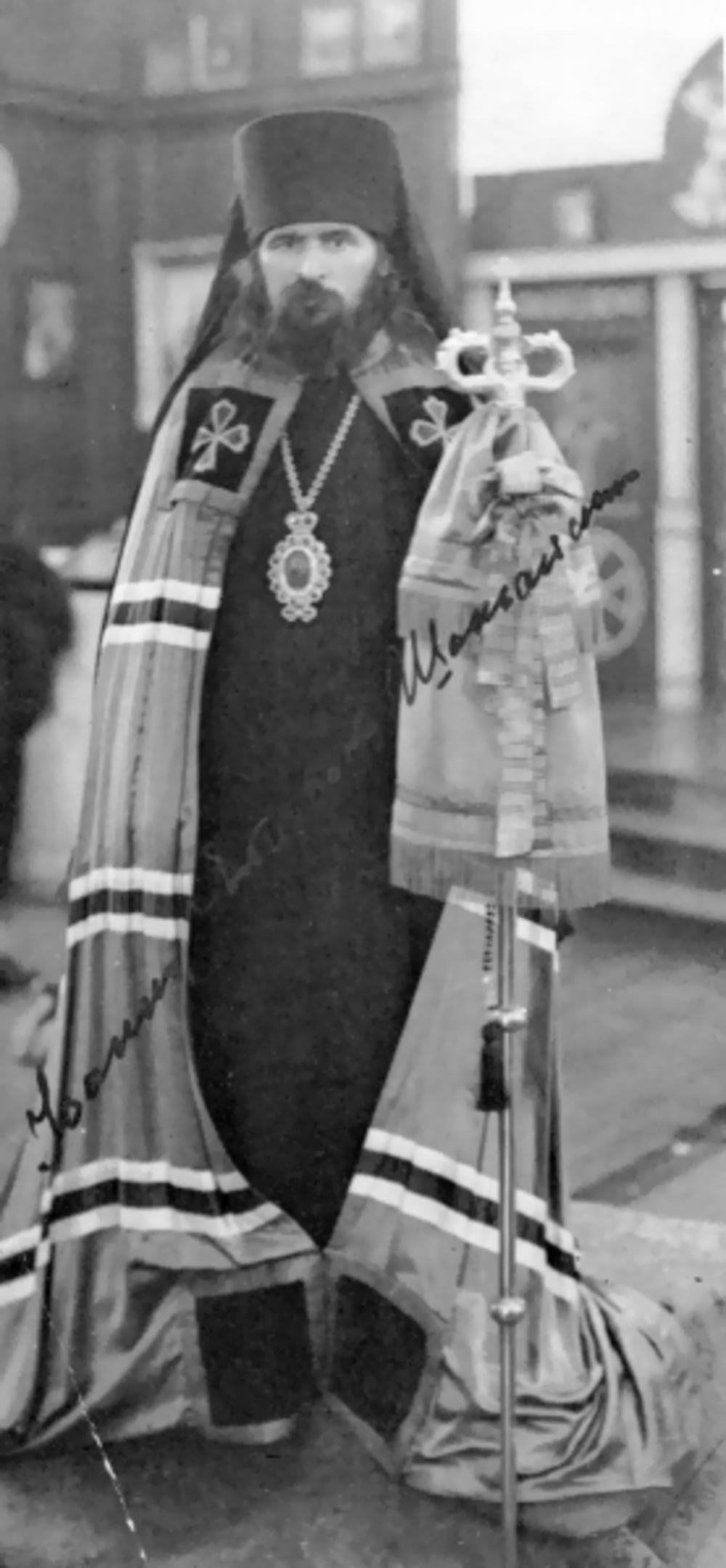
The 1964 Council of the Bishops of the Russian Church Abroad (ROCOR) marked a new milestone in its history: on May 27, 1964 Metropolitan Anastasii (Gribanovskii) retired. Bishop Anastasii’s episcopal consecration took place in Moscow in 1906. In 1913 he was appointed to devise rites for the glorification of St. Patriarch Germogen, which was presided by Patriarch Gregory IV of Antioch. In 1915, Anastasii was appointed Bishop of Chisinau and Khotin. He designed the rite of installation of St. Tikhon as Patriarch of Moscow on November 21, 1917. On December 7, 1917, the local council of the Russian Church elected him a member of the Synod of Bishops.

In 1918, after the accession of Bessarabia to Romania, Archbishop Anastasii refused to subordinate to the Romanian Church and was sent out of country by the Romanian military authorities. In 1920 he was appointed by the Supreme Church Administration of the South-East of Russia to Constantinople, which was occupied by the French and British troops, to address ecclesiastical needs of Russian refugees.

Evacuated from the Crimea in November 1920, the Russian Army created their own worldwide network – the Russian All-Military Union – in order to continue the struggle against Bolshevism. The Russian Church Abroad became the Church of this emigration that was traumatized by the civil war. The flock of the Russian Orthodox Church was very anti-communist: one could not expect from them a politically correct attitude toward the Bolsheviks. In 1924, the Ecumenical Patriarchate required Archbishop Anastasii to stop commemorating Patriarch Tikhon in the Divine Liturgy and to abstain from any political rhetoric. Archbishop Anastasii did not fulfill this demand and was suspended.

After his departure from Constantinople in 1924, Archbishop Anastasii was appointed to Jerusalem as an administrator for the Russian Ecclesiastical Mission. There he continued his encounter with Greek Orthodoxy, and he also visited Damascus. In 1927, at the request of Patriarch Damian of Jerusalem, he took part in the consecration of new bishops for the Jerusalem Patriarchate. At that time Palestine was under British mandate. Archbishop Anastasii maintained intensive contacts with the British and took part in joint prayers with the Anglicans. As a result of his labors, the Gethsemane monastic community was founded by former Anglican nuns who had become Orthodox.

In 1936, after the death of Metropolitan Antonii (Khrapovitskii), Anastasii became the second Primate of the Russian Church Abroad. During World War II, he did not escape the illusions prevailing among the flock of the Russian Church Abroad that the Germans, having liberated Russia from Bolshevism, would permit the establishment of an independent Russian state. Metropolitan Anastasii supported Russian Liberation Army of General Andrei Vlasov. Nevertheless, Metropolitan Anastasii’s intuition and caution saved him from calling to the entire flock of the ROCOR to support Drang nach Osten (that is, German expansion into Slavic lands).

In 1950, Metropolitan Anastasii moved to the United States. Here he maintained warm relations with the Greek Archbishop Michael (Konstantinides), whom he had met in Constantinople. In the postwar period, Metropolitan Anastasii had a rigid attitude toward the Moscow Patriarchate. At the ROCOR Council of Bishops in 1959, the decision was made to accept clergymen of the Moscow Patriarchate through repentance. In his so-called last testament, Metropolitan Anastasii called on the faithful to have no public contacts with representatives of the Moscow Patriarchate. Today, those who did not recognize the 2007 reconciliation of the Moscow Patriarchate and the Russian Orthodox Church Abroad refer to this document, pulling the words out of historical context.

In exile, Archbishop Anastasii showed a rare ability to step back from the noise of the dominant trends. At the Pan-Diaspora Council of 1921, he was against the adoption by the council of an appeal for the restoration of the Romanov dynasty, supported by Metropolitan Antonii. He was acutely aware that St. Patriarch Tikhon had a very different experience of life than those Russian bishops who left the country. At the Council of Bishops in 1953, Metropolitan Anastasii spoke out against the glorification of St. John of Kronstadt, believing that it was not the business of the refugee Church to glorify the All-Russian miracle worker. Metropolitan Anastasii was against Russian intervention in the internal affairs of the Greek Orthodox Church, and a Bishop’s Council passed a resolution not to participate in the consecration of the Greek Old Calendarists. This resolution was breached in 1962 by Archbishop Leontii of Chile and Peru.

It became very difficult for Metropolitan Anastasii to head the bishops’ “conclave” of the Russian Church Abroad due to his advanced age, and he summoned a Council of Bishops with the purpose of electing a successor. On May 27, 1964 Metropolitan Anastasii confirmed that he had not changed his mind about retirement. Since Byzantine times, conciliarity was maintained in the Orthodox Church by the confrontation between the “diplomats” and “zealots.” At the time of the Council of Bishops in 1964 there was a sharp confrontation between these two episcopal parties. The leader of “zealots” was St. John (Maximovitch) of Shanghai and San Francisco, and the leader of the “diplomats” was Archbishop Nikon (Rklitskii) of Washington and Florida. The election of a First Hierarch from either of these two factions would have made it extremely difficult for the other party to work with this person. To resolve this crisis, St. John offered to withdraw his candidacy, if Archbishop Nikon would follow suit. The result was that Bishop Philaret (Voznesenskii) became the Primate of the Russian Church Abroad. This opened a new period in ROCOR history. Bishop Philaret had been consecrated only a year earlier, and represented a new generation of leaders. On November 1 at the Synodal Cathedral in New York and later in Utica, New York, the glorification of St. John of Kronstadt took place. The Russian Church Abroad was turning into a self-sufficient entity.

On May 22, 1965, Metropolitan Anastasii died and was buried in Holy Trinity Monastery, Jordanville, NY.

Deacon Andrei Psarev teaches church history at Holy Trinity Russian Orthodox Seminary in Jordanville, NY. He also serves on the SOCHA advisory board and runs the ROCOR Studies website (www.rocorstudies.org).

ROCORStudies.org

Historical Studies of the Russian Orthodox Church Abroad

0

One of our advisory board members, Deacon Andrei Psarev of Holy Trinity Seminary in Jordanville, NY, operates the excellent church history website ROCORStudies.org. As the name suggests, the site is devoted to studying the history of the Russian Orthodox Church Outside of Russia (ROCOR). Recently, we asked Deacon Andrei to provide a summary of the site for our readers. He offered the following:

Our Website,  Historical Studies of the Russian Church Abroad, is a meeting place for people concerned with the past and present of the ROCOR.

  • Posted materials are in English and Russian.

Website Navigation:

LIVES OF BISHOPS
Hitherto unpublished biographies by Michael Woerl and photos of all bishops who served in the ROCOR, however briefly (e.g., Archbishop James Tooms of the American Orthodox Mission)

ARTICLES
Serialization of ROCOR history by Dr. Gernot Seide, bios of clergy and laity, canon law issues, relations with non–Orthodox. Your comments are welcome!

INTERVIEWS
Sister Vassa Larin on theology and education, interviews with historians and witnesses to key developments in ROCOR history

AUDIO RECORDINGS
Excerpts from liturgical services of Holy Trinity Monastery in Jordanville, NY

GALLERY
Photographs, including archival and rear images, documenting the history of the ROCOR

ARCHBISHOP LEONTII OF CHILE  (1904-1971) 
Photos and documents pertaining to a man who was a confessor of the faith in the USSR and became a controversial bishop of the ROCOR 1904-1971 in South America

The Web site is updated once a month. Subscribe to our free newsletters!

A variety of opinions is encouraged as long as academic standards are upheld: claims should be supported by evidence and controversial views must be couched in an inoffensive tone.

Web Administrator Deacon Andrei Psarev
rocorstudies@gmail.com
www.rocorstudies.org

HTM Ludwell Panakhida Collage

Two Memorials served for Colonel Philip Ludwell III – Tuesday March 14/27

2

Tuesday, March 14/27, 2012 marked the two hundred and forty fifth anniversary of the repose of Colonel Philip Ludwell III, a native of Williamsburg, Virginia. The metrical books of the Russian Orthodox Church in London, England record that Ludwell died at his home in London at 5p.m. on March 14 O.S., 1767, having previously been confessed and received holy communion and holy unction. His funeral was served several days later in the London church. He is the first known convert to Orthodoxy in the Americas, having traveled from Virginia to be received at the Russian Orthodox Church in London, England in 1738. Further details of his life may be found elsewhere on this site.

With the blessing of Archimandrite Luke, Abbot of Holy Trinity Monastery in Jordanville, New York, a memorial (panikhida) was served in English by Archpriest Gregory Naumenko, rector of the Protection of the Mother of God Church in Rochester, New York, who teaches pastoral theology and homiletics at Holy Trinity Seminary. Responses were sung by a small choir of seminarians under the direction of Reader Ephraim Willmarth, who is the administrative assistant to the dean of the seminary. Members of the monastic community and local Orthodox believers also joined in the prayers. Archpriest Gregory also remembered the other known Orthodox members of Colonel Ludwell’s family: his daughters Hannah, Frances and Lucy, and the latter’s husband John Paradise. A short reflection on the significance of Colonel Ludwell’s life for the Orthodox Church in Russia and the Americas, and his role in early American history, was offered by Nicholas Chapman before the commencement of the memorial.

On the evening of the same day a pahikhida was also served at the St. John of Kronstadt Russian Orthodox Memorial Church in Utica, New York. The parish’s rector, Archpriest Michael Taratuchin, when announcing the service on the previous Sunday, had noted that his own place of birth was very close to the church in the East End of London, where Colonel Ludwell was buried in 1767. Archpriest Michael chose to remember Colonel Ludwell as a voina (warrior) because of his role in the appointment of the young George Washington as a colonel in the colonial militia and his work with Lord Loudon (Commander in Chief of British Forces in North America), with whom Ludwell interceded for the strengthening of the Virginia frontier.

Both memorials were served with the blessing of Metropolitan Hilarion, the first hierarch of the Russian Orthodox Church outside of Russia, in his capacity as the head of the ROCOR diocese of Eastern America. It is not known to the writer at the present time whether other memorials were held on the same date elsewhere or on the date of Ludwell’s repose according to the revised Julian (new) calendar.

May Colonel Philip Ludwell’s memory be eternal!

Nicholas Chapman, Herkimer, New York, March 28, 2012

Go to Top