Matthew Namee

Matthew Namee

(213 comments, 399 posts)

Matthew Namee serves as editor of OrthodoxHistory.org. He specializes in the history of Orthodoxy in America from the mid-19th to the mid-20th centuries. His publications include "Father Raphael Morgan: The First Orthodox Priest of African Descent in America" in St. Vladimir's Theological Quarterly (2009), Wichita's Lebanese Heritage (coauthor, 2010), and the Atlas of American Orthodox Christian Churches (contributing author, 2011). He has lectured at numerous conferences and hosts the American Orthodox History podcast on Ancient Faith Radio.

Matthew is the former research assistant to baseball author and Boston Red Sox executive Bill James, and he helped to produce the Neyer/James Guide to Pitchers (2004). Also in 2004, Matthew cofounded The Hardball Times, a popular baseball website. He earned his J.D. from the University of Kansas in December 2012, and currently works as an associate in the employee benefits department at Hinkle Law Firm in Wichita, Kansas. He and his wife Catherine have three children. Matthew can be contacted at mfnamee [at] gmail [dot] com.

Posts by Matthew Namee
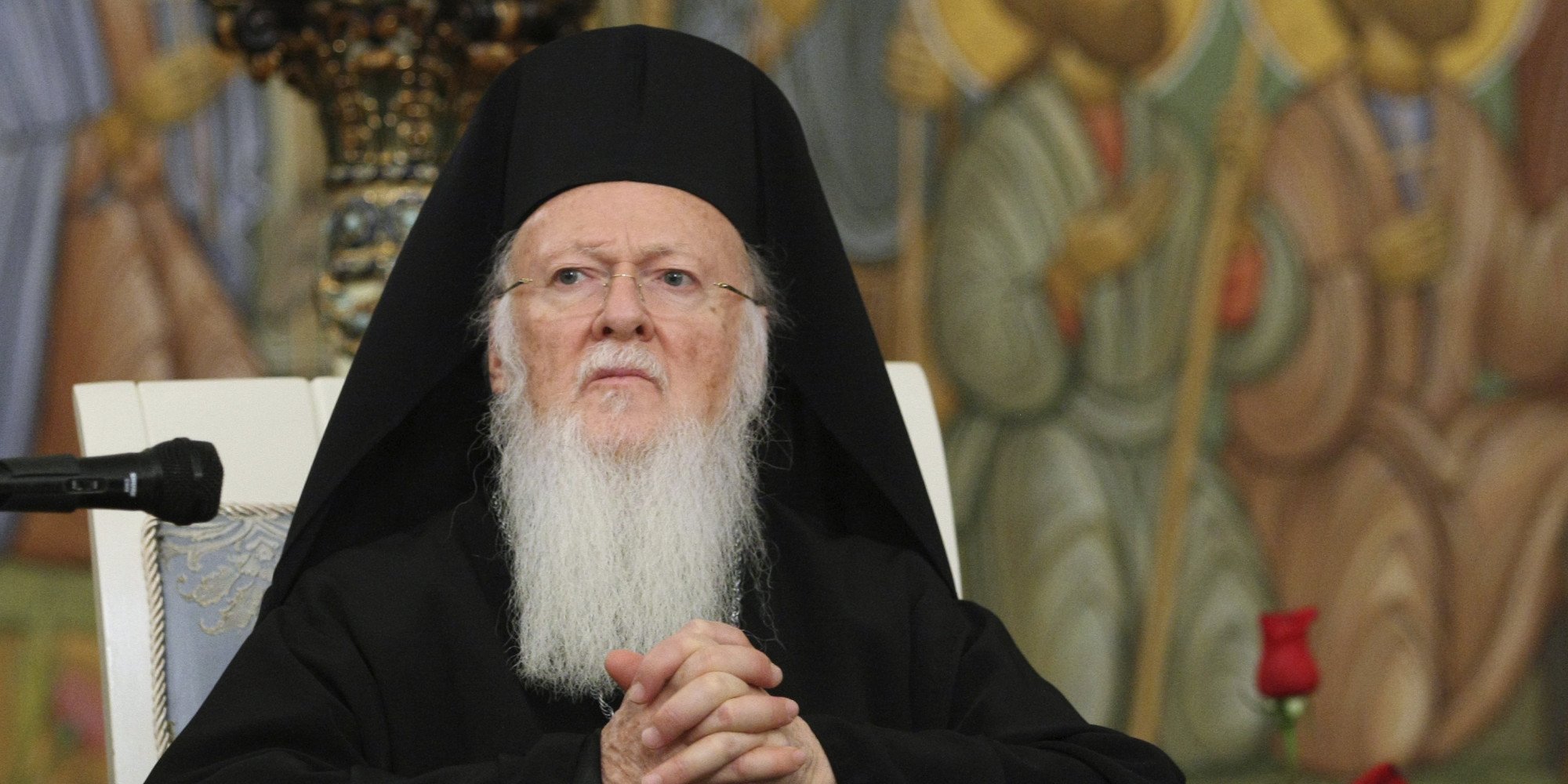
Ecumenical Patriarch Gregory VI (photo from OrthodoxWiki)

The “Bulgarian Question” and the 1872 Council of Constantinople, Part 1

0

Ecumenical Patriarch Gregory VI (image from OrthodoxWiki)

Recently, I had occasion to research the 1872 Council of Constantinople, which somewhat famously condemned “ethno-phyletism.” The issue arose because, as I understand it, the Bulgarian Orthodox Church — which was under the jurisdiction of the Ecumenical Patriarchate — declared itself autocephalous. Anyway, before I began this research, I could probably tell you three or four sentences’ worth of information about the whole affair. Surprisingly, there is very little to be found online, and what little has been written about the Council tends to focus on applying it to a modern, American context — an endeavor that can lead to historical inaccuracies and anachronisms. I also searched various databases of scholarly journals, but came up empty. At least in English, there appear to be almost no modern treatments of this Council.

I then checked my personal archives, and it turns out that I have a series of contemporaneous accounts of the situation, published in the Methodist Quarterly Review beginning in 1870. I’m going to reprint those articles here, because they are the best thing I’ve yet found on the subject, and also because they show the kind of reporting you could find in America on global Orthodox events in the 1870s.

This first installment comes from the July 1870 issue of the Methodist Quarterly Review, beginning at page 451.


THE EASTERN CHURCH — THE BULGARIAN QUESTION. — Among the most important questions which have agitated the Eastern Churches since the beginning of the present century is the re-construction of a national Bulgarian Church, which is to remain united with the Patriarchate of Constantinople and other parts of the Greek Church in point of doctrine, but to maintain an entire independence in point of administration. This question has obtained a political, as well as an ecclesiastical, importance, as Russia, France, and other European powers have tried to make capital out of it. A decree of the Turkish Government, issued in February, 1870, appears to decide the main point which was at issue. As important results may follow this decision, a brief history of the Bulgarian question will aid in a proper understanding of the situation it now occupies, and of the hopes that are entertained by the Bulgarians with regard to their future.

When the Bulgarians, in the ninth century, under King Bogaris, became Christians, the new missionary Church was placed under the supervision of the Greek Patriarch. About fifty years later King Samuel established the political independence of the Bulgarian nation and the ecclesiastical independence of the Bulgarian Church. But after his death, the Church was again placed under the Greek Patriarch, and did not regain the enjoyment of ecclesiastical independence till the latter part of the twelfth century. After the conquest of the country by the Turks, in 1393, many of the Bulgarians for a while became, outwardly, Mohammedans; but, as religious freedom increased, returned to their earlier faith, and the Bulgarian Church was made an appendage to that of Constantinople. Good feeling prevailed then between the Greeks and the Bulgarians, and the Sultan filled the Bulgarian Sees with Greek prelates, who were acceptable to the people. As the Bulgarian nobility was exterminated, and the people oppressed by wars which followed, there was, until the beginning of the present [19th] century, scarcely a single voice raised against the foreign Episcopate. But the national feeling began to assert itself about fifty years ago, and the Greek Patriarch was compelled to authorize several reforms. Abuses continued, however, and the national feeling increased, so that the Patriarch was obliged, in 1848, to approve the erection of a Bulgarian Church, and of a school for the education of priests, in the capital. The demand of the Bulgarians for a restoration of their nationality, in 1856, again aroused the slumbering zeal of the Greeks, and the differences between the two nationalities have continued very active up to the present time. The Porte, in 1862, named a mixed commission, to investigate and settle the inquiries. It proposed two plans of adjustment. According to one of these plans, the Bulgarian Church was to name the Bishops of those districts in which the Bulgarian population was a majority. The other plan accorded to the Bulgarians the right to have a Metropolitan in every province, and a Bishop in every diocese, where there is a strong Bulgarian population. Both plans were rejected, and the Turkish Government, having been to considerable pains for nothing, left the contending parties to settle the controversy in their own way.

Accordingly the Greek Patriarch, in 1869, proposed a General Council, and solicited the different Churches of the Greek Confession for their opinions and advice on the subject. Greece, Roumania, and Servia declared themselves in favor of the Council. On the other hand, the Holy Synod of Petersburgh, for the Russian Church, declared the claims of the Bulgarians to be excessive, and that, although it considered a Council the only lawful means of settling the points at issue, it feared a schism if the demands of the Bulgarians were complied with, and was further afraid that the fulfillments [sic] of the demands of the canons would be refused, and advised the continuance of the status quo. The Greek Patriarch, being unwilling to solve the question, the Turkish Government took the matter into its own hands, and in February, 1870, issued a decree which establishes a Bulgarian Exarch, to whom are subordinate thirteen Bulgarian Bishops, whose number may be increased whenever it may be found necessary. The Turkish Government has tried to spare the sensibility of the Greeks as much as possible, and has, therefore, not only withheld from the head of the Bulgarian Church the title of Patriarch, but has expressly provided that the Exarch should remain subordinate to the Patriarch of Constantinople. Nevertheless the Patriarch has entered his solemn and earnest protest against the scheme. His note to the Grand Vizier, which is signed by all the members of the Holy Synod of Constantinople, is an important document in the history of the Greek Church, and reads as follows:

To His Highness the Grand Vizier: – Your Highness was pleased to communicate to the Patriarchate, through Messrs Christaki, Efendi, Sagraphras, and Kara-Theodor, the Imperial firman, written upon parchment, which solves the Bulgarian question after it had been open during ten years. The Patriarchate, always faithfully fulfilling its duties toward the Emperor, whom the Lord God has given to the nations, has at all times remained foreign to any thought that the decrees of the Sublime Sovereign in political questions should not be obeyed. The Oriental Church obeyed with cheerfulness and respect the legitimate Sovereigns. The latter, on their part, have always respected the province which belongs to the ecclesiastical administration. The Sultans, of glorious memory, as well as their present fame-crowned successor, (whose strength may be invincible,) have always drawn a marked boundary-line between civil and ecclesiastical authority; they recognized the rights, privileges, and immunities of the latter, and guaranteed it by Hatti-Humayums. They never permitted any one to commit an encroachment upon the original rights of the Church, which, during five centuries, was under the immediate protection of the Imperial throne.

Your Highness: If the said firman had been nothing but the sanction of a Concordat between the Patriarchate and the Bulgarians, we should respect and accept it. Unfortunately, things are different. Since the firman decides ecclesiastical questions, and since the decision is contrary to the canons, and vitally wounds the rights and privileges of the Holy See, the Patriarchate cannot accept the ultimatum of the Imperial Government. Your Highness: Since the Bulgarians obstinately shut their ears to the voice of that reconciliation which we aim at, and since the Imperial Government is not compelled to solve an ecclesiastical question in an irrevocable manner; since, finally, the abnormal position of affairs violates and disturbs ancient rights, the Ecumenical Patriarchate renews the prayer, that the Imperial Government may allow the convocation of an Ecumenical Council, which alone is authorized to solve this question in a manner legally valid and binding for both parties. Moreover, we beseech the Imperial Government that it may take the necessary steps which are calculated to put an end to the disorder which disturbs the quiet within our flock, and which can chiefly be traced to the circulars of the Heads of the Bulgarians (dated the 15th of the present month). The Ecumenical Patriarchate enters its protest with the Imperial Government against the creation of these disturbances.

Written and done in our Patriarchal residence, Mar. 24 (old style), 1870.

(Signed) GREGORY CONSTANTINE, Patriarch.

(Signed) All the members of the Holy Synod.

The note of the Patriarch and his Synod indicates that they are aware that, sooner or later, the national demands of the Bulgarians must be granted; and their chief concern now is to obtain as large concessions for the supremacy of the Patriarchal See as possible.

A peaceable and a speedy solution of the difference is the more urgent, as during the last ten years the heads of the Roman Catholic Church in Turkey, aided by the diplomatic agents of the French Government, have made the most strenuous efforts to gain a foothold among the Bulgarians, and to establish a United Bulgarian Church. Nor have these efforts been altogether unsuccessful. Several years ago the Pope appointed the Bulgarian priest, Sokolski, the first Bishop of those Bulgarians who had entered the union with Rome, and who constituted a nucleus of the United Bulgarian Church, which, like the other united Oriental Churches, accepts the doctrines of the Roman Catholic Church, but is allowed to retain the ancient customs of the ancient national Church, (marriage of the priests, use of the Sclavic [sic] language at divine service, etc.). Bishop Sokolski was quite on a sudden carried off from Constantinople, (as was commonly thought by Russian agents,) and has never been heard of since. In 1855, Raphael Popof was consecrated successor of Sokolski; he still lives, as the only United Bulgarian Bishop, is present at the Vatican Council. He resides at Adrianople, and under his administration the membership of the United Bulgarian Church has increased (up to 1869) to over 9,000 souls, of whom 3,000 lives in Constantinople, 2,000 in Salonichi and Monastir, 1,000 in Adrianople, and 3,000 in the vicinity of Adrianople. The clergy of the Church, in 1869, consisted of ten secular priests.


The part about Rome and the emerging Bulgarian “unia” — complete with a Uniate bishop allegedly abducted by Tsarist agents! — is a topic worthy of study on its own. It’s also interesting to note that all of this was happening simultaneous with the First Vatican Council, which proclaimed the Roman Catholic dogma of papal infallibility.

Next week, we’ll be back with another article on the “Bulgarian Question” and the build-up to the 1872 Council of Constantinople — which, as you might have noticed from the Ecumenical Patriarchate’s letter, was referred to as an “Ecumenical Council.” (Yes, there were Ecumenical Councils after #7.)

Alaska Herald masthead

Fr. Andreades’ 1867 New Orleans homily

0

Archimandrite Stephen Andreades was the first priest of Holy Trinity Orthodox Church in New Orleans. He arrived in late 1867, making him the very first resident Orthodox priest in the contiguous United States. Very little is known about Andreades, and most of what we know comes from a short homily he gave upon his arrival. The homily was published in the March 15, 1868 issue of the Alaska Herald (vol. 1, issue 2), a periodical published by the infamous Agapius Honcharenko.

Until recently, I had seen references to that homily, but I had never gotten my hands on the text itself. But a couple of months ago, Maggie Maag, who heads up the great historical work being done at Holy Trinity in New Orleans, sent me a copy. The homily was originally given in Greek, but it was translated into Russian for the Alaska Herald. Maggie found the Alaska Herald issue at the Library of Congress, and she arranged for Roman Alokhin of the New Orleans Museum of Art to translate it from Russian into English. I ran the translation past a Russian translator friend of mine, who made some minor edits. The result is below.

The homily is dated December 25, 1867. I suspect that’s the Julian (Old) Calendar date, so it would have been January 6, 1868 according to the Gregorian Calendar used in America. The original translation from Greek to Russian was done by a man named Thomas Kraskovsky, about whom we know nothing. Here’s the whole thing, followed by my own comments:

I see with which Heavenly glory the hearts of Orthodox Christians of the Eastern Church are filled, because of the establishment of the first Orthodox Church in the New World.

In the name of this blessed event, let’s exalt our hearts to God and thank Him for raising this church in the land of freedom, equality, enlightenment and humanity.

Here, the notion of the history of Christianity gives an acknowledgement that our Church is the only true and unshakable church. As the mother of other churches that enlightened the universe with Godly and human law is understood by those, who did not spare means, when our church in the east was subject to danger, they (Christians of Holy Trinity church) regardless of payoff decided: what to Greece is not given, is subsequently (after all) given to it (to this church).

The erection of this Orthodox Church is a great jubilation of Orthodoxy, Christian strength and virtue, it increases the magnificence of our church crown. You, coming here from so far away for trading business and for improving your fate, did not forget your motherland and your protectress Orthodox Church. You understood that God’s temple is a union of devout and illuminated by the heavenly truth society, that entering the temple as if into a place of unseen God, we strengthen our faith, receive light from the sky, receive holy mysteries and while reading the holy gospel we hear the voice of almighty God.

Such feelings of Christian love prompted you to build this delightful temple, where you invited me from Greece to conduct this first Godly Liturgy.

Rejoice with me, Orthodox Christians, and receive my heartfelt spiritual blessing. Blessed and glorified the name of God, who granted me to conduct a spiritual service in this new church, and I beg Him for help in my task. The permanent duty of my service in this church will be: to keep the commandments of God and to comply with church bylaws. To conscientiously perform the holy mysteries, as the source of immortality, so as our life is not deprived of God’s grace.

My children! Have faith with virtue and virtue with reasonableness. Accustom to sobriety, be pious and patient, love each other as this is the source and root of all goodness and foundation of Christian morals. Respect your parents and older people, equally respect property and rights of your neighbors. These qualities make humanity great, produce kind citizens, well-doers/benefactors and great people.

Holy Trinity! Infinite mercy, inconceivable light, illuminating anyone coming to you, we beg you, remain amidst your children and honor us with your grace. Illuminate us the sinful and give us the strength to praise your beneficence and dominion. Guard this new church and protect it against all dangers. Shelter the flock and the shepherd, turn away bad intentions of invisible enemies, accompany to the jubilation of Orthodoxy. Strengthen us in our reasonableness and sustain in all undertakings – Amen.

The part about Andreades coming from Greece is the one thing I had seen before. The homily makes it sound like the church building was recently constructed, which fits with my impressions from other sources. The June 13, 1867 issue of the New Orleans Times reported that the New Orleans Board of Aldermen adopted the following resolution:

Resolved, That the Surveyor be and he is hereby instructed to cause to be constructed a wooden sidewalk, 250 feet long and 2 feet wide, and a wooden crossing 42 feet long by 4 feet wide, opposite the Greek Trinity Church, on Dorgenois street, between Barracks and Hospital streets.

So obviously, by June, there was a church building — which means that the church building preceded the priest by at least six months.

This is just one of the many, many fascinating discoveries that they are making in New Orleans. The historical work being done by that community, and spearheaded by Maggie Maag, is really tremendous. We’ll have much more on that work in the future.

Matthew Namee

Freemasonry in American Orthodox history

Once upon a time, it was the norm for American men to be members of fraternal organizations. These were especially attractive to new immigrants, who wanted to be integrated into American society and make progress in business. And in that earlier era, fraternal membership was the best and quickest way to achieve both goals. They joined the Rotary Club, the Lions, the Elks, the Odd Fellows, the Knights of Columbus, and a host of others. But the most famous — and infamous — of them all was Freemasonry. Countless men in American Orthodox history, including priests and bishops, have been Freemasons. This, despite the fact that membership in secret societies is widely viewed as incompatible with Orthodoxy.

For some background, let’s first look at the relevant canons. Now, I am not a canonist, nor am I a historian of the Eastern Roman (or “Byzantine”) Empire. But, as best I can tell, the key canons are Canon 18 of Chalcedon and Canon 34 of Trullo. Let’s take the latter one first:

But in future, since the priestly canon openly sets this forth, that the crime of conspiracy or secret society is forbidden by external laws, but much more ought it to be prohibited in the Church; we also hasten to observe that if any clerics or monks are found either conspiring or entering secret societies, or devising anything against bishops or clergymen, they shall be altogether deprived of their rank.

The Trullo canon was referred to as simply a renewal of Canon 18 of Chalcedon:

The crime of conspiracy or banding together is utterly prohibited even by the secular law, and much more ought it to be forbidden in the Church of God.  Therefore, if any, whether clergymen or monks, should be detected in conspiring or banding together, or hatching plots against their bishops or fellow-clergy, they shall by all means be deposed from their own rank.

On their face, these canons seem to be focused on prohibiting clergymen from conspiring against other clergymen. I don’t think that the bishops who composed the canons had in mind groups like the Freemasons. That isn’t to say that Freemasonry is acceptable in Orthodoxy, but I don’t think there’s an explicit forbiddance in the ancient canons themselves. If anyone knows of other relevant canons, please let me know, because, as I said earlier, I am definitely not an expert on this stuff.

Freemasonry and other secret societies were extremely prevalent in Russia,  Greece, and other traditionally Orthodox countries in the 19th century. Meletios Metaxakis — the Archbishop of Athens who founded the Greek Archdiocese and later became Ecumenical Patriarch — was a Freemason. So was Archbishop Athenagoras Spyrou, who led the Greek Archdiocese for two decades and then became a hugely influential Ecumenical Patriarch. Likewise Metropolitan Antony Bashir, the longtime head of the Antiochian Archdiocese of New York. And these were just three of the biggest names; numerous other Orthodox bishops were Freemasons in the 20th century. (In the case of Athenagoras and Bashir, I’ve talked to people who knew them, and it was common knowledge that they were Freemasons. But I must admit that I don’t have any hard evidence to prove this fact. Unfortunately, evidence beyond word of mouth is hard to come by on this sort of thing.)

In 1917, Fr. Ingram Nathaniel Irvine argued strongly against the consecration of Aftimios Ofiesh as bishop for the Syrians. One of Irvine’s main contentions was that Ofiesh was a Freemason. I’ll quote Irvine’s letter at length here, because it’s directly relevant to the topic at hand. The letter, dated 2/5/1917, was written to the North American Ecclesiastical Consistory and is preserved in Irvine’s file in the OCA archives. All the emphases and misspellings are Irvine’s.

 A Schism can be healed but the consecration of the wrong party for the Episcopate never. [...] Who is the candidate for the Syrian Vicar Bishoprick? A Freemason. It may be said that, he has given up Masonry. While I doubt it, it makes the matter more terrible than if he persisted in being an active member. And why?

First: Because by being an in-active member for the sake of a chance of being made a Bishop he must have lost the respect of both the Masonic Order and loyal Orthodox Christians.

Second: There is an old and well authenticated fact to wit: — “Once a Mason always a Mason.” An ignorance of the watchword because of delinquency of a member etc., for the time being, does not hinder the opportunity of having that ignorance remedied and the knowledge granted at an opportune moment. Insincerity under the first point would suggest the second idea.

The history of Freemasonry is a night-mare to Christianity in the West. Pardon a little bit of my own knowledge being interjected. Practical knowledge after all is the best.

[Irvine goes on to discuss his own negative experience with a Freemason bishop in the Episcopal Church.]

Freemasonry, today, is a mixture of spurious Christianity, agnosticism, infidelity, aethism [sic], Judaism, and in very many instances, immorality. I have carefully studied it for over fifty years. It’s [sic] nobility of long ago, while it has still had some noble men as members, has long since departed. It has damned the State and the Church by its under-hand influence and corruptive practices.

If a Bishop of the Church is a Freemason then every priest had better be a Mason in his Diocese, for otherwise it may follow that a Jew, an Infidel, an Aethiest etc. or the lowest saloon keeper, or house of ill fame manager, as a member would have more influence as a mason with the Masonic Bishop than the priest who was not a member of the Order.

One of the questions asked of me when I was a candidate for the Russian Orthodox Priesthood was “Are you a Freemason?” My reply was “I am not.” Have we changed? Are our conditions variable?

Now if the Episcopate is one, any member of it affects the whole. And if the Church is one, any member of the same may feel agrieved [sic] if he believes that a member of an alien and pernicious organization is permitted to rule in the high and sacred office of a Bishop in the Church of God Almighty.

The Orthodox Church has gained the Confidence and love of right-thinking people. Let us not tarnish her banner now by inserting amongst the title letters “Masonery.” Rome is marveling at our success and Orthodox Catholicity. Let us not give her a chance to say that, we have retrograded to rationalism and chicanery. Above all things let us guard the Episcopate from that which is worldly and earthly.

Therefore if all others keep silent, I for one, as a faithful priest of the Russo-Greek Holy Orthodox Catholic Church, most solemnly protest against the admission of Archimandrite Afiesh or any other Mason into the Episcopate.

And if he is admitted or any Mason, even under pain of Ecclesiastical penalties, I will never recognize him as a Bishop. I can not serve God and Mammon in the Episcopate. Masons as Laymen may be sinners, but as Bishops hypocrites and creatures of circumstances.

In spite of Irvine’s campaign against him, Ofiesh was consecrated a bishop. And his career did end badly — he exhibited erratic behavior and ended up marrying a young girl in 1933 — but I don’t think any of that was connected to his status as a Freemason.

Have any Orthodox Churches formally condemned Freemasonry? Yes, they have. The Russian Orthodox Church Outside of Russia (ROCOR) condemned it in 1932. The Church of Greece followed suit the next year, issuing a rather lengthy statement. The Holy Synod of Greece had appointed a commission of four bishops to study Freemasonry, and on October 12, 1933, the commission presented its initial findings. The Holy Synod also heard reports from the Theological Faculty of the University of Athens. After this, the Synod unanimously adopted several conclusions.

  1. “Freemasonry is not simply a philanthropic union or a philosophical school, but constitutes a mystagogical system which reminds us of the ancient heathen mystery-religions and cults—from which it descends and is their continuation and regeneration.”
  2. “Such a link between Freemasonry and the ancient idolatrous mysteries is also manifested by all that is enacted and performed at the initiations.”
  3. “Thus Freemasonry is, as granted, a mystery-religion, quite different, separate, and alien to the Christian faith.”
  4. “It is true that it may seem at first that Freemasonry can be reconciled with every other religion, because it is not interested directly in the religion to which its initiates belong. This is, however, explained by its syncretistic character and proves that in this point also it is an offspring and a continuation of ancient idolatrous mysteries which accepted for initiation worshippers of all gods. [...] This means that by masonic initiation, a Christian becomes a brother of the Muslim, the Buddhist, or any kind of rationalist, while the Christian not initiated in Freemasonry becomes to him an outsider.”
  5. “On the other hand, Freemasonry [...] shows itself in this sense to be in sharp contradiction with the Christian religion.”
  6. “Thus, the incompatible contradiction between Christianity and Freemasonry is quite clear. [...] [T]he Orthodox Catholic Church, maintaining in its integrity the treasure of Christian faith [has] proclaimed against it every time that the question of Freemasonry has been raised. Recently, the Inter-Orthodox Commission which met on Mount Athos and in which the representatives of all the Autocephalous Orthodox Churches took part, has characterized Freemasonry as a ‘false and anti-Christian system.’”

I’ve truncated all of those conclusions; click on the above link to read the full statement. The Holy Synod of Greece concluded:

Freemasonry cannot be at all compatible with Christianity as far as it is a secret organization, acting and teaching in mystery and secret and deifying rationalism. Freemasonry accepts as its members not only Christians, but also Jews and Muslims. Consequently clergymen cannot be permitted to take part in this association. I consider as worthy of degradation every clergyman who does so. It is necessary to urge upon all who entered it without due thought and without examining what Freemasonry is, to sever all connections with it, for Christianity alone is the religion which teaches absolute truth and fulfills the religious and moral needs of men. Unanimously and with one voice all the Bishops of the Church of Greece have approved what was said, and we declare that all the faithful children of the Church must stand apart from Freemasonry…

This is an especially remarkable statement given the prevalence of Freemasonry in Greece, and its role in the Greek Revolution a century earlier. The Church of Greece didn’t (and doesn’t) have an American jurisdiction, but in 1949 the Holy Synod of the Russian Metropolia in America (today’s OCA) formally affirmed the statement of the Church of Greece. In 1960, the Metropolia’s Synod reiterated that affirmation (click here to read the 1960 affirmation).

As far as I know, those three bodies — ROCOR, the Church of Greece, and the Russian Metropolia (OCA) are the only Orthodox Churches/jurisdictions that have formally condemned Freemasonry. That isn’t to say that it is acceptable among the other Orthodox Churches, but it’s also a somewhat sensitive issue, given how many Orthodox men have been Freemasons over the past century.

This is all by way of introduction. There’s quite a bit of material online about Orthodoxy and Freemasonry, but unsurprisingly, most of it focuses on condemning Freemasonry, rather than talking about history. If anyone out there has more details on the historical side of things, please let me know.

Matthew Namee


Photius Kavasales Fisk

Two Greek youths come to America in 1823

0

Photius Kavasales Fisk (image from the biography by Lyman Hodge)

Years ago, on an online database, I came across an article titled “The Two Greek Youth” and published in the April 1823 issue of The Guardian, or Youth’s Religious Instructor, a short-lived American magazine. According to the article, Protestant missionaries brought these two boys over from Malta to study at the Cornwall School in Connecticut.

One of the boys, Anastasius Karavelles (age 11) was the son of an Orthodox priest. Anastasius was born at Zante (Zakynthos), but the family moved to Malta when he was a small child. The other boy, Photius Kavasales, was a 15-year-old orphan who had lost almost his entire family (parents and six siblings) to the plague in Smyrna nine years earlier. He lived in a hospital for a few years, and when he was about 11 he was sent to live with an uncle in Malta. This uncle gave the Protestant missionaries permission to bring Photius to America.

According to the magazine, the boys both knew Greek, Italian, and Maltese, and before starting classes at the Cornwall School, they planned to spent time in Salem, Mass. and study English. The brief magazine article closed with a fundraising plea: “It may be proper to add, that their only dependence for support is upon the charity of the public — it is hoped that a generous sympathy will be felt for them, not only upon their own account, but on account of their oppressed and bleeding nation.”

Ah, yes, that’s right — this was smack-dab in the middle of the Greek War of Independence. Malta had become a part of the British Empire in 1819, but even so, the war in Greece must have placed some part in the boys’ (and their guardians’) thinking.

In any event, I always wondered, what happened to those boys? Is it even possible to find out, nearly 200 years after the fact, what became of a couple of Greek foreign exchange students from the 1820s?

To my surprise, it was kind of ridiculously easy. Do a quick Google search for “Photius Kavasales,” and you’ll find an act of the United States Congress dated May 3, 1848, authorizing the change of Navy chaplain Kavasales’ name to “Photius Fisk.”

Why Fisk? Because a certain Rev. Pliny Fisk was young Photius’ patron. In 1891, a biography of Photius Kavasales Fisk was published, written by Lyman F. Hodge, and it’s chock-full of information, including a lengthy letter from Rev. Fisk himself. (The entire book is available on Google Books.)

Apparently, Rev. Fisk was working as a missionary at Malta when, in the summer of 1822, he ran into the teenage Photius and invited him to attend the mission’s Sunday School. Photius turned out to be a star student, and Fisk invited him to come to America and receive a full education. Photius’ uncle agreed, and everything was arranged.

As all this was happening, one of the local Orthodox priests, Fr. John Karavelles, asked about the possibility of sending his son Anastasius to America as well. Of course, the Protestants thought this was a fabulous idea, and both boys were signed up. Here’s how Lyman Hodge describes what happened next, in his biography of Photius:

Having been .associates and playmates from the time that Photius came to the island, the boys had become fast friends; and Mr. Fisk had promised that they should be kept together, and should be instructed in the same schools. But, in order to unite them in still closer and more endearing relationship to each other, they were made brothers, through the impressive ceremonies of the Greek Church. Clad in his sacerdotal robes, the priest, after an appropriate address to the two boys, bound them together with a girdle, and laying his sacred hands upon their heads, he solemnly pronounced them brothers, and declared that the bonds of relationship were indissoluble.

This rare and little known ceremony, called “adelphopoiesis,” is a sacramental rite to make two men brothers. That’s what the term literally means, and it’s how the ceremony has been used in the Orthodox Church from time immemorial. Not too long ago, a Yale historian came up with the idea that adelphopoiesis wasn’t actually about making men brothers, but rather that it was a rite of same-sex marriage. This theory had the lovely features of lacking any historical foundation whatsoever and simultaneously appealing to modern trends, so it’s gotten some unwarranted attention, but it’s been successfully rebutted by both Orthodox and secular scholars.

Anyway, Photius and Anastasius were made brothers, and they sailed for America. After completing their studies, both young men returned to Greece. Anastasius remained there, but Photius loved America and soon returned. He became a Congregationalist clergyman, eventually changed his name to Photius Fisk in honor of his patron, and had all kinds of interesting adventures that you can read about in Lyman Hodge’s book.

After Photius returned to America, he didn’t see Anastasius again for almost half a century. The two were briefly reunited when Photius visited Greece in 1871. Anastasius had done quite well for himself: according to the Biographical Record of the Alumni of Amherst College, after returning to Greece he had studied law, become a judge, and worked as director of telegraphs at Syra, Greece. After the visit, Anastasius wrote a touching letter to Photius:

I received with the greatest pleasure your portrait and the Park Street views. I am very sad that I have not been able to fulfil my promise to you to go to Athens. I am a slave to a miserable salary, and consequently not free to do according to my wishes. We are not brothers by necessity, but by our own choice and circumstances. We left Malta when boys together, and with the same hopes ventured the great ocean of chance to find a home and happiness. Fortunately, we are both safe from the danger of destitution in this life. We had the happiness to see each other, separated as we had been by oceans. We may see each other again,— God knows. The early impressions of our boyhood have been indelibly fixed upon our minds and hearts. We have loved each other truly and fraternally. My dear Photius, remember me ever, as I will remember you. If idolatry is a sin, I will commit that sin in remembering you always; and, seeing your portrait, I will love you sincerely to the end of my life.

Mrs. Karavelles and my children desire to unite with me in expressing their sincere thanks to you for the love you bear to me, and participate in this proffered love. Please write to me how long you intend to remain in Athens, and if you intend to come again to Syra.

I remain yours, truly and sincerely,

A. Karavelles.

Photius died in February 1890, at the age of about 83. I’m not sure when Anastasius died, but it was before Photius; the aforementioned book on Amhearst College alumni was published in 1883, and Anastasius had already been dead for “several years.”


Photo from the consecration of Bishop Victor Abo-Assaly, first primate of the Antiochian Archdiocese.

This week in American Orthodox history (Nov. 5-11)

0

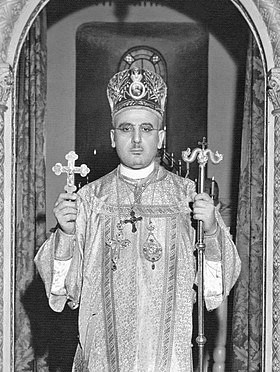
Photo from the consecration of Bishop Victor Abo-Assaly, first primate of the Antiochian Archdiocese.

November 8, 1894: Memorial services for Tsar Alexander III of Russia were held in New York and Washington, DC. The New York memorial was held in Holy Trinity Greek church, because there was no Russian church in the city. In Washington, President Grover Cleveland attended the service, which was led by Bishop Nicholas Ziorov. A couple of years ago, I wrote an article about these memorials; click here to read it.

November 9, 1897: Fr. Sebastian Dabovich officiated at the marriage of his niece Ella to Theodore Pashkovsky, who later became dean of the Russian cathedral in San Francisco. After Ella died, Fr. Theodore was consecrated a bishop (taking the name “Theophilus”), and he ultimately became primate of the Russian Metropolia from 1934 until his death in 1950.

The Pashkovskys had a son, Boris, who shortened his last name to “Pash” and went on to live a rather remarkable life himself. He worked security on the Manhattan Project — in fact, he was one of two sons of Orthodox bishops on the project, the other being the son of Metropolitan Leonty Turkevich — and after World War II, he negotiated to have the Japanese Orthodox Church placed under the jurisdiction of the Russian Metropolia in America.

November 8, 1900: Bishop Tikhon Bellavin, along with Fr. John Kochurov and Fr. Sebastian Dabovich, attended the consecration of an Episcopalian bishop in Fond du Lac, Wisconsin. The gathering became known as the “Fond du Lac Circus,” and, honestly, it’s high time that this event gets a full article of its own. I’ll add it to the to-do list.

November 9, 1902: Bishop Tikhon consecrated St. Nicholas Syrian Orthodox Church in Brooklyn, NY. He was assisted by Archimandrite Raphael Hawaweeny, head of the Syro-Arab Mission in North America.

November 5, 1905: Ingram Irvine, a convert from the Episcopal Church, was ordained an Orthodox priest by Archbishop Tikhon at St. Nicholas Russian Orthodox Cathedral in New York. Irvine had been an Episcopalian priest for a quarter century before being defrocked by his bishop for “conduct unbecoming a clergyman.” His ordination to the Orthodox priesthood sent shockwaves through the Episcopal Church.

I used to write about Irvine all the time here at Orthodox History, but not so much lately. Why, you ask? Because Aram Sarkisian (and, to a lesser extent, I) came upon some really important sources on Irvine — sources that don’t present him in a particularly good light. We’re still getting some things translated, and until Aram has a chance to present those findings, it’s a little difficult for me to say much about Irvine. In any case, my perspective on Irvine has changed quite a lot because of these new sources, and I’m much more inclined to think that the Episcopalians who disliked him had good reasons for doing so.

November 11, 1908: James Chrystal, a Protestant minister, died in Jersey City, NJ. Many years earlier, in 1869, Chrystal had traveled to Greece, converted to Orthodoxy, and been ordained a priest by the celebrated Archbishop Alexander of Syra. But Chrystal soon repudiated Orthodoxy because of his opposition to icons, and for the rest of his life, he held out hope that the Orthodox would abandon their “idolatry.” For more on Chrystal, check out my podcast and article on him and his fellow convert-turned-apostate, Nicholas Bjerring.

November 5, 1913: At a convention in Chicago, the Serbian Orthodox clergy in America formally requested to be transferred from the jurisdiction of the Russian Church to that of the Serbian Church. Nothing official happened until after World War I and the Bolshevik Revolution, but the wheels were in motion to create a separate Serbian jurisdiction in America.

Incidentally, this fact is one of the many pieces of evidence against the notion that the Bolshevik Revolution caused the subsequent jurisdictional chaos in America. The Serbs — along with the Greeks, Syrians, and others — were already either not part of the Russian Mission, or openly talking about leaving it, well before 1917.

November 9, 1924: Archimandrite Victor Abo-Assaly was consecrated in Worcester, MA to be the first primate of the brand-new Antiochian Archdiocese of North America.

November 6, 1954: Robert Royster, a Baptist convert to Orthodoxy, was ordained to the priesthood by the BIshop Bogdan, head of the Ukrainian jurisdiction under the Ecumenical Patriarchate. Royster took the name “Fr. Dmitri,” and he was just one of many American converts that Bishop Bogdan ordained. In his important 1973 book The Quest for Orthodox Church Unity in America, Fr. Seraphim Surrency wrote,

Bp Bogdan ordained over a dozen native converts to the Orthodox priesthood without requiring any theological training, and as might be expected the results were disastrous (an exception was Fr. Dmitry Royster who later transferred his allegiance to the Russian Metropolia and was consecrated Bishop in 1969).

Of course, the Metropolia morphed into the OCA in 1970, and Dmitri became one of its most prominent bishops. In 1977, he received by far the most votes in the election for a new OCA Metropolitan, but he was just shy of two-thirds, which meant that the names of both Dmitri and the distant runner-up — Theodosius Lazor — were submitted to the Holy Synod for consideration. In spite of Dmitri’s high vote total, the Synod quickly elected Theodosius as Metropolitan. The next year, Dmitri took over the fledgling OCA Diocese of the South, which he led until his retirement in 2009. Dmitri died in 2011.

And just to make quick plug: the best, most balanced and well-researched treatment of Dmitri that I’ve ever seen is Fr. Peter Robichau’s recent St. Vladimir’s Seminary thesis, From District to Diocese: An Examination of the Founding and Missionary Methods of the OCA Diocese of the South. It’s not published, but I hope Fr. Peter turns it into one or more articles in the future. If you happen to be at SVS, it’s worth a look.

November 8, 1979: Matushka Olga Michael of Alaska died. Many people today consider her to be a saint, and you can find icons and even an akathist service to her on the internet. For more on Matushka Olga, check out Kevin Wigglesworth’s 2008 article published in The Canadian Journal of Orthodox Christianity, and available online. The article leans more toward hagiography than history, but you’ll get a good sense of why so many people admire her.

Once again, my apologies for the lack of new material over the past couple of months. We do have some really fascinating material in the pipeline, and I’m trying to get my “This week” series back on track, so stay tuned. – Matthew Namee

Matthew Namee's RSS Feed
Go to Top